By 1720 Sweden, once the formidable Lion of the North, realises the futility of its ambitions to dominate the north of Europe; its former grandeur has been squandered in a string of defeats at the hands of Russia
England, which had stood on Sweden's side from the very beginning, was from 1707 openly backing the Swedes and setting them upon Moscow; in 1713 she insisted that Russia give up all the Swedish territories she had conquered; in 1716 she wished to take Peter captive; from 1717 she actively spread anti-Russian rumours about Petrine aggression; and after the removal of the peace-inclined Charles XII she assembled an anti-Russian coalition out of all the warring states, and finally, in 1719, sent her fleet into the Baltic Sea, followed the next year by a still larger squadron, with a plan for the Anglo-Swedish destruction of the Russian Baltic fleet.
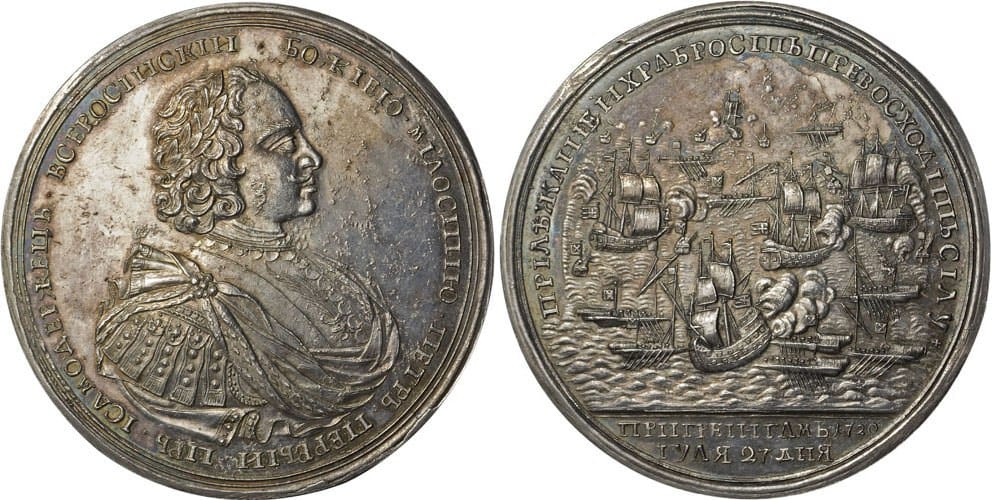
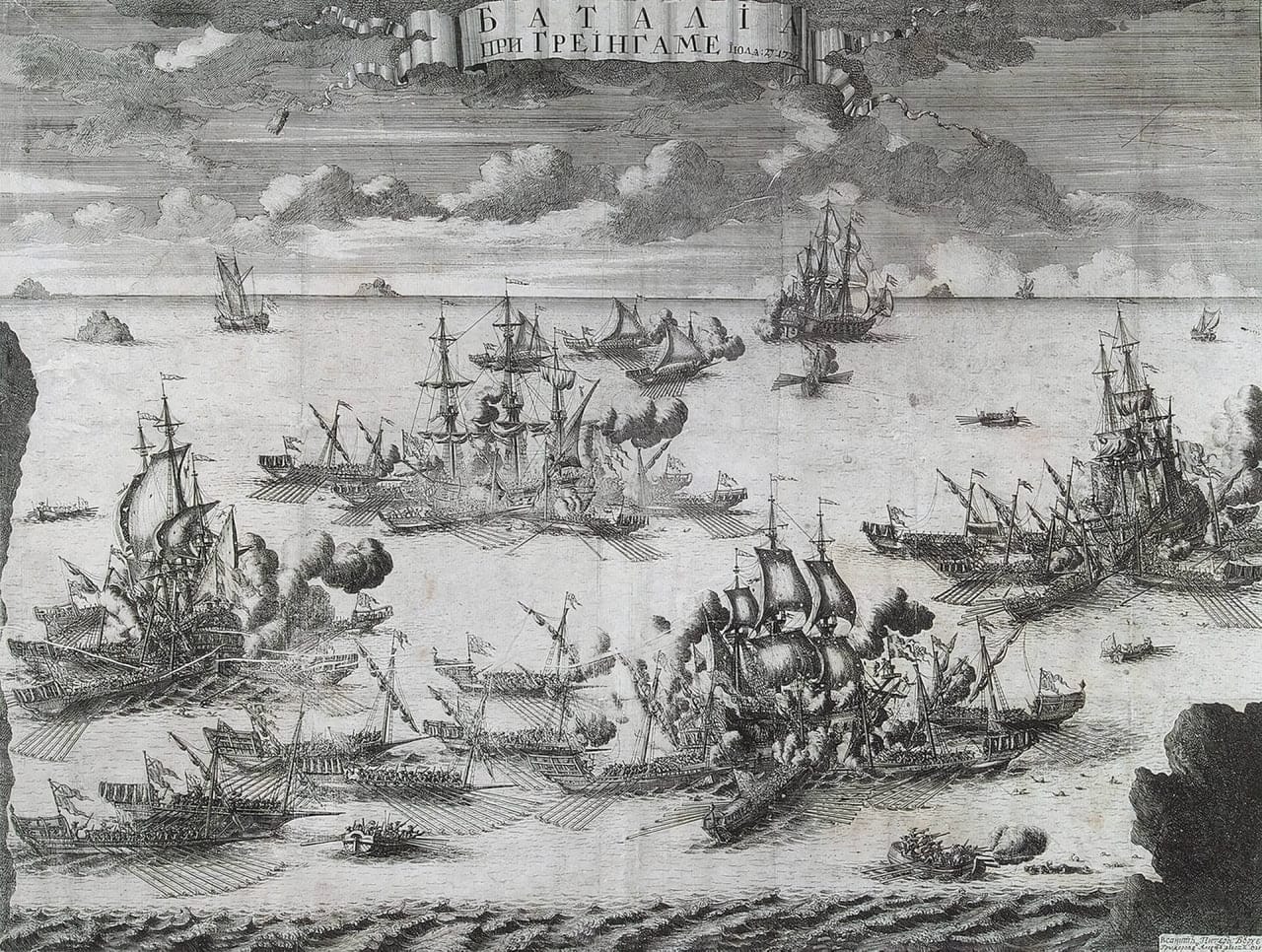
And so two mighty flotillas were arrayed against the young Russian fleet. In July 1720 the Russian galley fleet came into direct collision with the Swedes. The advantage in ships and strength lay with Sweden. The Russian squadron was commanded by General Mikhail Mikhailovich Golitsyn, who, by means of tactics, lured the Swedes into a trap of shoals and underwater rocks. The Russian galleys surrounded the Swedish frigates and captured four of them. Only the flagship of the Swedish vice-admiral and a few small vessels managed to escape.
It was a Russian triumph in the Baltic. The second major victory of the Russian fleet after Gangut, it showed the whole world that Russia had advanced from the position of a country with access to the sea to the status of a naval power capable of defeating a large enemy fleet. After Grengam the English withdrew from the Baltic.
“Truly, no small victory may it be reckoned, for it was in the very sight of the English gentlemen, who defended the Swedes no less than their lands, and their fleet likewise”
- Peter I wrote to Menshikov.
The Battle of Grengam was a step in the Russian Empire's greatest ascent and one of the final blows to Sweden's fading grandeur. The medal “For the Battle of Grengam” bears the additional inscription “Diligence and courage surpass strength”