Caravaggio's only fresco at the Villa Ludovisi in Rome and its alchemical symbolism
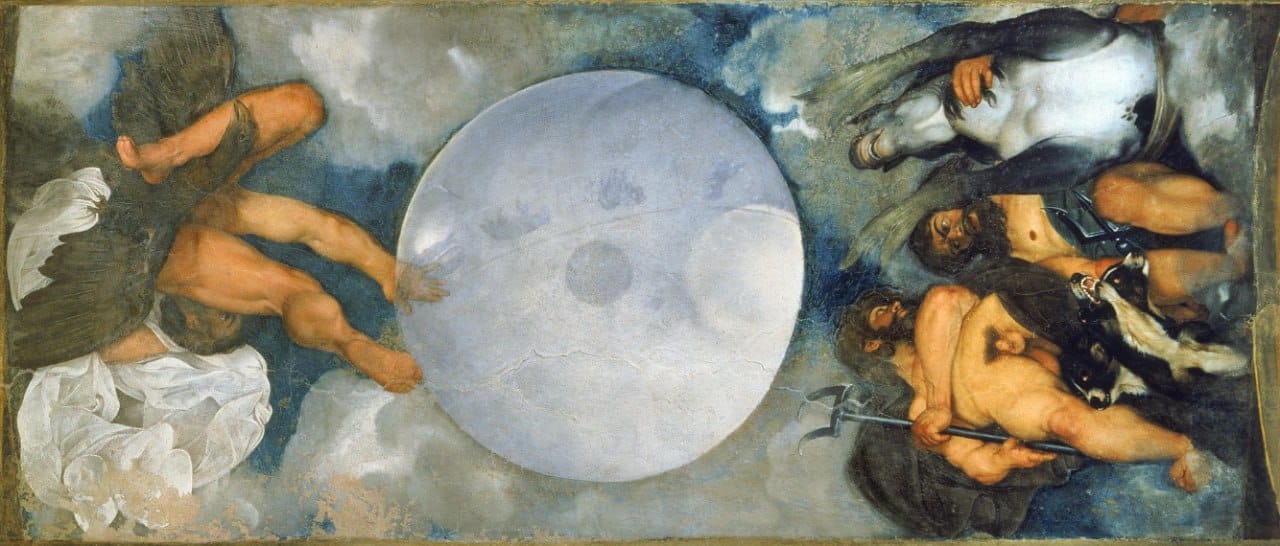
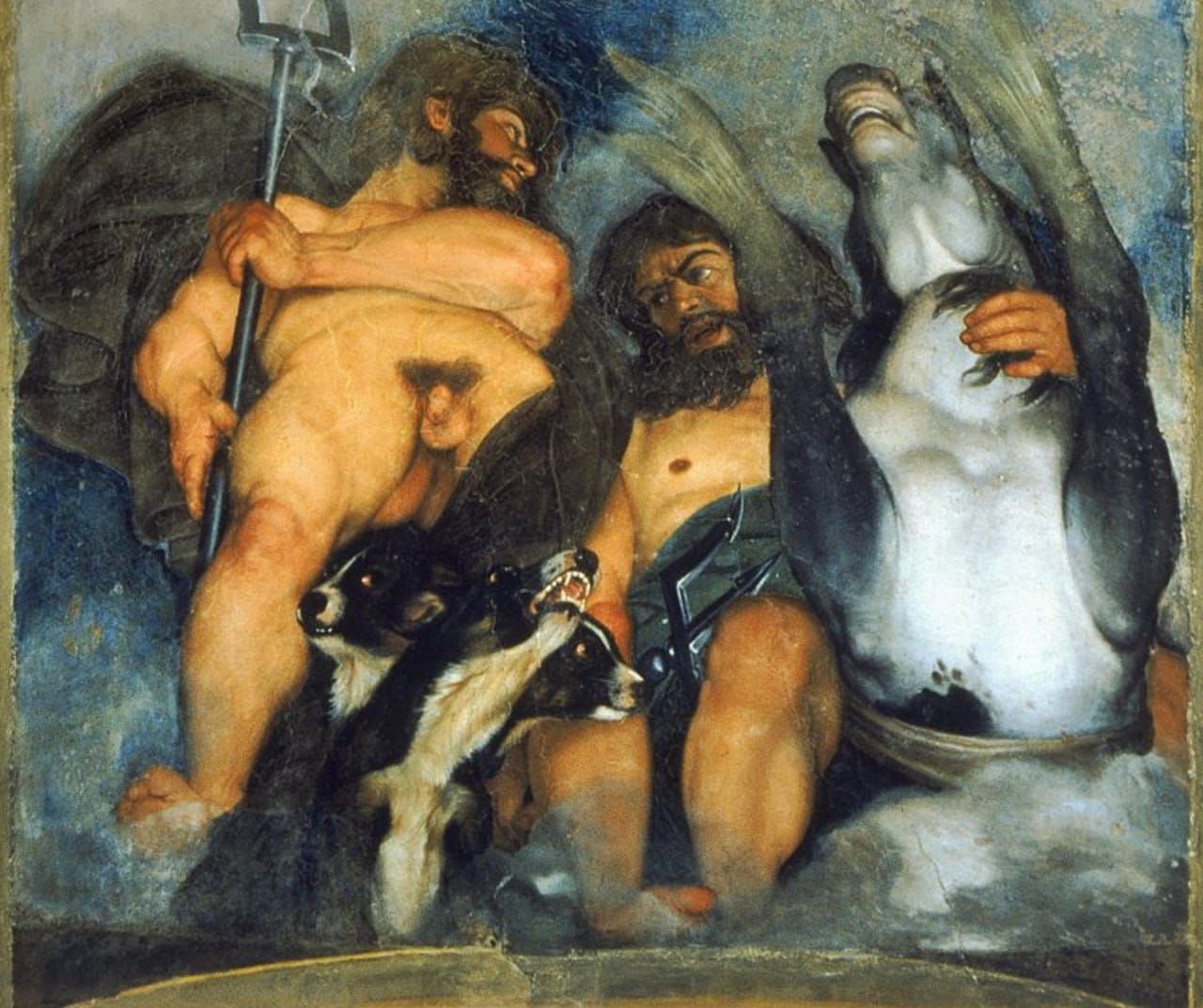
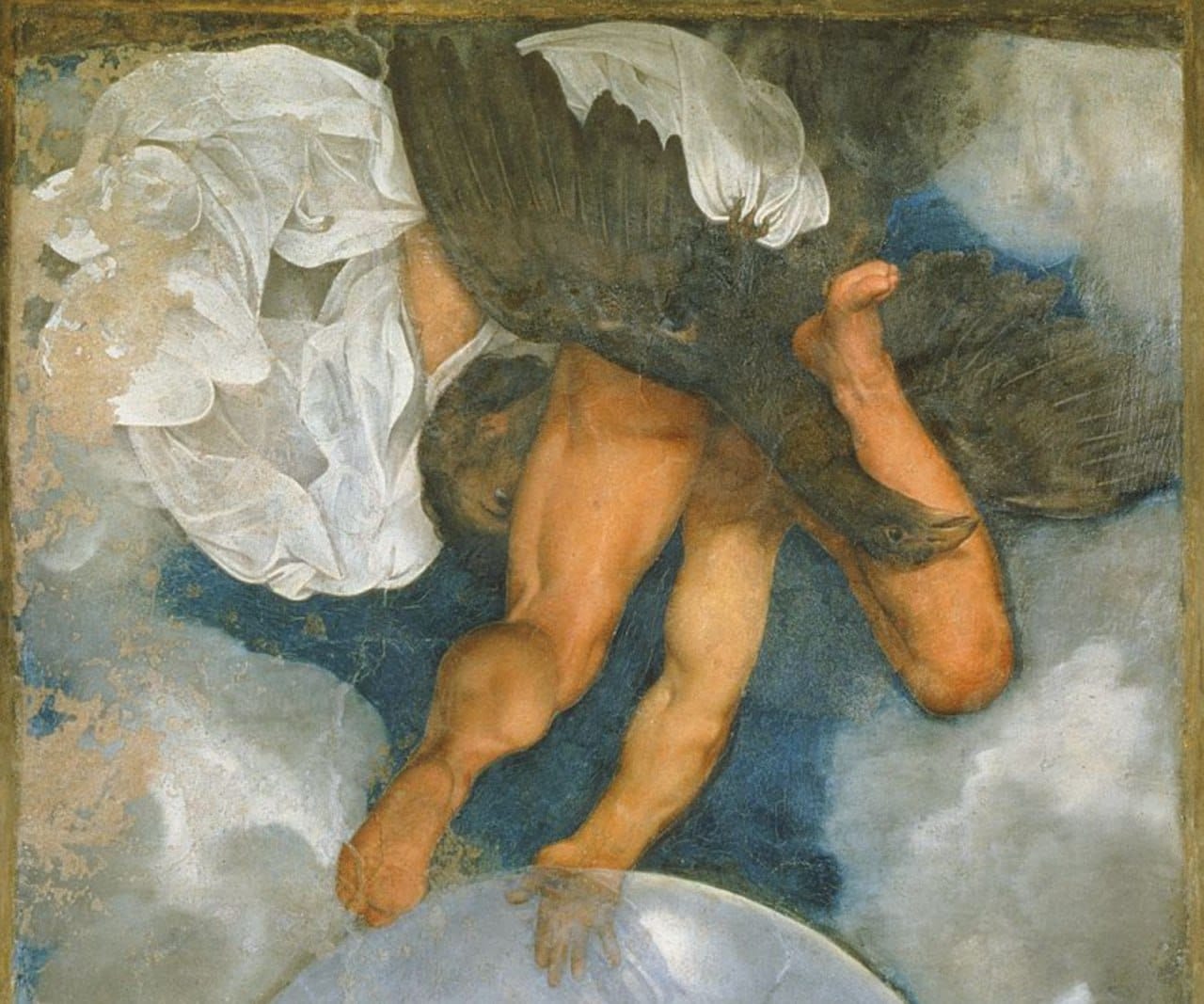
"Jupiter, Neptune and Pluto", the only fresco painted by Caravaggio, is found in the alchemical study of his patron, Cardinal Del Monte, in the hunting lodge of his villa. Today the sixteenth-century building on the highest ground in Rome, the Villa Boncompagni Ludovisi, is often called the Villa Aurora, after another celebrated fresco on its ceilings, Guercino's "Aurora".
A few years ago an attempt was made to sell the villa, without success, in order to settle a dispute among the heirs: the widow and the children of the last owner of this aristocratic nest. The building was then billed as the most expensive residential property in the world, priced at close to 500 million euros, which is itself doubtful given what the houses of the nouveaux riches fetch. Yet the villa, filled with historically significant works of art, was never sold, and the price was cut several times, to a positively shocking 100 million or so, compared with the estimated value of a single Caravaggio fresco, painted when he was 20, of more than 300 million.
The villa itself is in a lamentable state (a wall has even collapsed somewhere), but the works of art hidden within its walls are astonishing. And the fresco "Jupiter, Neptune and Pluto" remains one of Caravaggio's enigmatic creations, packed with secret signs.
Paracelsus's alchemical triad is conveyed in allegorical figures bearing the face of Caravaggio himself: salt and earth as Pluto with the three-headed hound Cerberus, mercury and water as Neptune with his winged horse, sulphur and air as Jupiter with the eagle, setting in motion the celestial sphere with the Sun and the Earth.