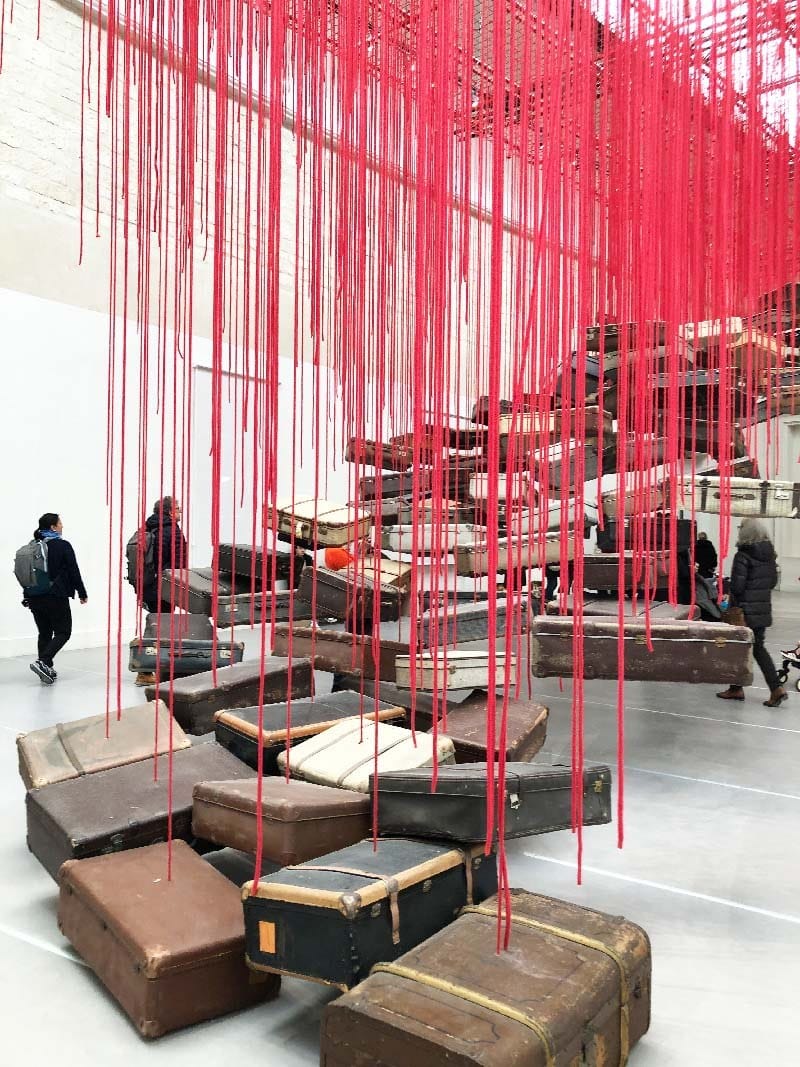
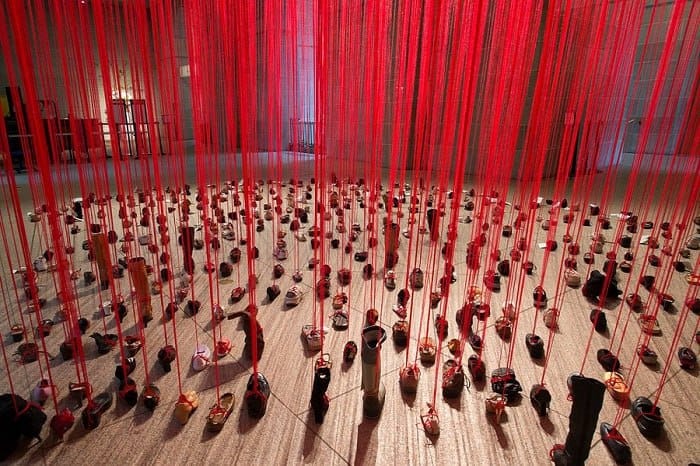
The story of the Kazakhstani artist's project withdrawn from the Biennale takes on a new meaning as she is accused of plagiarising the work of Chiharu Shiota, a contemporary Japanese artist based in Berlin, who has been creating similar installations sinc

It turns out that the Kazakhstani officials may not have been censoring a statement about repressions at all, but trying to avoid the charge of exhibiting plagiarism. Which, in fact, is just what the official side says: the artist, so we are told, was pointed to an improper borrowing and asked, apparently, to do something about the wholesale appropriation of another's aesthetic, the absence of any visual novelty, the absolute coincidence of every key element of the work. All the more so since Kazakhstan does not deny the Stalinist repressions: the country has a Day of Remembrance of Victims of Political Repression, and no persecution of people who work on this subject has been observed.
Of course, one may object here that the use of red threads in installations is not anyone's exclusive right, nor the discovery of the Japanese artist, all the more so as she, to all appearances, has never touched on the theme of Soviet repressions, and the visual logic is different. But how alike it has turned out, has it not?