Researchers discover that the ancient Egyptians used an equivalent of correction fluid to fix mistakes on papyri
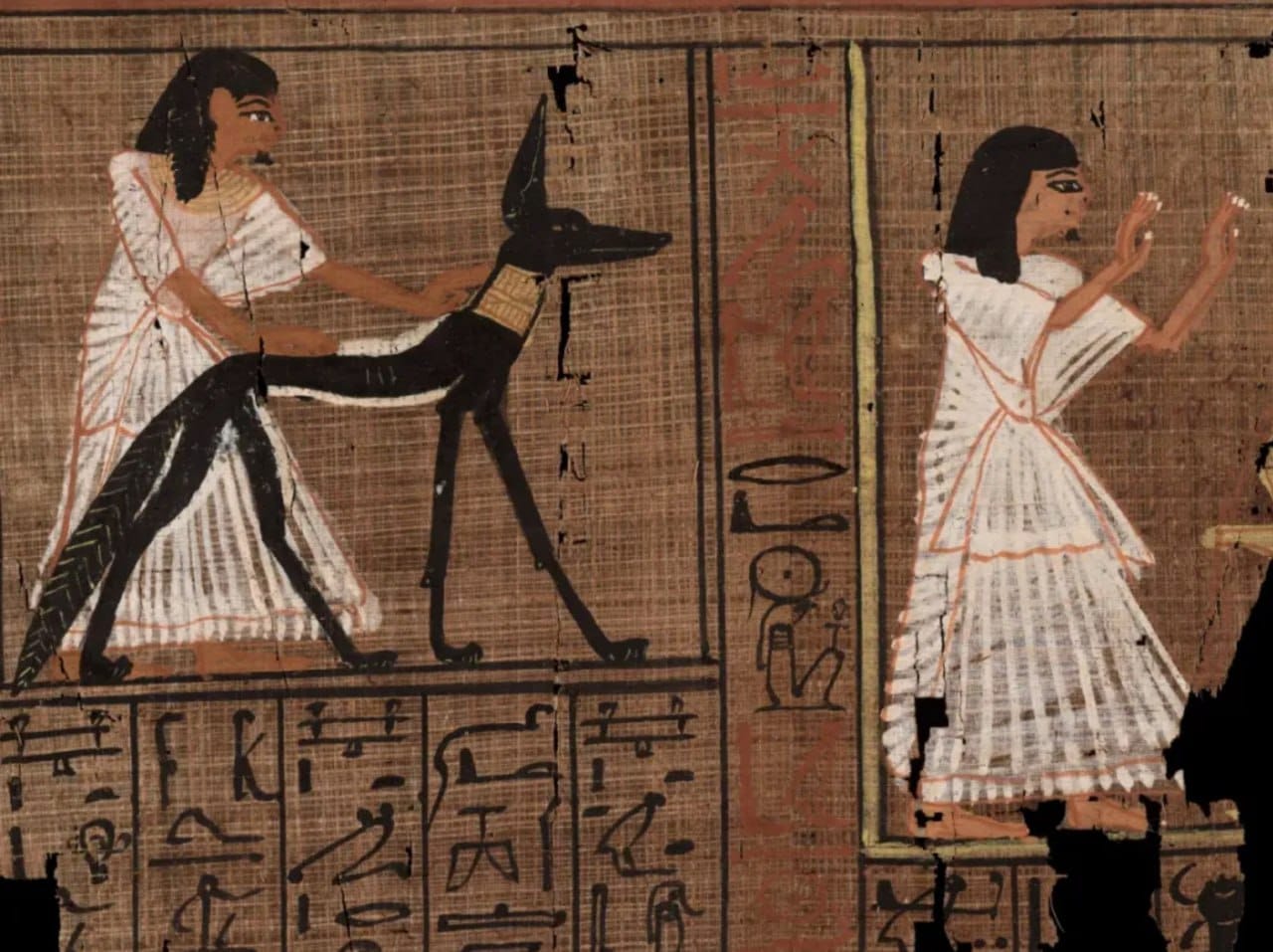
While preparing a papyrus some 3,300 years old for the exhibition "Made in Ancient Egypt" at the Fitzwilliam Museum in England, staff noticed that the painted figure of a jackal had been altered: the animal had been made slimmer.
The jackal is part of a scene from the Book of the Dead, a scroll intended to accompany the deceased into the afterlife and made for the tomb of the royal scribe Ramose. In the picture Ramose walks beside the jackal, which apparently represents the god Wepwawet, patron of armies and guardian of the dead.
White lines are visible along the upper and lower parts of the jackal's body, as well as along the front of its hind legs.
Analysis showed that the white paint was a mixture of the minerals huntite and calcite, and also contained particles of yellow pigment, probably to blend in better with the colour of fresh papyrus