Researchers from the University of Aberdeen have analysed marks on the teeth of the narrow-nosed rhinoceros Stephanorhinus hemitoechus from two Middle Palaeolithic sites in Spain and France, dating to some 100,000 years ago
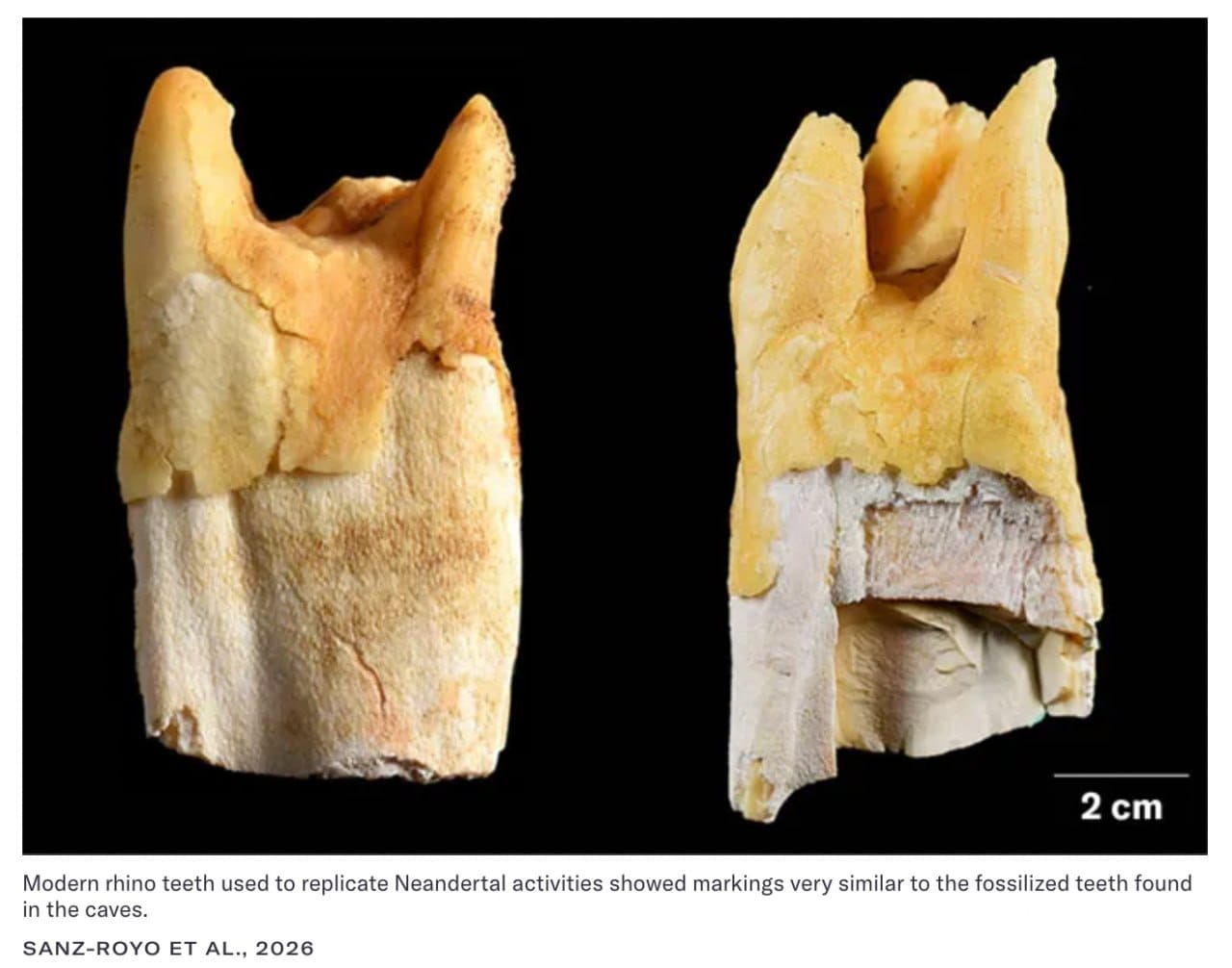
Researchers from the University of Aberdeen have analysed marks on the teeth of the narrow-nosed rhinoceros Stephanorhinus hemitoechus from two Middle Palaeolithic sites in Spain and France, dating to some 100,000 years ago. The grooves, notches, sliding marks and scratches proved to be precisely what repeated percussion leaves behind.
The team resorted to experimental archaeology, taking rhinoceros teeth from zoos and trying them out, as on an anvil, for dressing stone and for cutting hide and plant fibres. The marks on the modern teeth matched the Palaeolithic ones. It has also been established that Neanderthals selected teeth for a specific task according to their size and shape.
Until now the "non-stone" toolkit of the Neanderthals had been reduced to bone and antler. The tooth, a harder material, takes its rightful place in that series. And in a broader sense, this is yet another confirmation that the technological gulf between Neanderthal and sapiens is considerably narrower than was customary to suppose in the twentieth century.