The name of the Italian opera singer of Russian origin Nadezhda Vasilyevna Bulycheva (1858-1921) is inscribed for ever in letters of gold in the history of the worldwide struggle to abolish slavery
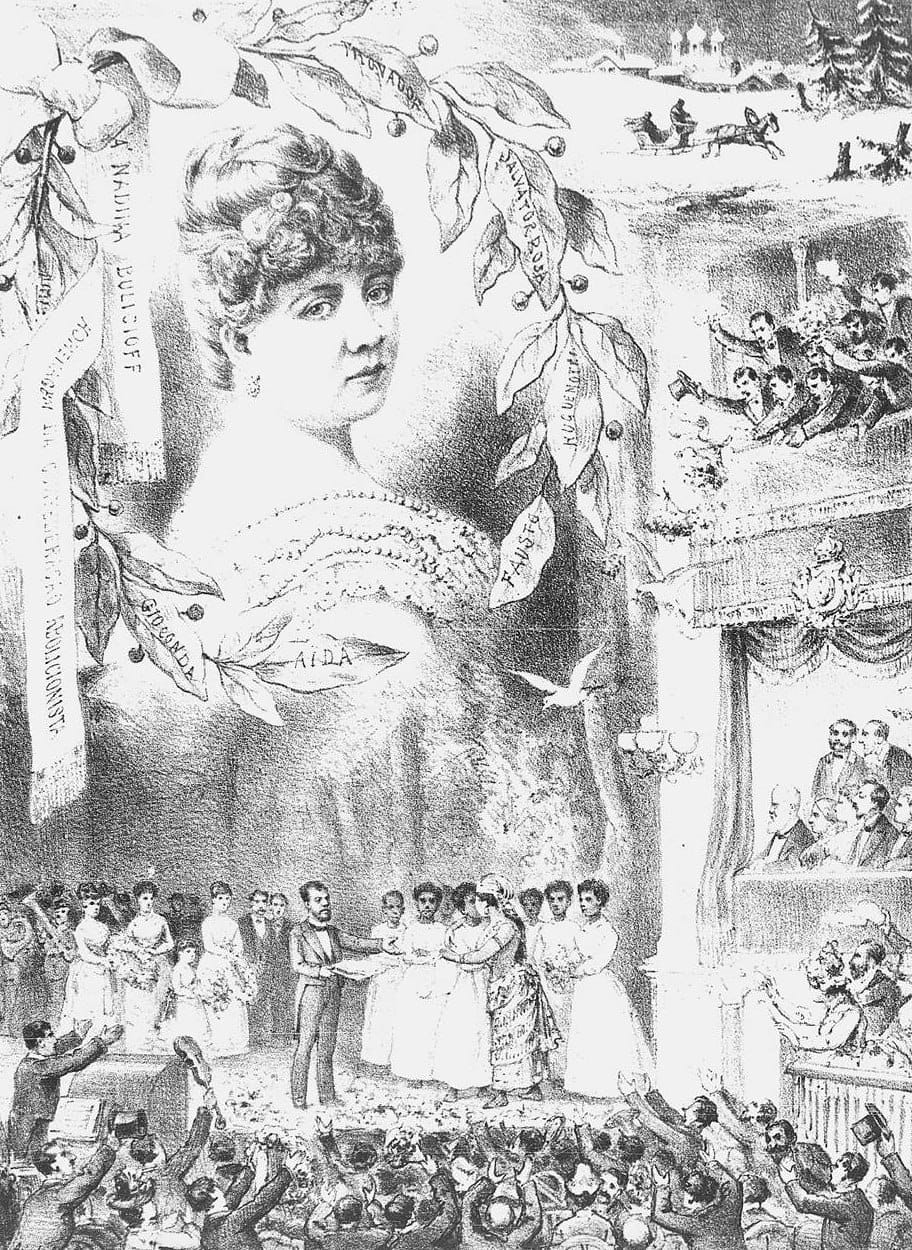
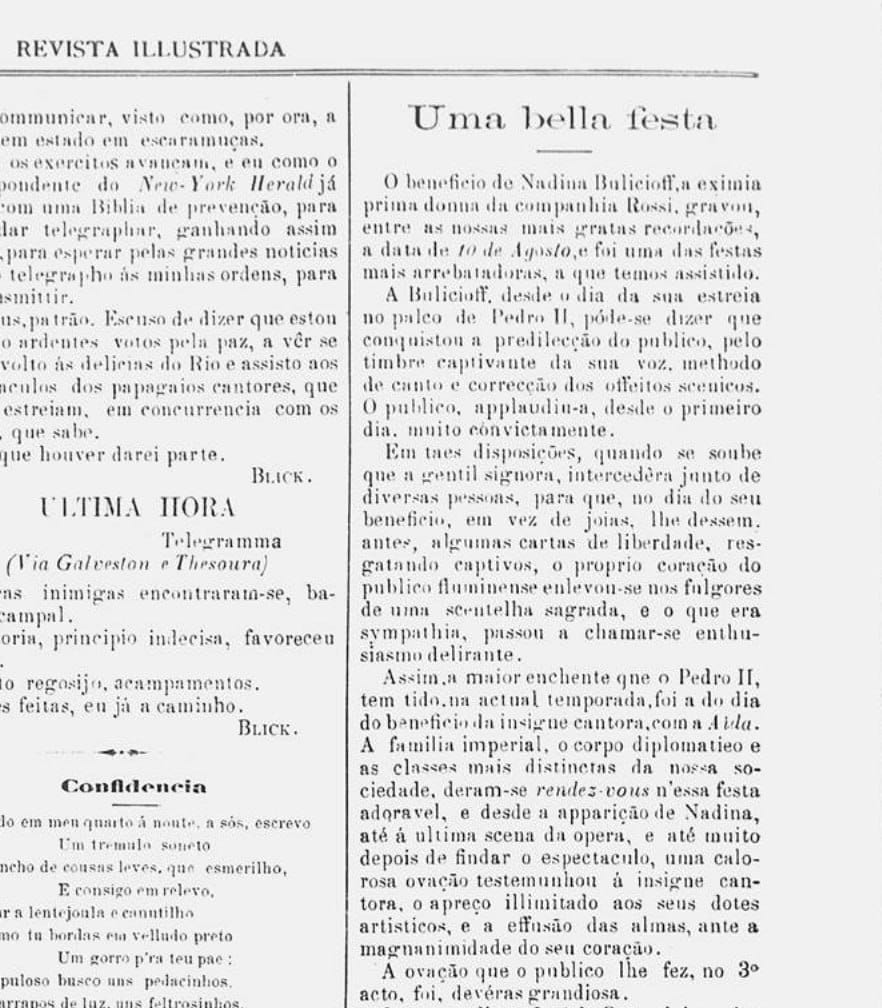
On 10 August 1886 the Russian prima donna Nadine Bulycheva sang the part of the Ethiopian slave Aida in Giuseppe Verdi's opera of that name on the stage of the Rio de Janeiro theatre, before a packed house that included the Emperor of Brazil with his family, the aristocracy, politicians and diplomats. It was the last performance of a brilliant season, the Russian singer's benefit night, devoted to her incomparable success on the stages of South America.
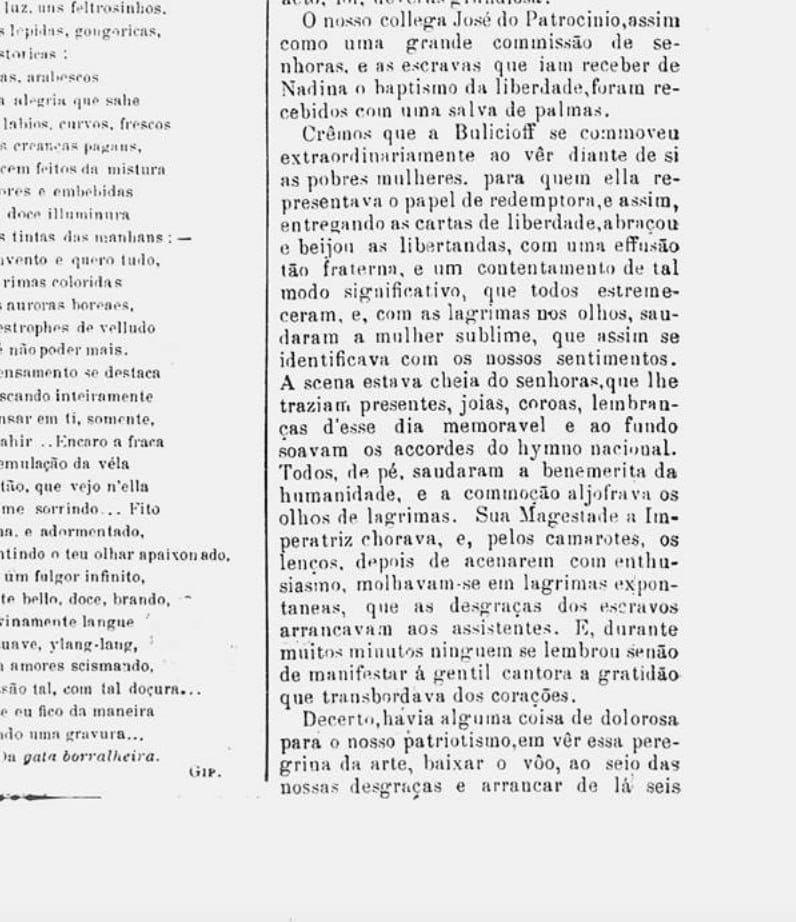
Bulycheva came out on to the stage during the final ovations and cut them short, apologising to the audience for distracting them from the music they had come to hear. She delivered a fiery speech against slavery and gave the orchestra a sign. The music struck up, and slave women began to file out from the wings. Nadine went up to each of them in turn, embraced her, kissed her and handed her the papers certifying her freedom.
People in the auditorium leapt from their seats, applauded without end, wept, cried out, and threw flowers on to the stage, and brought up jewels, diamond tiaras and keepsakes.
Even before her performances began, Nadezhda Bulycheva had made it a condition with the organisers that slaves be purchased with her fees. She also asked that her admirers be told that she would rather have money than costly gifts. The jewels presented to her after the performances she likewise asked to have sold. With the entire sum raised, slaves were bought on Bulycheva's behalf, and all of them received their freedom on the day her Brazilian tour came to an end.
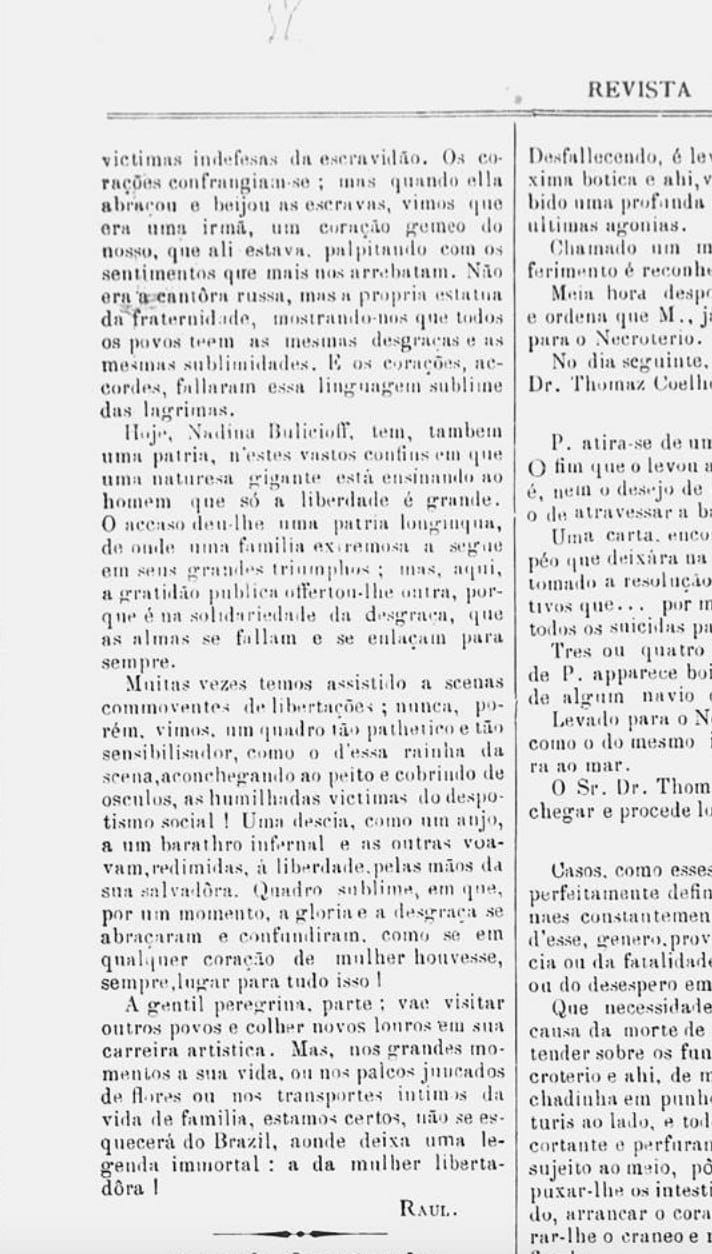
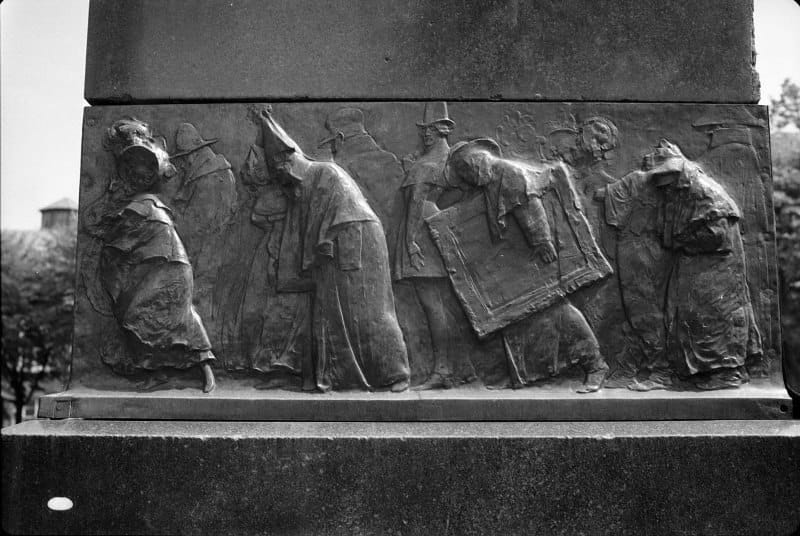
Newspapers throughout the country sang the praises of the Russian singer's angelic nobility and the generosity of her heart: "When she embraced the slave women, we saw that she is our sister, a kindred soul, sympathetic and trembling. This is not a Russian singer, this is that very statue of Brotherhood, showing that all peoples share one set of woes and one greatness. ... The boundless expanses of Nadine Bulycheva's homeland taught her that only freedom is great. ... it is precisely in the solidarity of misfortune that souls are joined for ever."
In the cinema Bulycheva was played by Elizabeth Taylor. In the 1988 film Young Toscanini Franco Zeffirelli portrayed Bulycheva as a wilful beauty, the mistress of Emperor Pedro II, which is neither confirmed nor refuted by the testimony of contemporaries. Yet the film very accurately catches the public effect of the artistic gesture of freeing slaves on the stage itself, before the ruling family, the courtiers, high society and the most active figures of culture. Indeed, soon afterwards in Brazil, by order of the Emperor, work began on legislation to free the slaves. True, Bulycheva was neither the only nor the chief fighter against slavery, but her act became a culmination, a loud and weighty appeal to the whole of society, an eloquent condemnation of slavery.