If you hurried through the Egyptian hall of the Louvre to get to the tiny Mona Lisa sooner, I advise you to correct the mistake and make the acquaintance, at the very least, of the figure of the Seated Scribe Kay
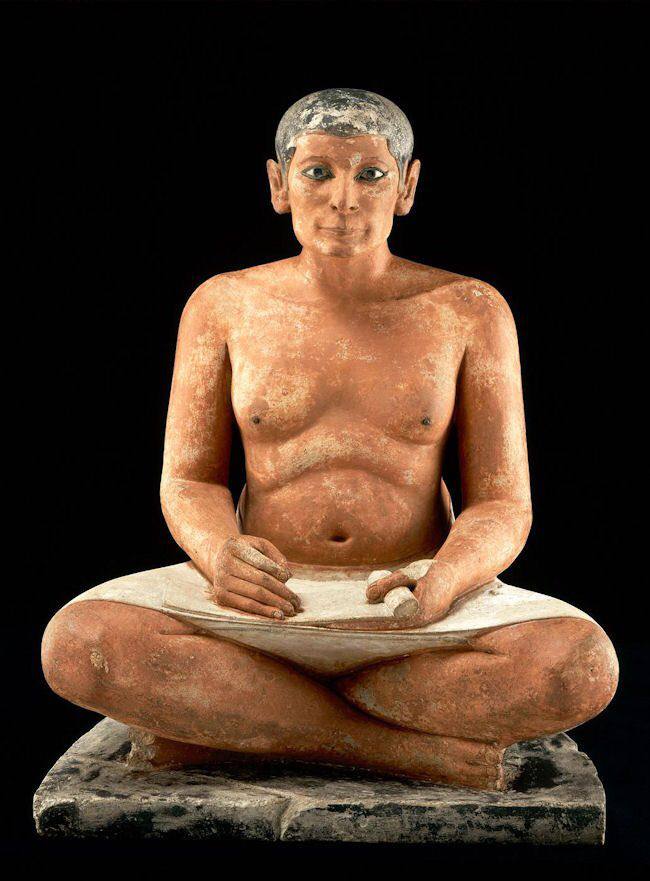
If you hurried through the Egyptian hall of the Louvre to get to the tiny Mona Lisa sooner, I advise you to correct the mistake and make the acquaintance, at the very least, of the figure of the Seated Scribe Kay. He is undeservedly neglected, although many historians and art historians count this sculpture among the ten principal treasures of the Louvre. Yes, yes, some do not include the Mona Lisa in such lists at all, and they have their reasons.
Since the description of this exhibit is rather dull, I would probably have walked past too, had I not known the story of the find in advance. Really, who would be intrigued by a label reading: note the concentrated gaze of the scribe; the sculpture is thought to date from the period of the 4th to 6th dynasties.
I think that a brief mention that this limestone figure has a chest inlaid with wooden elements, and eyes made of crystals, would be enough to send crowds running to him.
Apart from the well-preserved paints, though they have lost their brightness with age, what is remarkable are the eyes, executed in some most intricate manner, so that there is an eyelid, an eyeball, a pupil and a retina. Peculiar ones, of course, made of copper strips, rock crystal, quartz and special pigments. That is why all who describe him draw attention to his intelligent gaze.
Much about the monument's provenance remains unclear. The date, among other things: the figure of 2800-2200 BC is given. It is said that the man depicted may have belonged to the royal family, and it is not doubted that he was a dignitary named Kay. The explanatory blocks and the pedestal have not survived. In any case, the indication of literacy in itself underlines high status, since not even all priests and courtiers knew how to write.
For me personally this scribe is all the more interesting and enigmatic because he stands out so sharply among the more than six thousand finds transferred together with him to the Louvre in the nineteenth century by Mariette. He differs greatly from the other figures of scribes, and despite being only half a metre tall he looks even more impressive than the huge, likewise seated Ramesses in the same hall. There is a similar statue in the Cairo Museum, but there the scribe is somehow unmanly and puny, perhaps because of the small neck, although with a more striking hairstyle