The United States' purchase of Louisiana from France in 1803 for 15 million dollars
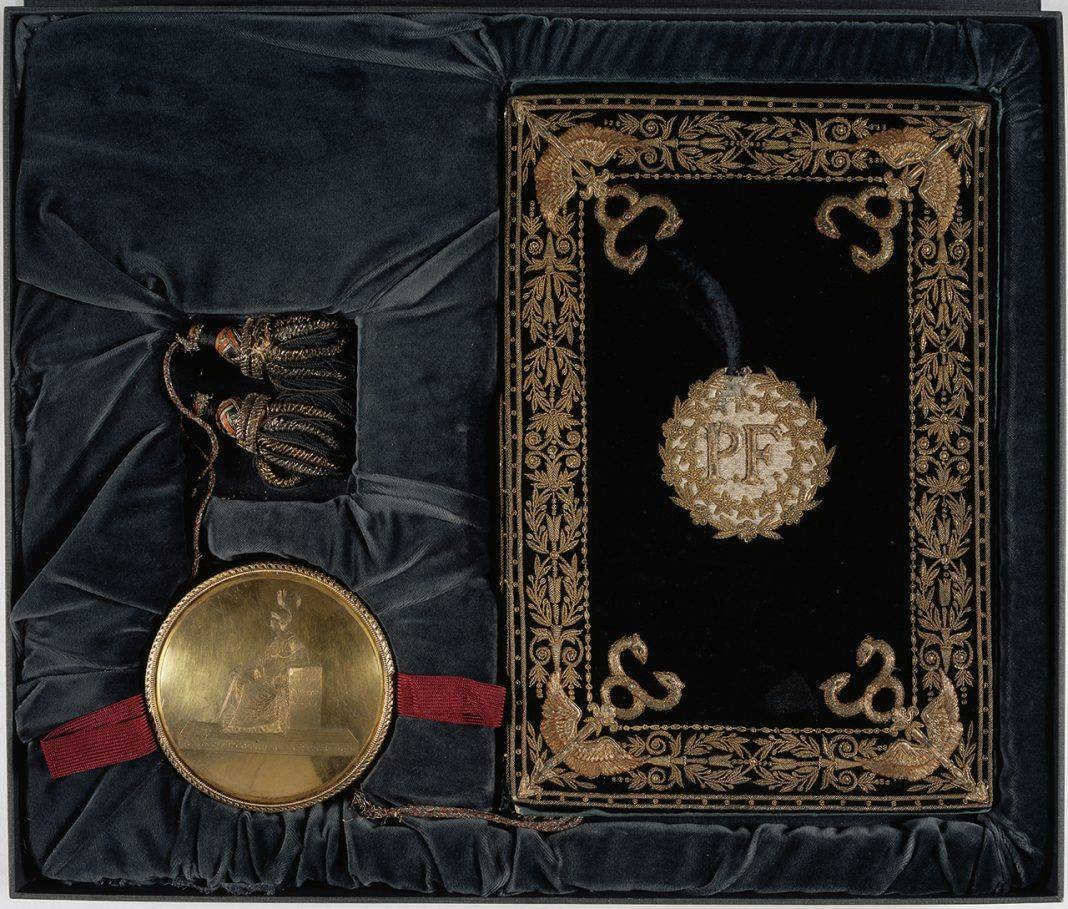
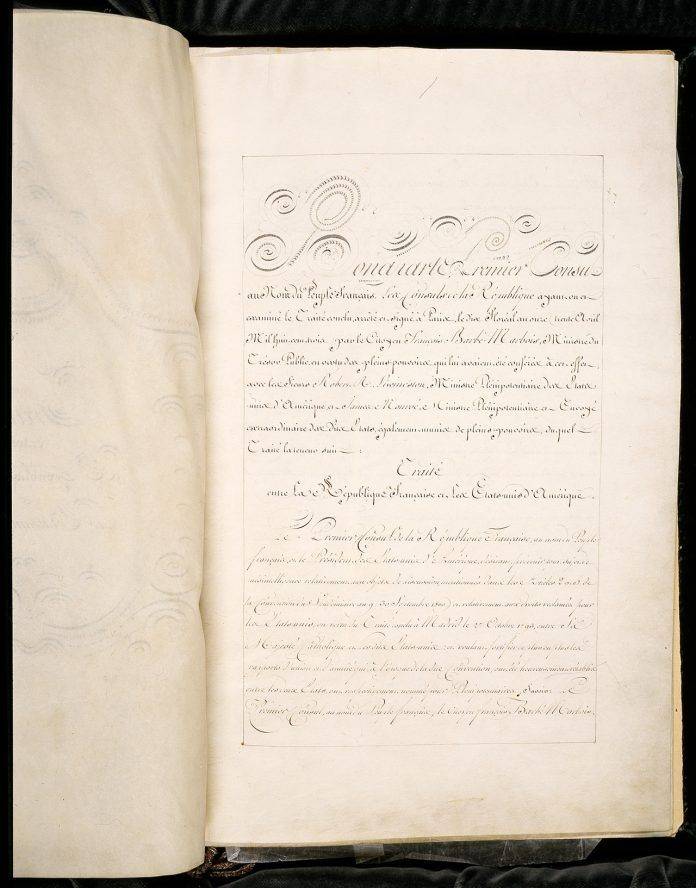
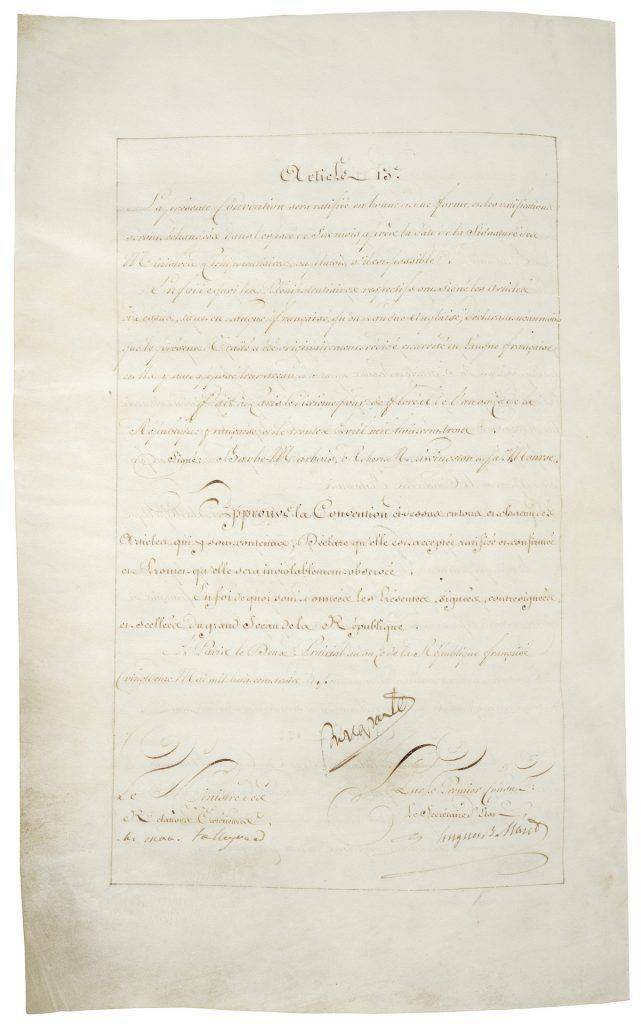
The 1803 treaty for the purchase of Louisiana, France's North American possessions, signed by the third President of the United States, Thomas Jefferson.
Jefferson originally wanted to buy only New Orleans from the French, in order to ease trade and logistics thanks to the port of New Orleans. But Napoleon offered to sell the whole of Louisiana, which was twice the size of the United States of the day, and for a trifling sum for such a territory: for New Orleans alone Thomas Jefferson was prepared to pay 10 million, while for the whole of Louisiana they asked a mere 15. France cashed the bonds received from the Americans at an English bank, and the proceeds went towards preparing the invasion of England. Formally speaking, the English themselves lent France the money to attack them. The invasion, it is true, never took place in the end: fate led Napoleon into war with Austria and Russia.
The French crown had owned vast territories in North America since the 17th century, but in the 18th century Louisiana, named in honour of Louis XIV, became a loss-making burden for France: the lands had become too costly to govern, too expensive to maintain and to defend. That is precisely why Louisiana passed to Spain in 1762, and for the same reason the unprofitable colossus was returned to France in less than 40 years. So the United States, which was able to buy Louisiana for 15 million dollars in 1803, did the French, who were not coping with such a load, something of a favour.
On the site of the former Louisiana lie Arkansas, Missouri, Iowa, Oklahoma, Kansas, Nebraska, a considerable part of North and South Dakota, Montana and Wyoming, the southern part of Minnesota, the north-east of New Mexico, the north of Texas, half of Colorado and part of present-day Louisiana.