What can be said of Turgenev's works as a whole?
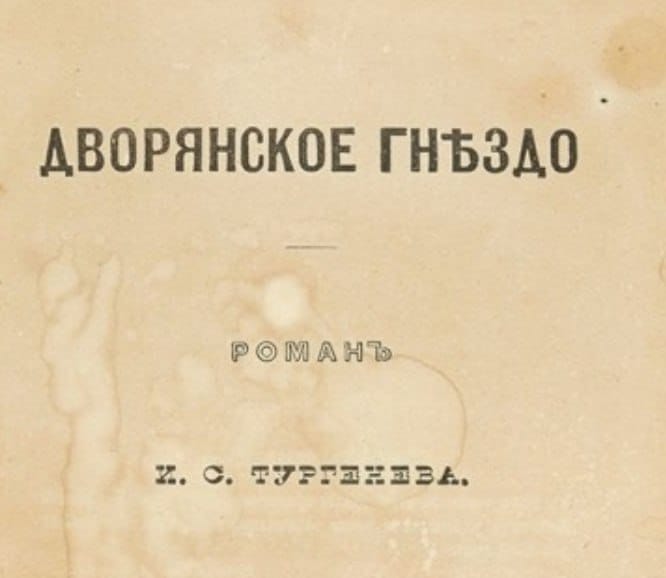
What can be said of Turgenev's works as a whole? That after reading them one breathes easily, believes easily, feels warmth? That one senses distinctly the moral level rising within oneself, and mentally blesses and loves the author? But these would be mere commonplaces, and yet it is precisely this impression that those transparent figures, seemingly woven out of air, leave behind: this beginning of love and light, welling up like a living spring in every line and nevertheless vanishing into empty space. But to express even these commonplaces decently, one must oneself be a poet and fall into lyricism. Turgenev's heroes do not finish their business: they dissolve into the air. The critic cannot catch them, because they cannot be held in the hand, as Pisemsky's heroes can. That is why, although much has been written about Turgenev, it has not been directly about him, but merely on the occasion of him. One can write a great deal of nonsense about the superfluous man, as Stervan Dudyshkin has done, one can touch upon the Russian man at the rendez-vous, but about Turgenev himself it is impossible to write. His writings can be characterised by his own words, with which he concludes his novel: one can only point to them and pass on. I have not been so shaken in a long time, but by what precisely I cannot give myself an account. I think by neither this, nor that, nor the other, but by the general structure of the novel. Of course, this can hardly set Turgenev high as an artist (although Varvara Pavlovna is a delightful creation in the artistic respect too, but at the same time she fouls the general structure of the novel), yet he himself hardly lays claim to that. Here in Russia the time has not yet come for artists. However much Pisemsky turns his dummies on the lathe, he cannot breathe the living spirit into them. Our artists smell of pettifoggery and the seminary; everything comes out of them fleshy and thick, and they can never subdue form. After Turgenev, one feels a certain fury against these artists.
M.E. Saltykov-Shchedrin after reading “A Nest of Gentlefolk” in February 1859, in a letter to P.V. Annenkov