Warwick Rodwell studies skeleton from Roman sarcophagus in Westminster Abbey
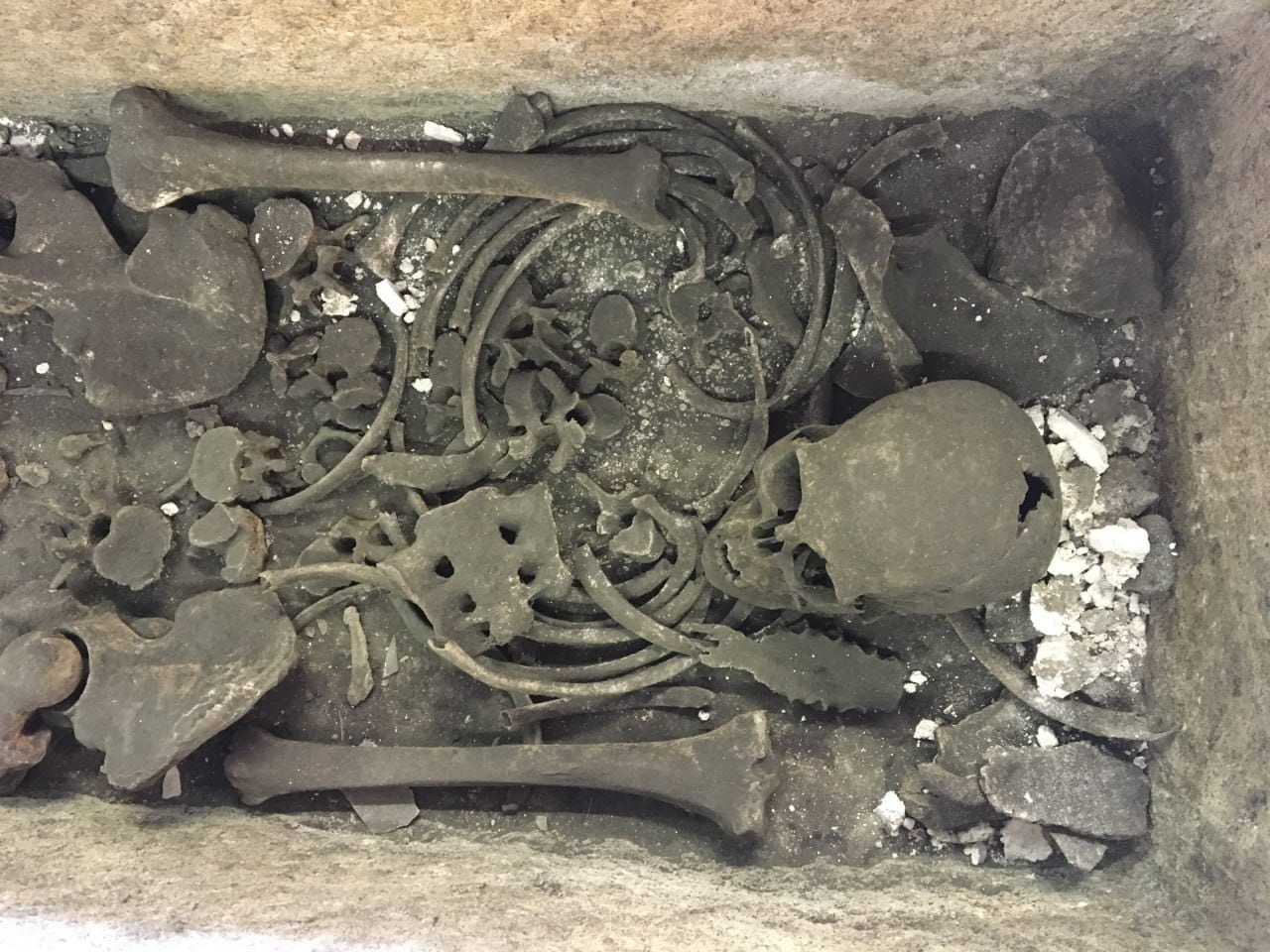
The British archaeologist Warwick Rodwell, consultant to Westminster Abbey, has published a study of a skeleton that lay for many years in a Roman stone sarcophagus in the Abbey. The sarcophagus was made of limestone in the 3rd or 4th century AD. The Latin inscription on it states that the sons Valerius Superventor and Valerius Marcellus set it up in memory of their father, Valerius Amandinus, a man of means from Londinium, the Roman city on the site of London. According to the article, workmen came upon the sarcophagus beside the Abbey's vestry in 1820 and broke its lid into six pieces. The find was officially recorded in 1869, when the lid was restored.
Scholars have long noted that the Roman inscription does not identify the person who lies in the sarcophagus. In the early Middle Ages, in the 10th or 11th century, craftsmen cut across the lid and carved a large Latin cross on it. In the 19th century, researchers described the skeleton as the remains of a sturdy young man about 170 centimetres tall and no older than 30.
The osteologist James Young Langthorn established that the man was between 35 and 49 years old and about 175 centimetres tall. The Scottish Universities Environmental Research Centre carried out radiocarbon analysis of the bone and showed that the man died between 987 and 1052. Traces of white lime inside the sarcophagus preserved the outline of a rectangular wooden coffin, long since decayed. This means that in the late Saxon period the sarcophagus was reused and a wooden coffin was placed in it.
At that time Westminster was a Benedictine monastery, and Rodwell names two possible candidates. Abbot Ælfwig died around 1020, and his successor Wulnoth died in 1049 and was probably buried in the Abbey