Machines and a mechanical doll in Alexander Grin’s 1921 novella “The Grey Automobile”
Beware of things! They enslave us very quickly and very firmly!
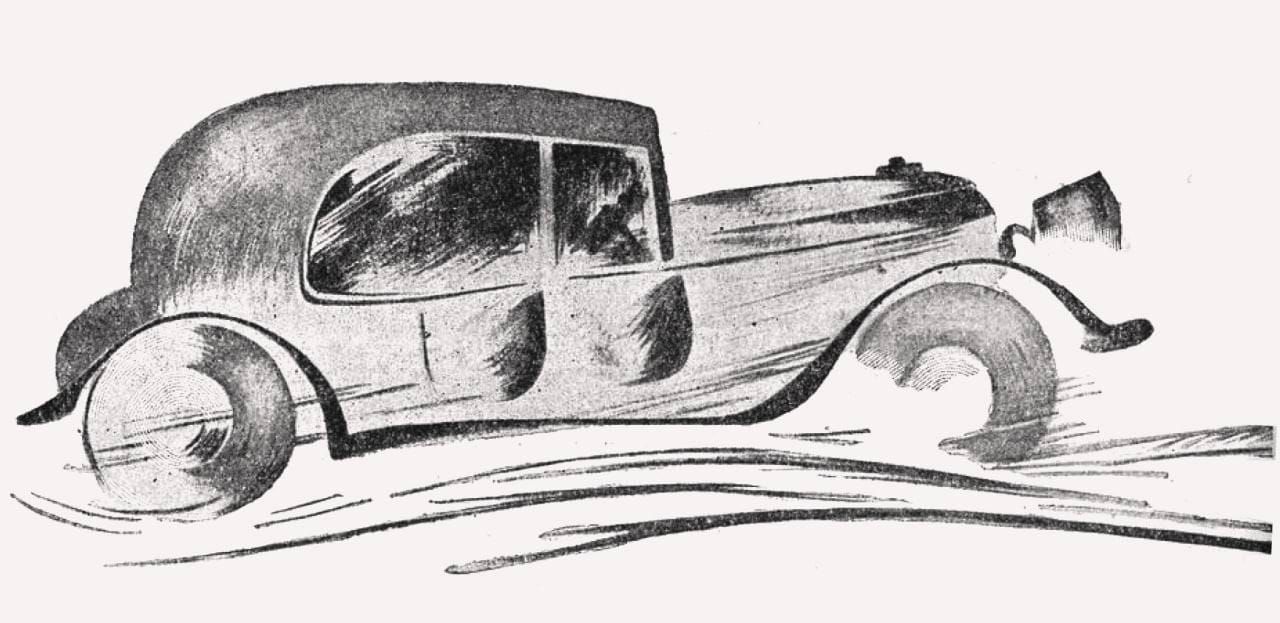
So Ebenezer Sidney, the hero of Alexander Grin's novella “The Grey Motor-Car”, warns his interlocutor as he reflects on the degree to which mechanical objects (or creatures) may be endowed with life. I recalled the story while reading discussions of the phenomenon of artificial intelligence, in which some fear that a soulless machine will soon displace man everywhere. Well, a text of 1921 rather got ahead of these anxieties.
“Inanimate matter,” said Kishley. “Iron and steel are dead.”
I made no reply to this. It seemed to me that a motor-car had cried out beyond the window. Indeed, the cry was repeated, closer, and then right beneath the window.
“Do you hear?” I said. “There is its voice: a howl faintly reminiscent of some coarse, embittered words. So it has a voice, movement, sight, perhaps even memory. It has a home. In the Rue Bock-Méthane it is worth visiting the wholesale motor showrooms to see them in their domestic surroundings. They stand gleaming and oiled on the cement floor of an enormous hall. On the walls hang their portraits: photographs of models and of winners in competitions. It has its music: certain new compositions that so diligently reproduce the dissonance of street noise, or of the chance sounds that arise with any movement. It has, finally, a gramophone and a cinematograph; it has doctors, panegyrists and poets, the very ones you spoke of half an hour ago, people with a keenly developed sense of mechanism. It also has mistresses, those ladies who bestow from the windows of fashionable shops the smile of their waxen faces. And is this not life? A fairly full existence, I should say. Besides, it goes in for sport and murder, and takes part in war.”
“So it follows,” said Nikolai, “that... But I shall put it more briefly: a certain motor-car, covered in mud and wounds, returned from the theatre of military operations. Having had a shave at the barber's, it went home, where it put on the gramophone a record of the march ‘To Glory and Triumph’ and ordered the cinematograph to be wound up for the picture ‘The Motor Races between Liss and Zurbagan’. In its delight, a tyre burst.”
The protagonist, the eccentric Sidney, ponders in earnest the earthly existence of machines, and even seriously supposes that some of them may differ not in the least from human beings.
By his conjecture, the girl he loves is a waxen mechanical doll so artfully made that she has managed to escape from a shop and to act like a real girl, even to conduct love affairs. He observes her skin the colour of yellow chalk, which at times pales and turns the colour of a wax figure, her empty, pleasant smile; he notices that her daily routine seems governed by nothing but the machine, and that she herself is a soulless slave of things. But above all he notes her unreal feelings: incapable of love, she seems endowed with a soul yet is drawn to him solely by his wealth. By every sign, this indifferent creature, with a voice of impassive expression and the strange name Corrida El Baso, of unknown nationality and unknown origin, can only be a mannequin, one that Sidney really did once see in another city. This, together with the sinister appearance in his life of a grey motor-car, not merely robs the hero of peace but very soon of his reason. Corrida is not a living girl but a doll come to life. And so she must be killed.
And Sidney tells her at the edge of the precipice:
I have grasped the secret of your mechanism. It has come to resemble the outward appearance of human life through the power of all the mechanisms that clang around us. But to become a woman, understand this, to become a truly living being, you can only after destruction