Has everyone heard of the medieval demon professionally attached, so to speak, to the guild of scribes?
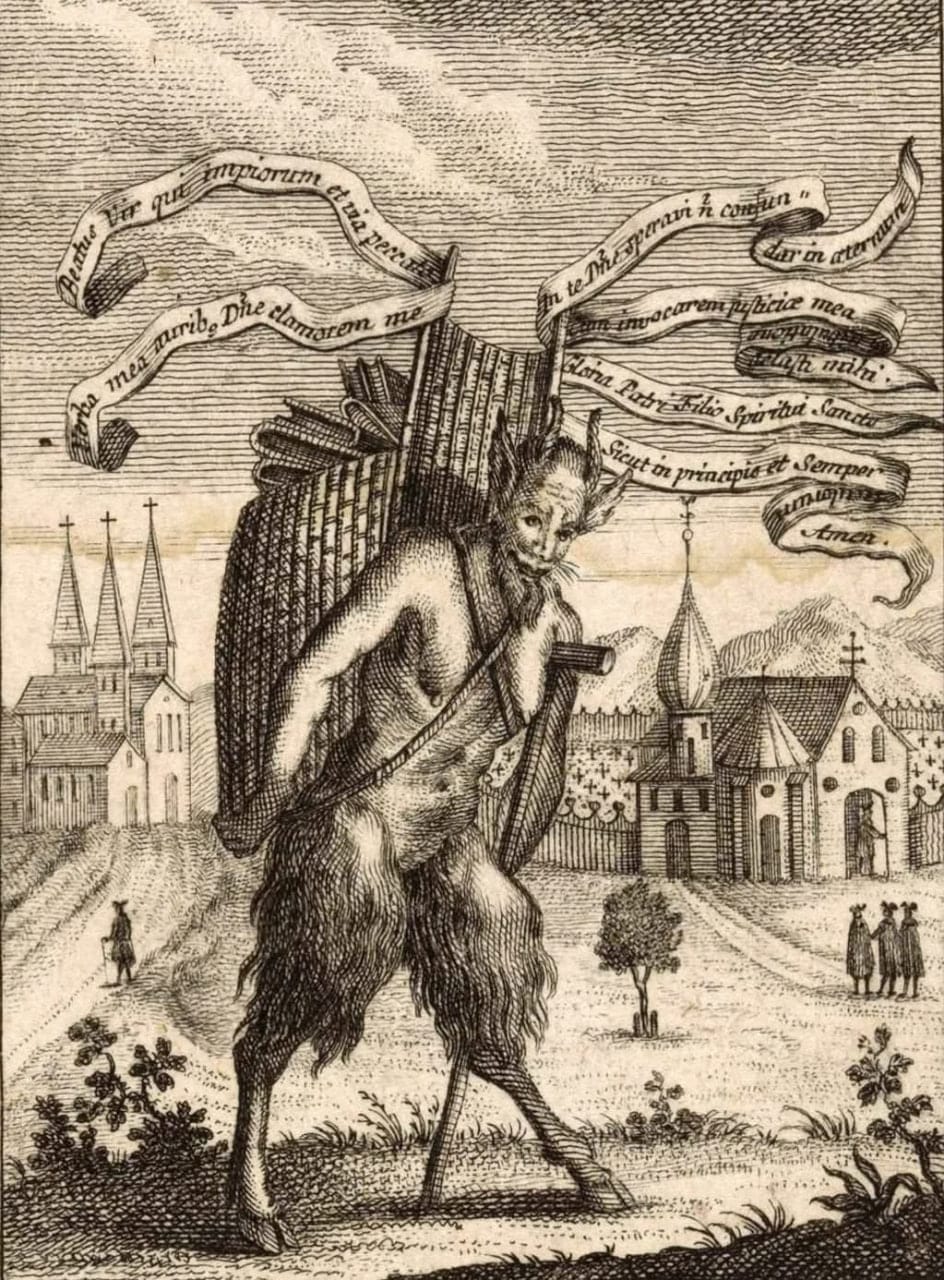
Has everyone heard of the medieval demon professionally attached, so to speak, to the guild of scribes? His name was Titivillus, and he served a double function.
His first task was to listen to church services. The monks sang psalms, and there were always some who swallowed syllables, hurried, skipped words or let their thoughts wander. Titivillus carefully gathered all of this into a sack and carried it down to hell, where every lapse was entered on the sinner's account.
His second task concerned the copyists of manuscripts. The work was monotonous, eyes drooped, hands tired, and errors inevitably crept into the text. Here he proved especially useful: it was not the scribe who was at fault, but the demon who had whispered. He was called the patron of scribes, though it would be more accurate to call him their professional alibi.
He was first named in a Latin text by John of Wales, around 1285. The name itself existed in dozens of spellings: Tutivillus, Tintillus, Tantillus, Titivitilarius. Perhaps this confusion over the spelling of the demon's own name is one of his pranks.
In an anonymous fifteenth-century English treatise the demon introduced himself, and it emerged that every day he was required to bring his master a thousand sacks full of carelessness in syllables and words. To all appearances, he still has plenty of work.
In the age of print he moved from scribes to compositors. Now he is reckoned the patron of proofreaders. A misprint that has survived five rounds of proofreading is said, in editorial circles, to bear his name, though I personally have never heard of such a thing.