On 24 November 1813 Russian Cossacks liberated Amsterdam from the French invaders
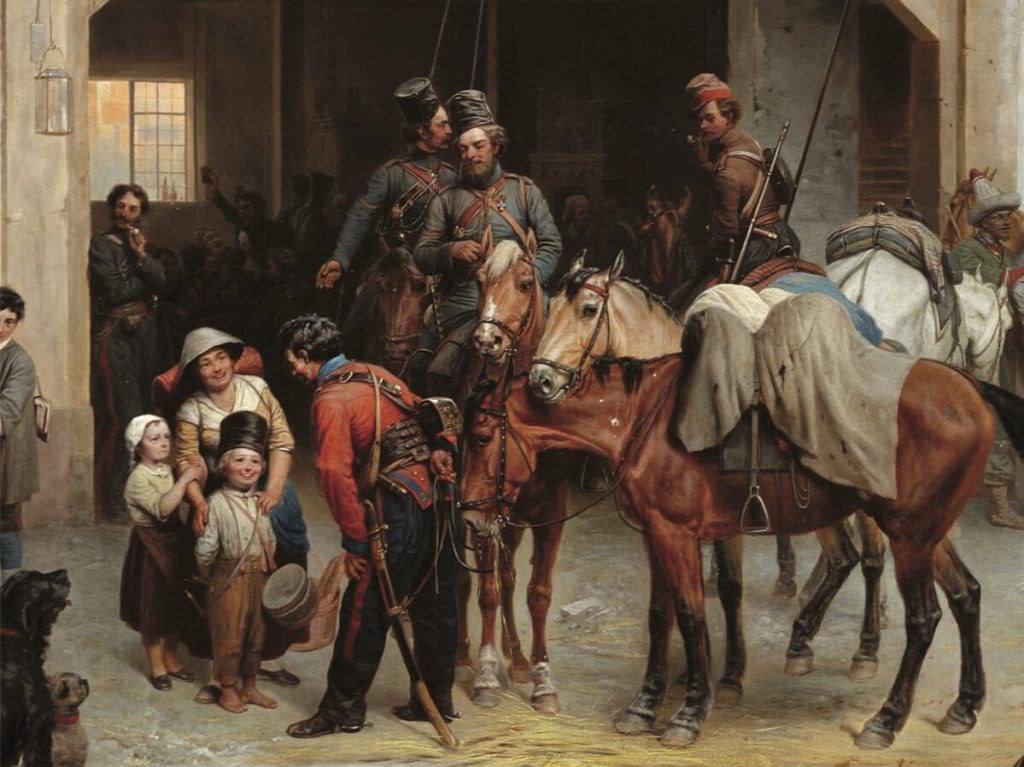
Russian and Prussian troops helped the Dutch to free their country from the French, and soon after the events in Amsterdam the Netherlands proclaimed its independence.
But the Dutch now react very painfully to statements along the lines of "the Russian army granted the Netherlands its independence", and receive in reply the retort that without Russia's victory over Napoleon they would still be swearing allegiance to the French monarch. One side argues that Napoleon had already been crushed a month earlier at the Battle of Leipzig, fought on 18-21 October, and that Amsterdam had passed into the hands of Dutch administrators. The other points out that almost half of the participants in the Battle of Leipzig were Russians.
It is curious, incidentally, that before the onset of mass Russophobic hysteria the exhibition at the Geelvinck museum in Amsterdam, for one, told visitors that the change of power in the Amsterdam city council, directed against the French authorities, might have taken a fatal turn in November 1813 had a Russian commander not come from beyond the Urals to the aid of the patriotic forces with a handful of stern Cossack horsemen.
This commander acted against the order of his superior, but in the spirit of the instructions received from the Russian Tsar Alexander I. It was a feat of arms that made it possible to push the French troops back from their strategic positions around the city.
It was a small museum about the life of one well-to-do family in the period between the Golden Age and the industrial revolution. It now appears to be closed. But as regards the founding of modern statehood, the museum told roughly the following:
On 2 December 1813 the Prince of Orange, the future King William I, accompanied by an escort of Russian Cossacks, was solemnly welcomed by the people of Amsterdam. His proclamation that day by the provisional city council of Amsterdam as the first sovereign prince of the Free Netherlands opened the way to a modern constitutional monarchy, which laid the foundation of our modern society.
Unfortunately, the Kingdom of the Netherlands today prefers to ignore this important page of its history