Henri Cartier-Bresson's Famous Photograph of Young People Gazing at a Ceiling Was Taken Not in the Louvre but in the Rotunda of the American Capitol in 1957
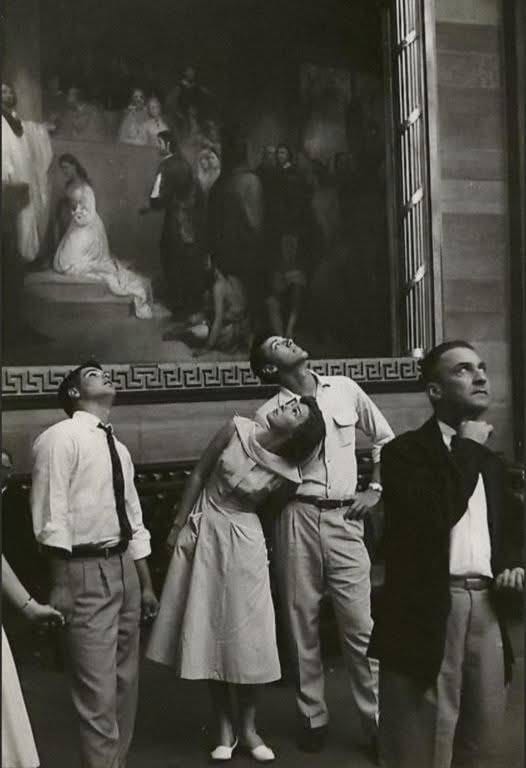
Henri Cartier-Bresson's famous photograph of young people gazing at a ceiling was taken not in the Louvre but in the Rotunda of the American Capitol in 1957. The young people are looking not merely at a ceiling but at one of the most beautiful domes in the world, 55 metres high and 29 metres in diameter.
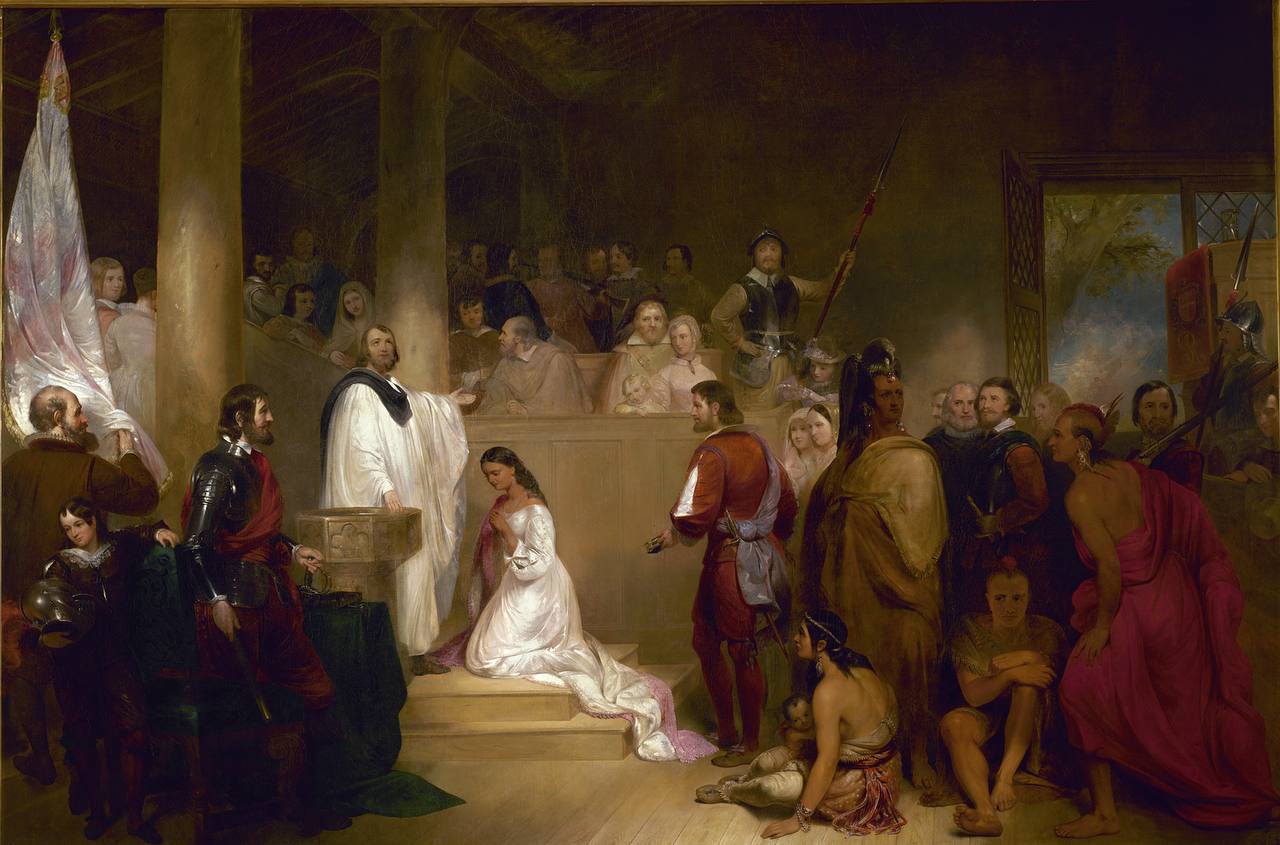
But what interests us is not the architecture of the Capitol but the painting behind the young people's backs. Before us is the scene of the baptism of Pocahontas.
John Gadsby Chapman depicts the Indian princess Pocahontas, literally "the little mischievous one", daughter of Powhatan, chief of the Virginia tribe of the Powhatan, dressed in white and receiving baptism from the Anglican priest Alexander Whitaker at Jamestown, Virginia. The event took place in 1613 or 1614.
Pocahontas is known for the story of how she saved from execution the colonist Captain John Smith, who had been taken captive by her tribe; he was afterwards received under the chief's protection, while the girl in time learned English and began to negotiate with the English on behalf of her tribe.
Pocahontas appears kneeling, surrounded by members of her family and by colonists. Her brother Nantequaus turns away, unwilling to witness what is taking place. The baptism of Pocahontas took place before her marriage to the Englishman John Rolfe, who stands behind her.
Their union is considered the first official marriage between a European and a Native American.
From Thomas, the son of Pocahontas and John Rolfe, descend a number of famous figures of American history, among them the mathematician Percival Lowell, Edith, wife of President Woodrow Wilson, Nancy, wife of President Ronald Reagan, and the actor Edward Norton.