Why do libraries need rare book departments, and why must they have a special regime of access?
The answer is very simple: the preservation of holdings.
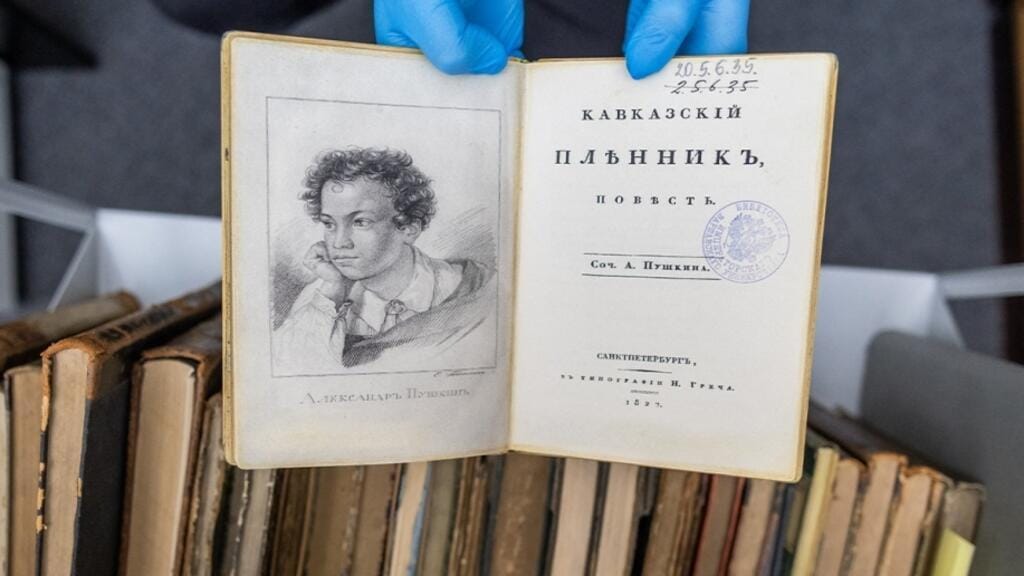
Between 2022 and 2023, a number of European countries recorded cases of rare antiquarian editions disappearing from public and university libraries. Among the lost copies are first editions published in the lifetimes of Pushkin, Gogol, Lermontov, Shevchenko, Kruchenykh and other authors of the nineteenth and twentieth centuries.
According to investigations in Estonia, Latvia, Lithuania, Poland and other countries, unknown persons ordered books under false names and used forgeries to substitute for the originals. In some cases books were simply carried out without any replacement.
In the course of investigations in several countries, citizens of Georgia were detained who admitted that they had been commissioned to find books and take them abroad.
Some of the stolen copies were subsequently discovered at Moscow auctions. The sellers claimed that the books had been acquired lawfully, and explained the presence of library stamps as «historical traces» that do not testify to an unlawful provenance. However, staff of the European libraries were able to identify a number of the books by their distinctive marks and defects.
By the libraries' estimates, the total damage runs to hundreds of thousands of euros. The heaviest losses were suffered by the libraries of Tartu, Riga, Warsaw and Vilnius.
Among the causes of what happened, observers point to changes in library regulations: whereas nineteenth-century editions were formerly issued in a separate reading room under heightened supervision, the rules were later relaxed, in the name of making the holdings more accessible and attracting a larger number of readers.