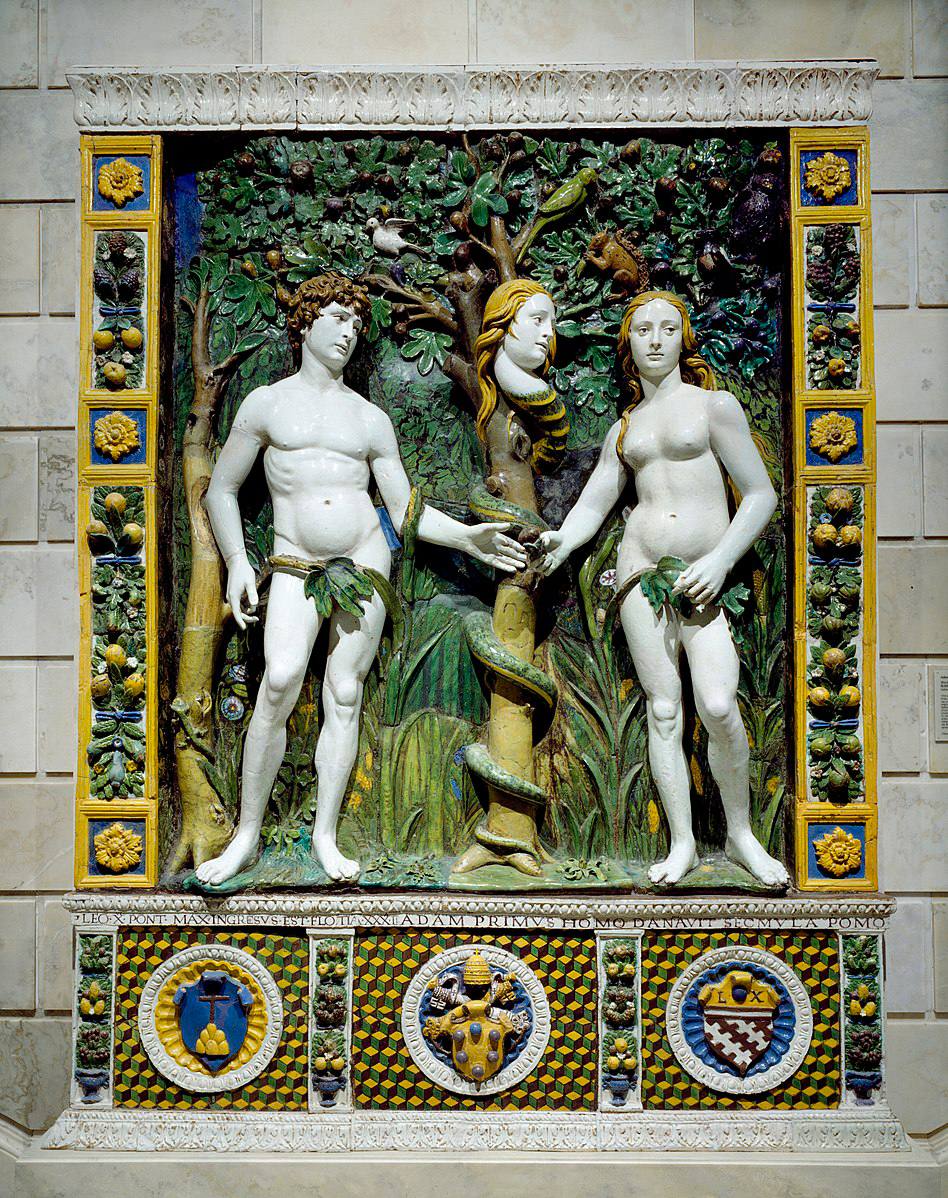
Della Robbia relief of Adam and Eve, made in Florence in 1515
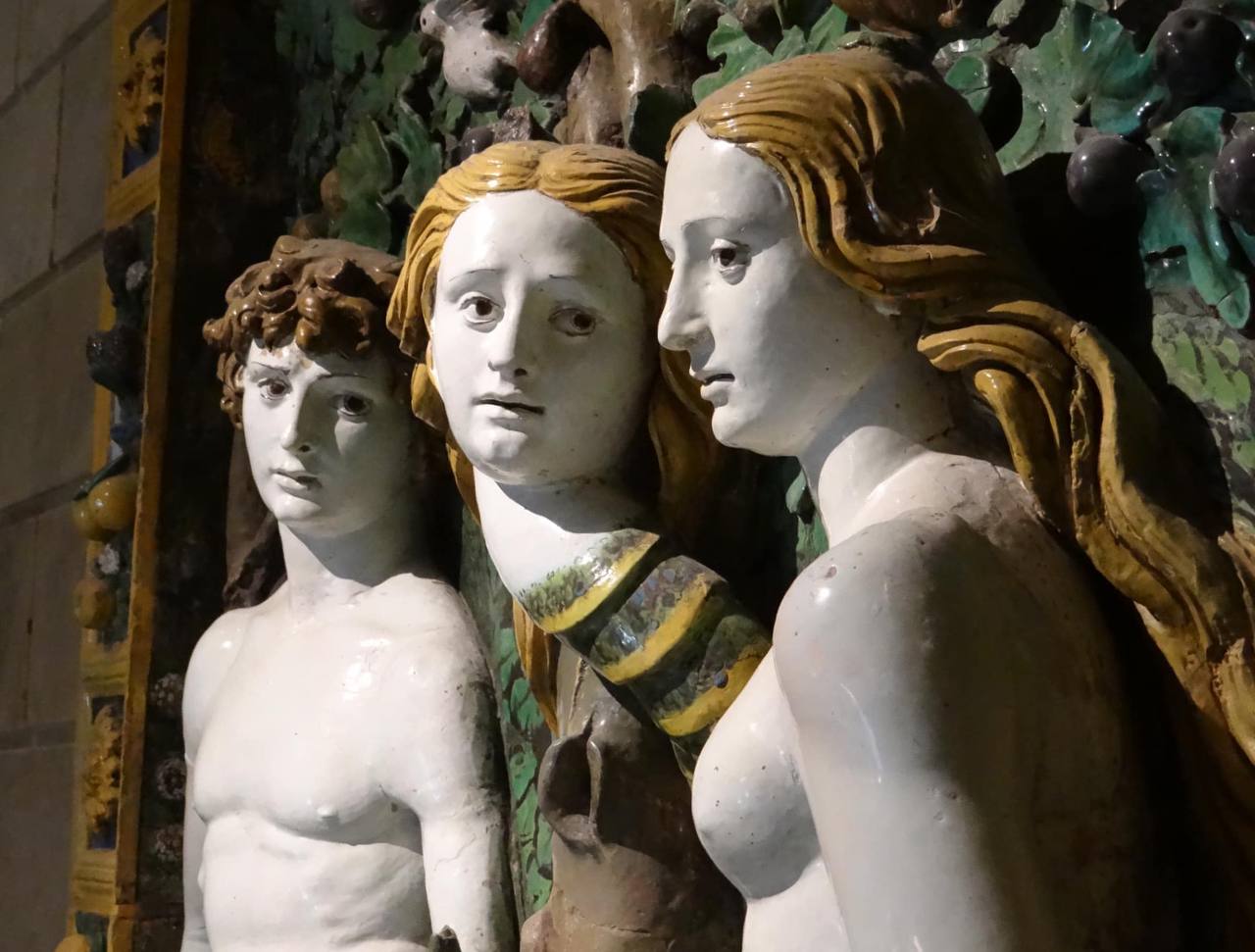
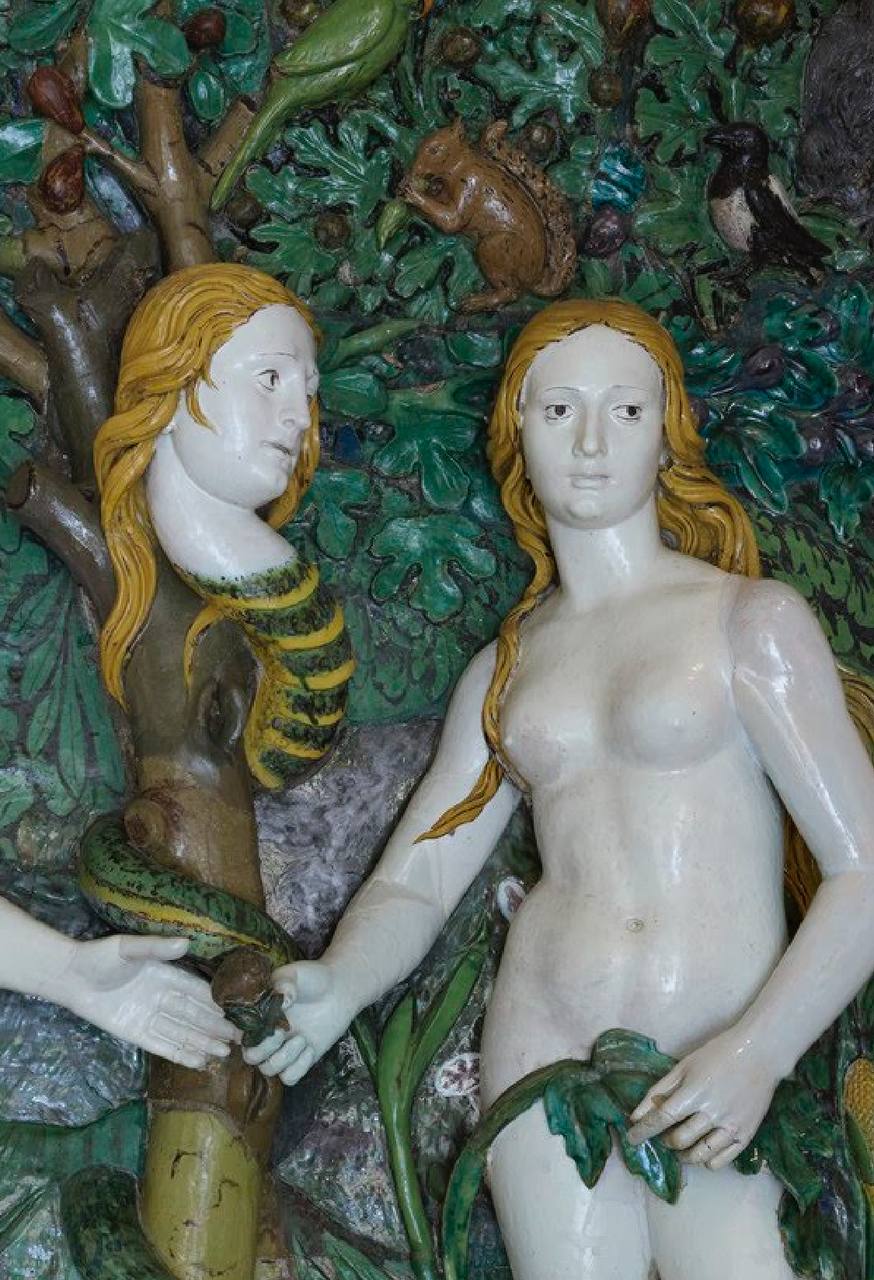
On first seeing Giovanni della Robbia's Adam and Eve, I was much amused to find that the serpent-tempter has, quite literally, Eve's face.
This polychrome relief in glazed terracotta, illustrating the biblical parable of Adam and Eve, was made in Florence in 1515. Its details tell us how the story of original sin was interpreted in the culture of the Italian Renaissance. The dove is the eye of the Lord, Adam is the forefather, Eve the foremother. And then the most interesting part begins.
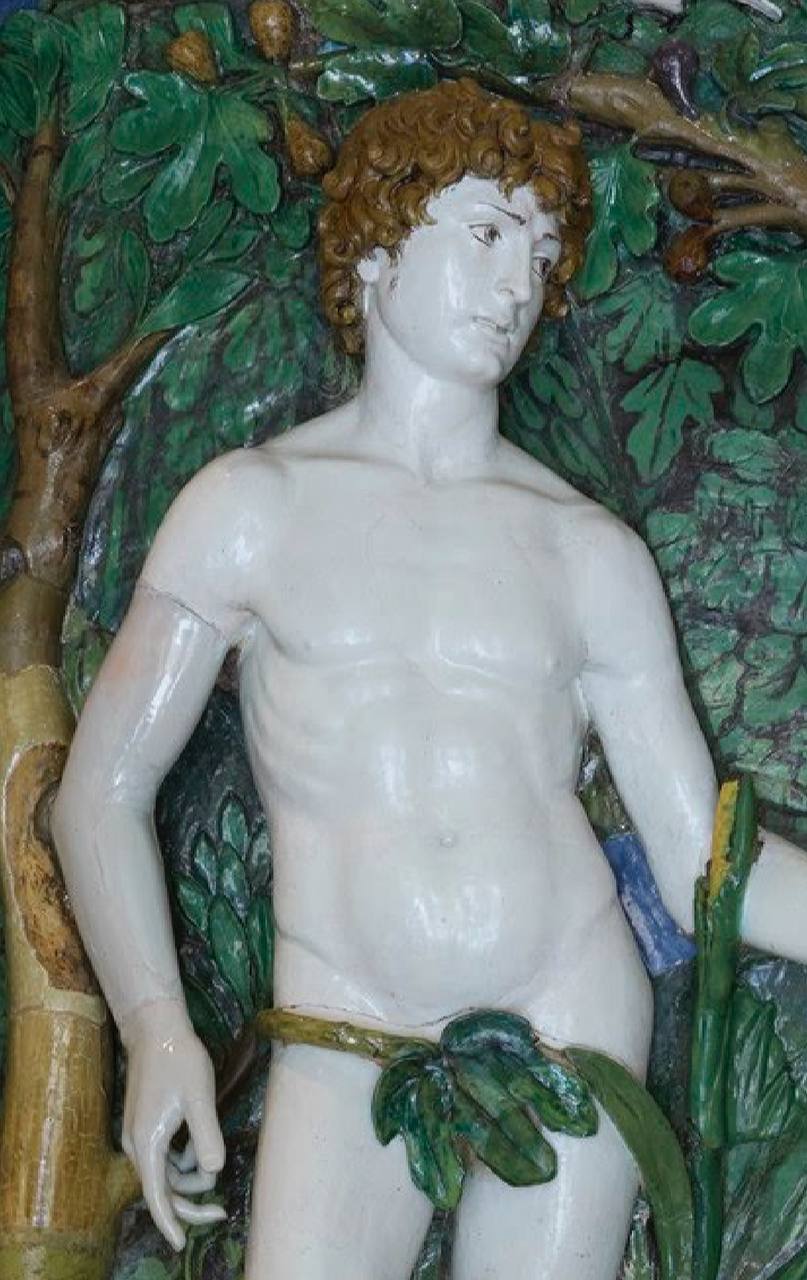
The Garden of Eden is usually associated with a place free of sin, but Della Robbia plainly indicates that in the moment he has captured the sin has already been committed. How do we know, in this blissful place filled with birds of paradise, that Adam and Eve have already tasted the apple from the tree of knowledge? Both were naked, but now they know of their nakedness and have therefore covered it modestly. They have already sinned, but have not yet been cast out of the Garden of Eden.
That Eve was created from Adam's rib is indicated by the fact that he is missing one rib. Look closely: on Adam's right one can see three little bumps of the ribs, while on the left there are only two.
The serpent, symbolising sinfulness, guile and deceit, is depicted quite literally with Eve's face, and, for the slowest of wits, is turned towards her, creating the effect of a mirror image. Need we explain who, in the family history of Adam and Eve, turned out in Della Robbia's view to be the biggest and fattest serpent of them all?