A colossal new study changes our picture of how power was organised among the Scythians
According to a collective paper recently published in Science Advances, high status among the early nomads of Eurasia was inherited along family lines rather than won anew by each generation.
The researchers analysed whole-genome data from the remains of 85 Iron Age individuals from across the Scythian-Siberian world, from the Altai to the Black Sea region. Of these, 38 were elite burials and 47 non-elite, and 46 of the genomes were sequenced for the first time. The span runs from 900 to 200 BC.
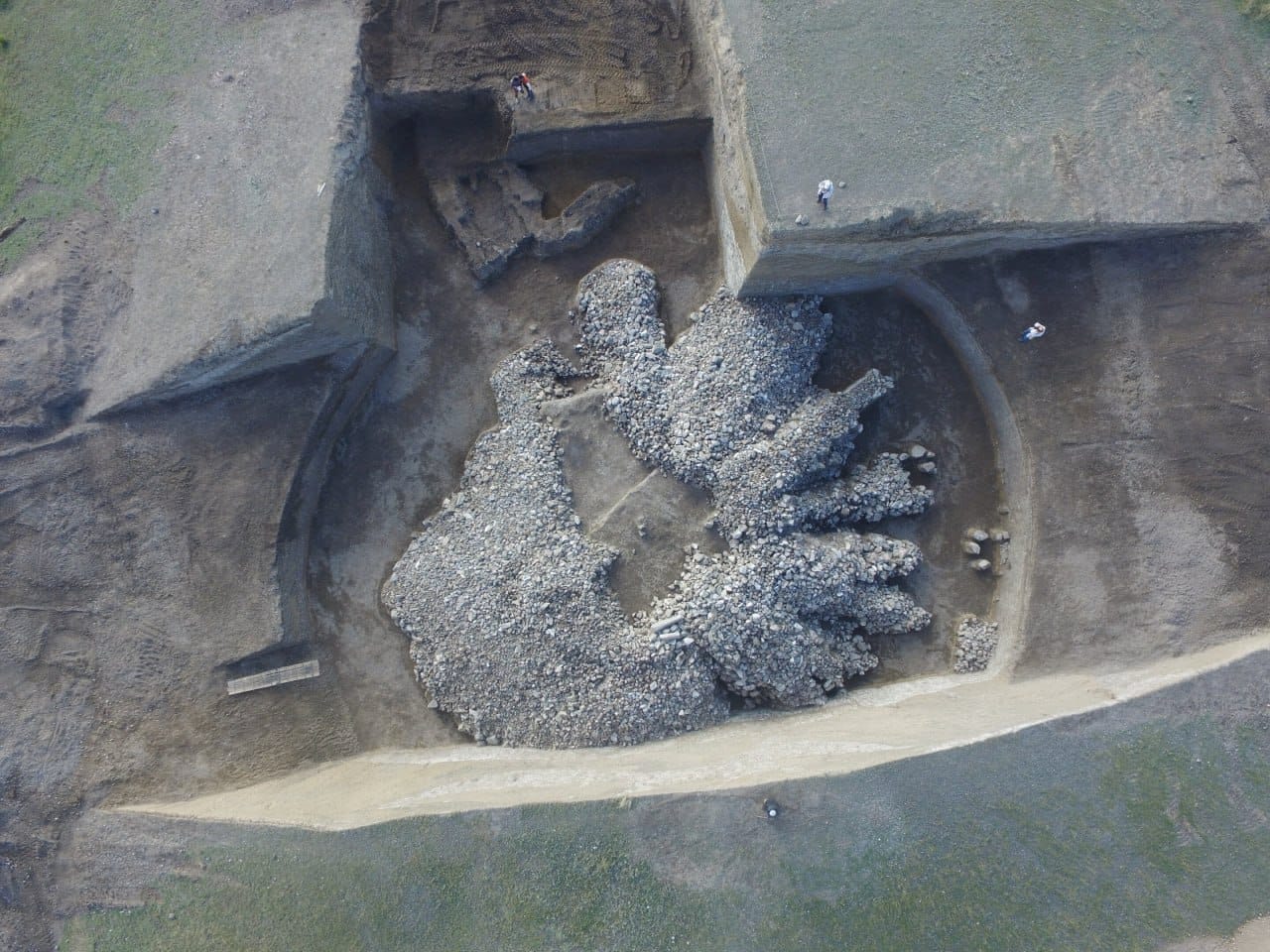
It must be made clear at once how an elite burial was defined. A high-status burial meets quite specific criteria: a kurgan more than a metre and a half to two metres high, a considerable quantity of gold artefacts, valuables and other objects inside, horses in the grave, and a dromos, an entrance corridor, leading to the burial chamber. Separately, it may be noted that the skulls of the nobility can bear traces of trepanation, a marker of access to elite medicine.
The study concluded that elite individuals from different kurgans, and even from different burial grounds, proved more closely related genetically to one another than to their “non-elite” neighbours within the same burial complex. In other words, status and membership of the elite were determined by a network of blood kinship spread across a vast expanse of steppe, and not by ties to the local community. Kinship, incidentally, was calculated not from crude coincidences of markers but by means of the statistical apparatus usually employed to describe social networks.
What is especially impressive, moreover, is that the genome of the “Golden Man” from the Issyk kurgans near Almaty has been read for the first time. He is one of the most famous archaeological symbols of Kazakhstan and one of the most striking emblems of the whole of ancient Kazakh history. The burial dates to 400 to 300 BC; the wooden chamber held more than 4,000 gold items, weapons, and a pointed headdress embroidered with gold, which eventually became the visual emblem of the modern Kazakh republic. According to the new data, the occupant of this high-status grave was indeed male and belonged, by origin, to the Saka. Both facts had been disputed from time to time; now one of the defining symbols of Kazakh statehood has a firm genetic foundation.
Among other curious observations: a pair of burials from the elite kurgans turned out to be a grandfather and his one-year-old grandson. The infant was interred with honours of rank he had had no time to earn, which leads to the conclusion that in Scythian thinking status was, after all, innate. A single child buried with high honours has demolished the convenient picture of the Scythians as a meritocracy of steppe warriors, as they are sometimes portrayed. A one-year-old could hardly have distinguished himself in the hunt or on campaign, and so was revered by the mere fact of having been born into the right family.
Women lie in almost half of the high-status burials, so it was not only men who bore status and the right to equal honours after death. Nor was any clear link found between the elite and patrilocality or matrilocality; that is, the Scythian upper crust had no rigid scheme of “the wife goes to the husband's clan” or the reverse, and the arrangement of marriage ties was more complex.
The paper naturally has many co-authors from Kazakhstan itself, researchers of the Centre for Palaeogenetics and Ethnogenomics and the Laboratory of Molecular Genetics at the Almaty Institute of Genetics and Physiology. I heartily congratulate the whole team on such a serious scientific result. But what pleased and surprised me most was to find among the authors a girl from the parallel class at school, with whom I danced at our graduation ball.