The death of John Kipling in 1915 and his father Rudyard Kipling's poem of 1916
A medical board refused 16-year-old John Kipling conscription for the front in the First World War because of short-sightedness. The youth was burning to serve, as earlier he had dreamed of entering a military school. His influential father, by then the world-famous writer Rudyard Kipling, used his connections and appealed to Lord Roberts, a comrade-in-arms from the Anglo-Boer War, so that his sickly son might be enrolled in the Irish Guards and go off to fight after all. In his diary Kipling wrote: “Why should the son of our friends or neighbours die so that our own son may live?”
In the end John did not live. He fell in the summer of 1915, leading his men into an attack. His body could not be found, and he was listed as missing.
In Kipling’s letters there are lines saying that he had never been so happy as in the time when he knew that his son was asleep in the next room.
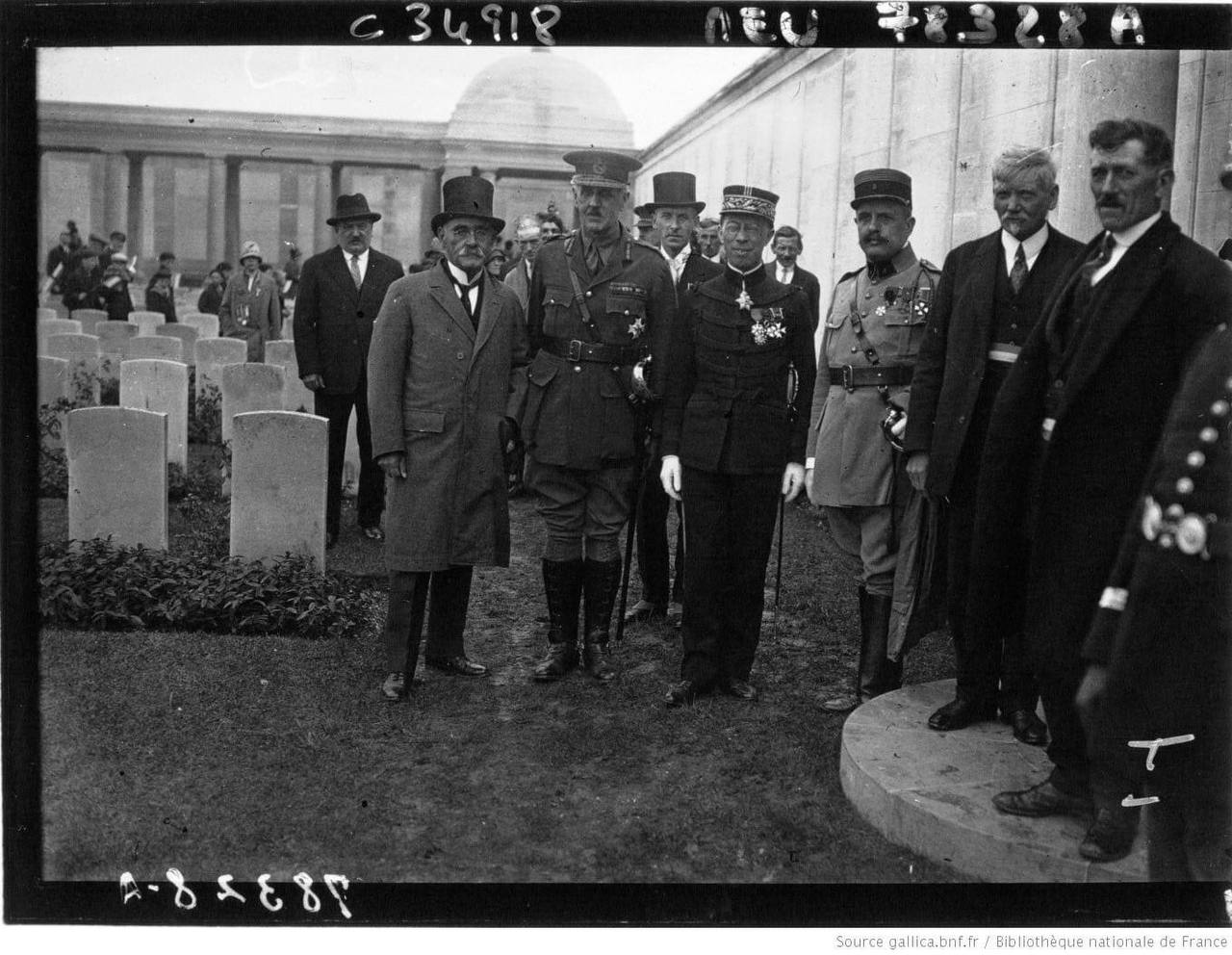
In the photograph from the opening of the memorial to those killed at the Battle of Loos, Kipling is the man at the far left of the front row, in a top hat. His son’s grave was identified only in 1992. Yet Kipling, who worked for the Red Cross and sat on the War Graves Commission, did in fact see his son’s grave without knowing it, for the stone bore the inscription: A Lieutenant of the Irish Guards.
In 1916 Rudyard Kipling wrote a poem, an epitaph, for his only son, killed in the war to which he himself had sent him.
“Has any news come of Jack, my son?”
“Not on this tide.”
“Will he return again to his father’s house?”
“Not with this fair wind, not on this tide.”
“And who can know anything of him?”
“Not on this tide.”
The sea does not give up its dead.
Not with this fair wind, not on this tide.
“O God, comfort me with something!”
“Not on this tide,
Nor on the next tide.
He was no coward: he did you honour.
Not with this fair wind, not on this tide.”
Hold your head high, father,
On this tide
And on the next tide.
You begot him and raised him for many years,
But you yourself sent him off with this fair wind, on this tide!
Literal translation