While building a new line of the Rome metro, archaeologists have discovered an ancient Roman laundry, a fullonica, in exceptional condition
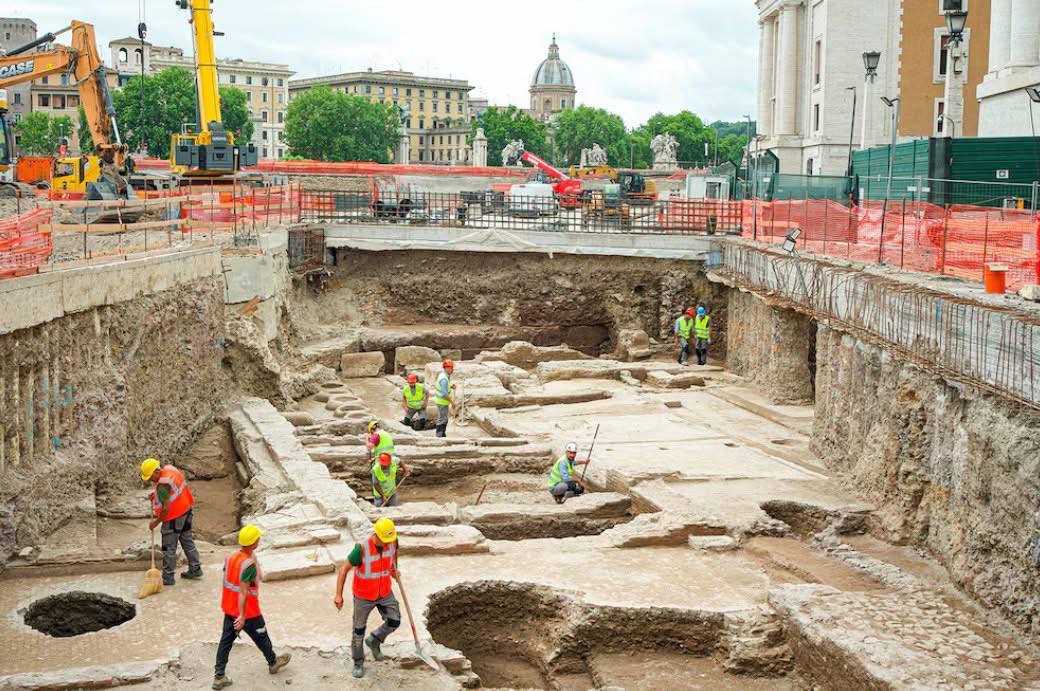
While building a new line of the Rome metro, archaeologists have discovered an ancient Roman laundry, a fullonica, in exceptional condition. The find was made not far from the Vatican, next to the recently excavated palace of the Emperor Caligula. The fullonica they have uncovered has preserved its buckets for washing, the places where clothes were trampled, and a complex system of hydraulic installations.
Fullers were rather respected people in ancient Rome, with their own guild and a decent material position. But since Rome did not know soap as we are accustomed to it, washing went about quite differently from ours. For washing, the fullonicae collected urine from all over the city; it was left to stand for two weeks and, thanks to the ammonia it contained, became the basis of the whole laundering process.
Of course, the Romans knew something like modern soap, the so-called Gallic remedy, a substance made from ash and fat, but it was used only for personal hygiene, while washing, and the fulling of cloth, was done with the help of urine, clay and running water. The soaked linen was trampled in the fuller's dance, then mixed with clay, beaten, rinsed, dried and bleached, and so round again, until the required degree of cleanliness had been reached.