Louis XV style cabinet by the Parisian cabinetmaker François Linke
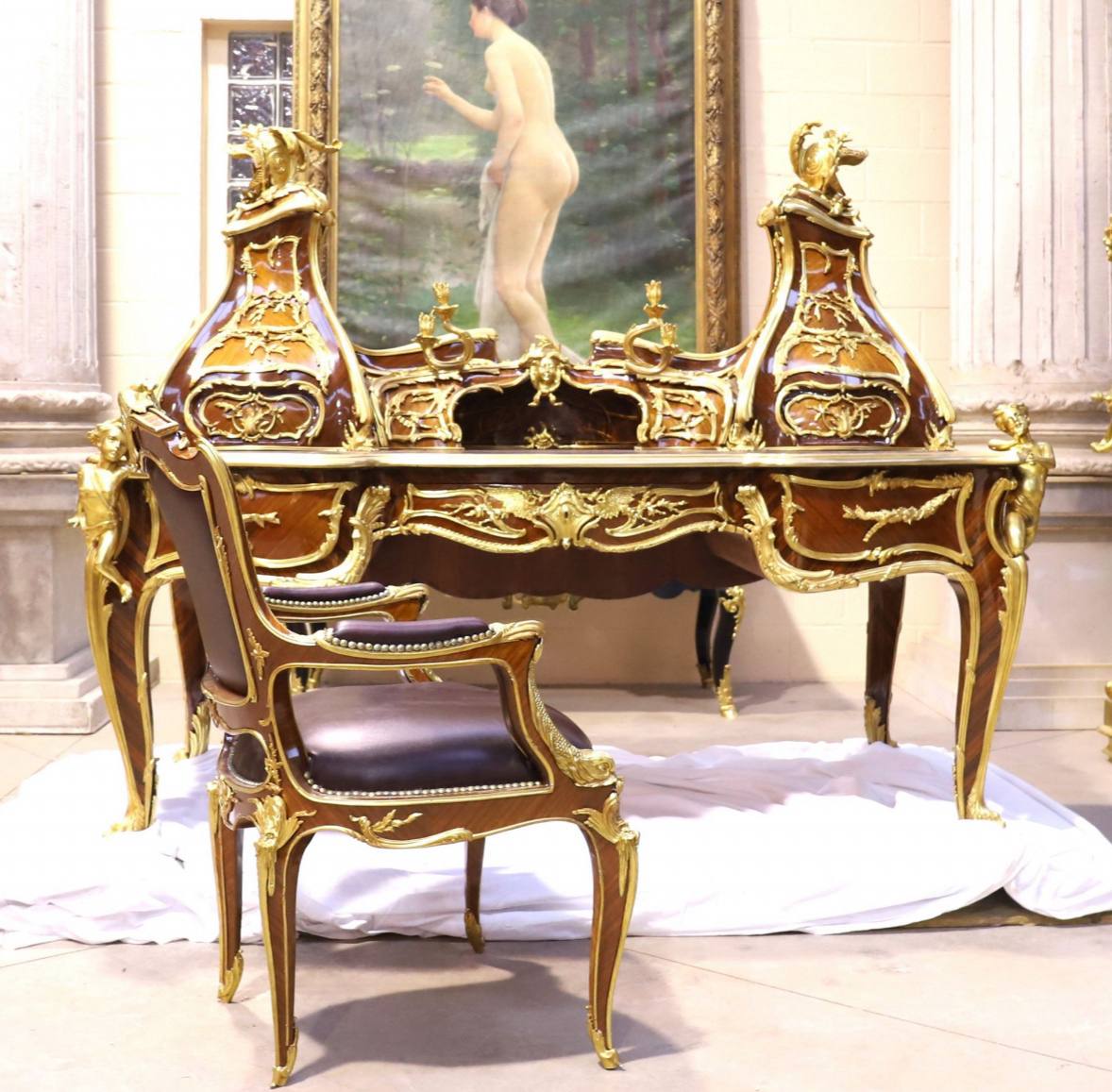
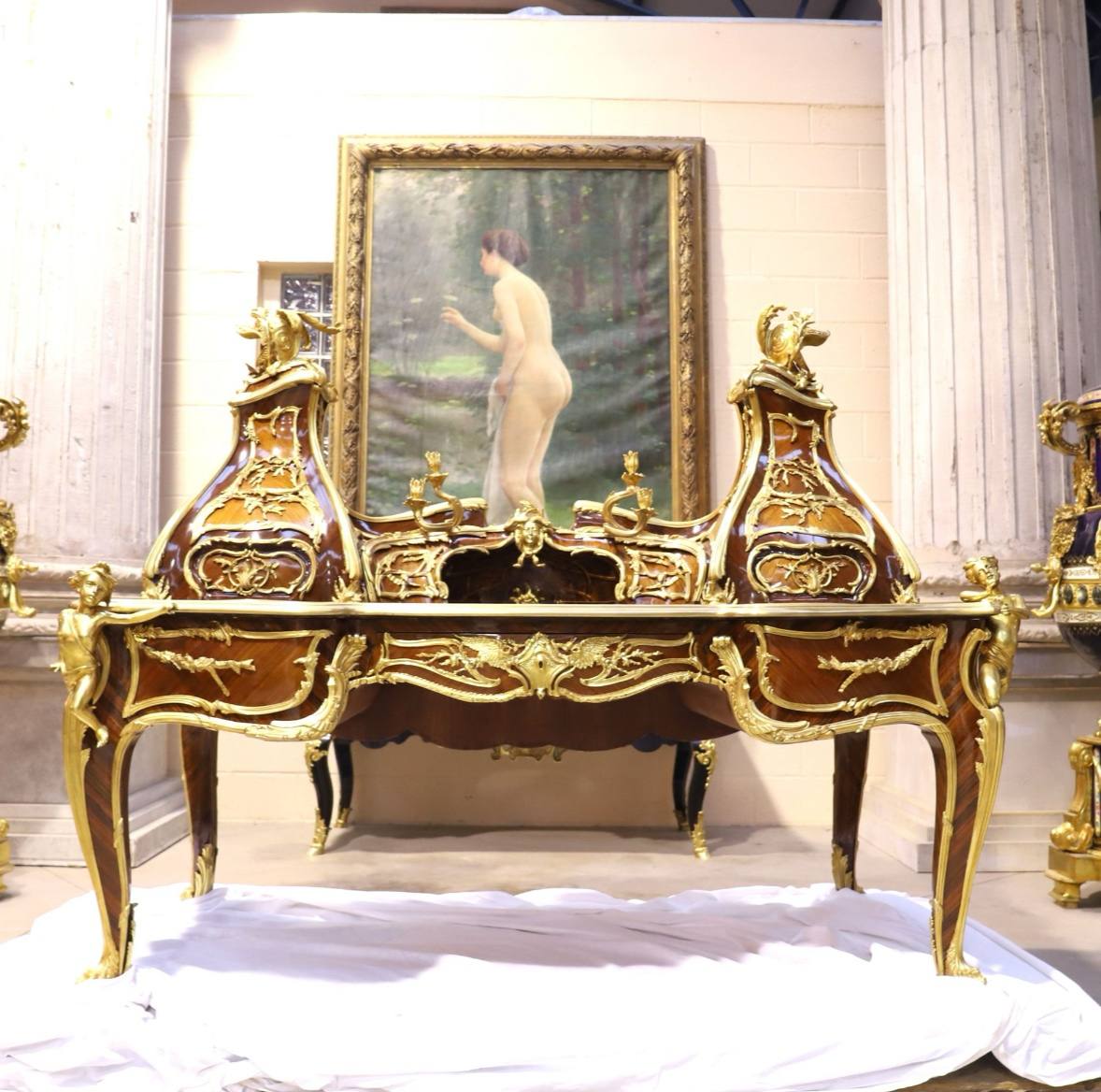
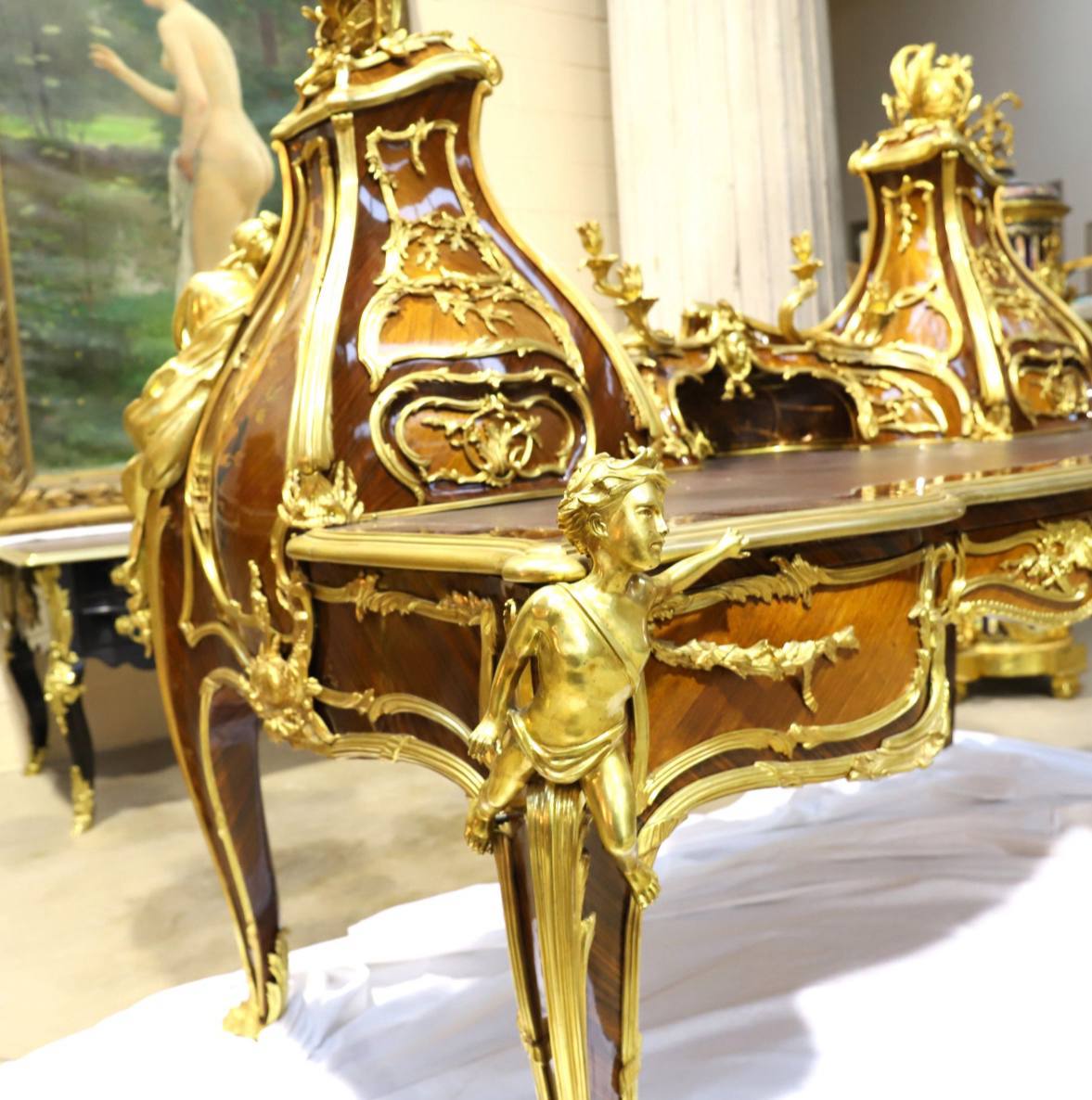
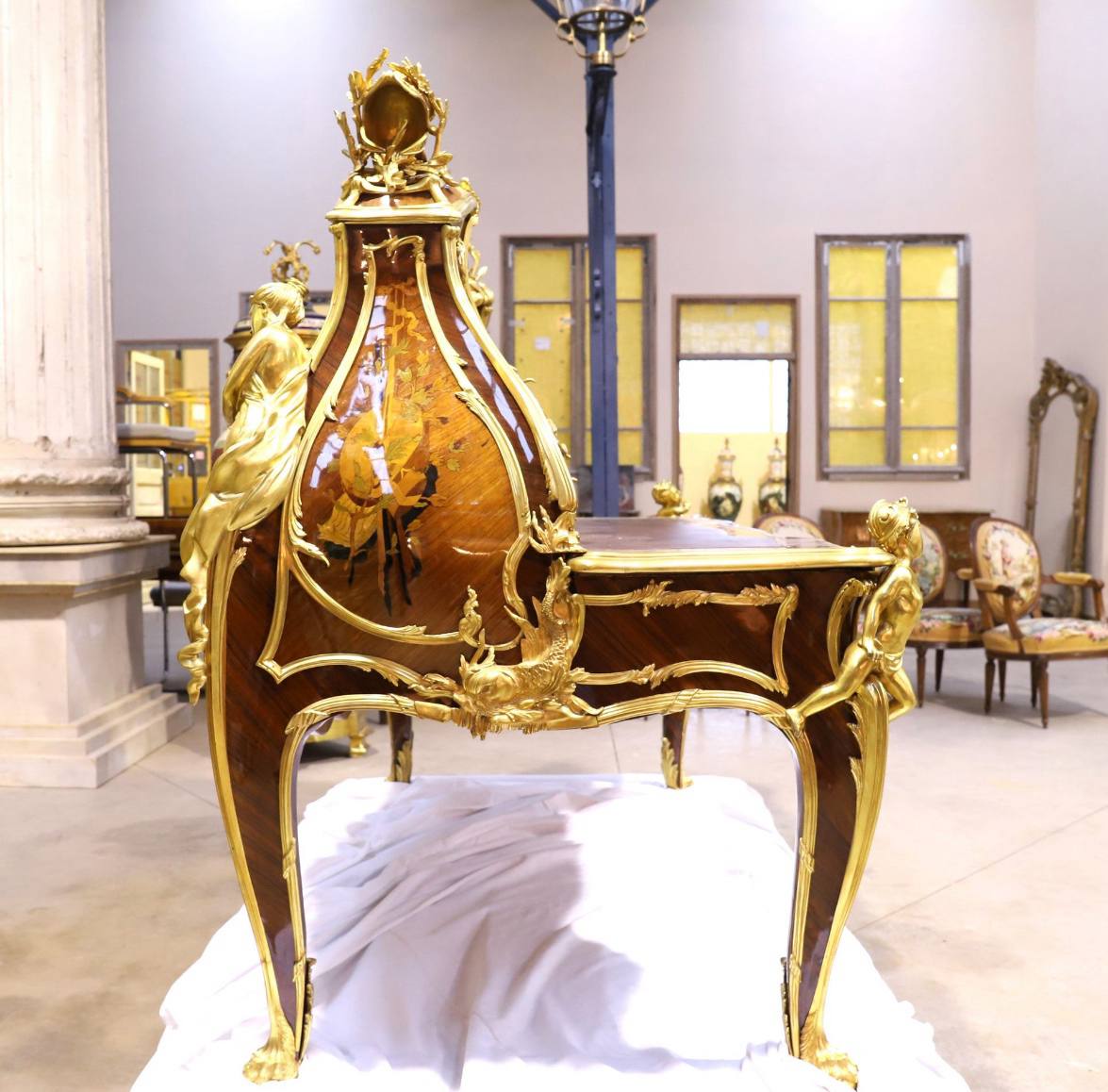
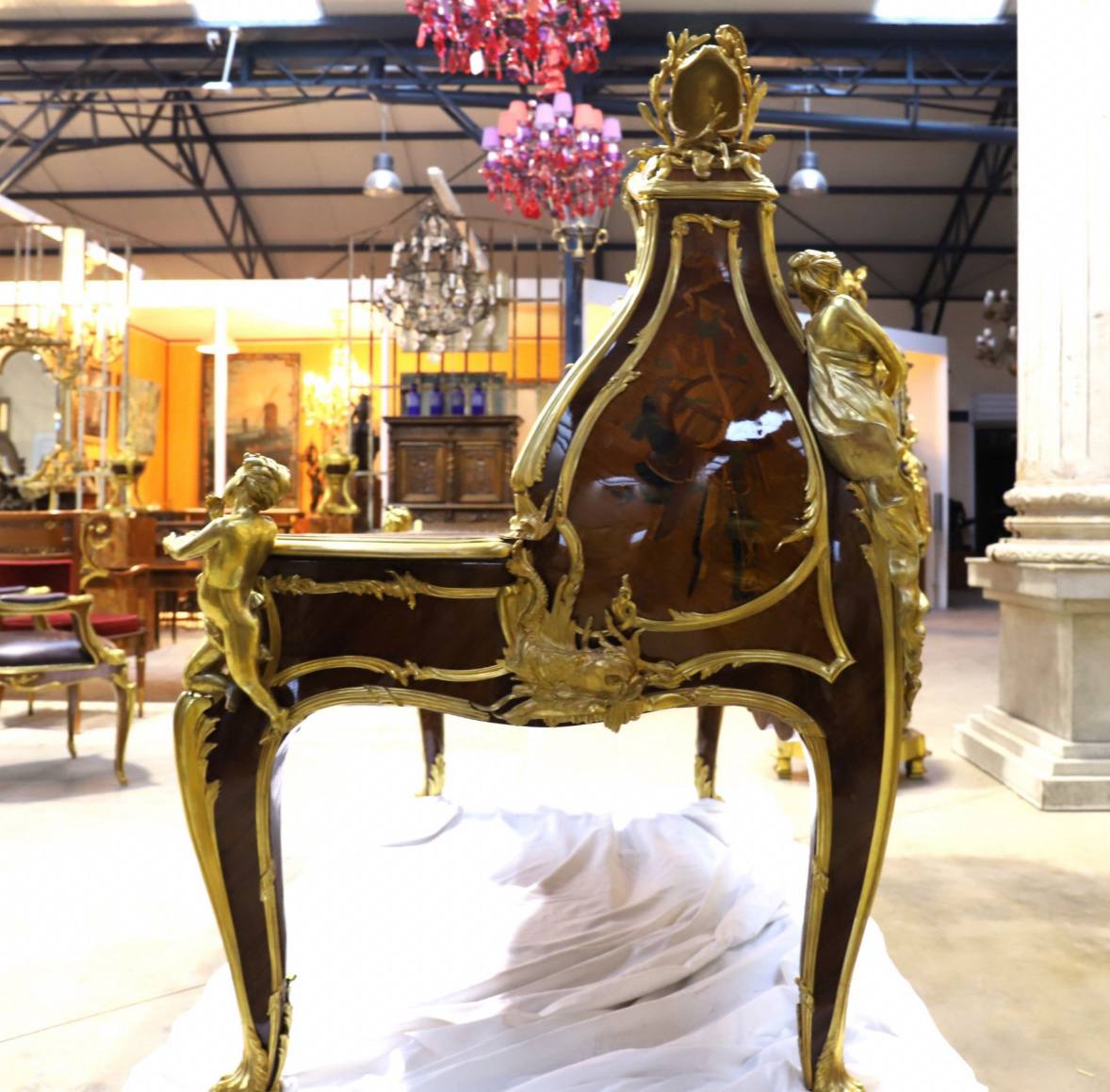
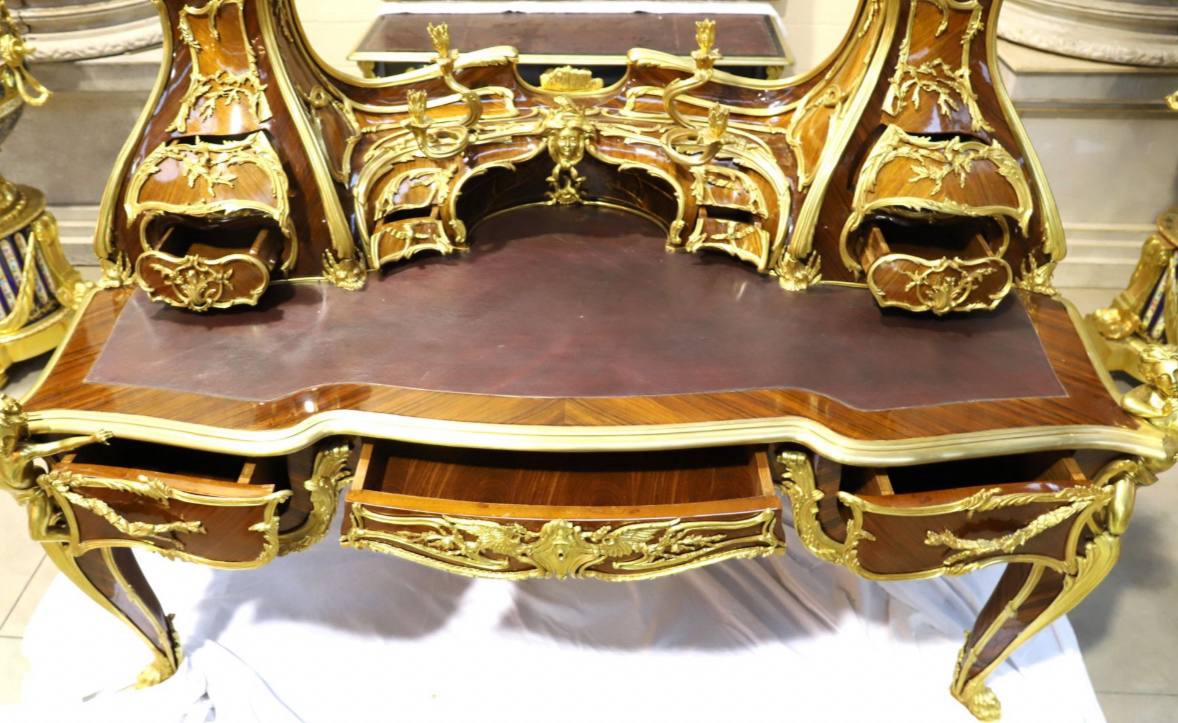
A magnificent desk in the style of Louis XV, not to be confused with Louis XIV. A model by François Linke (1855-1946).
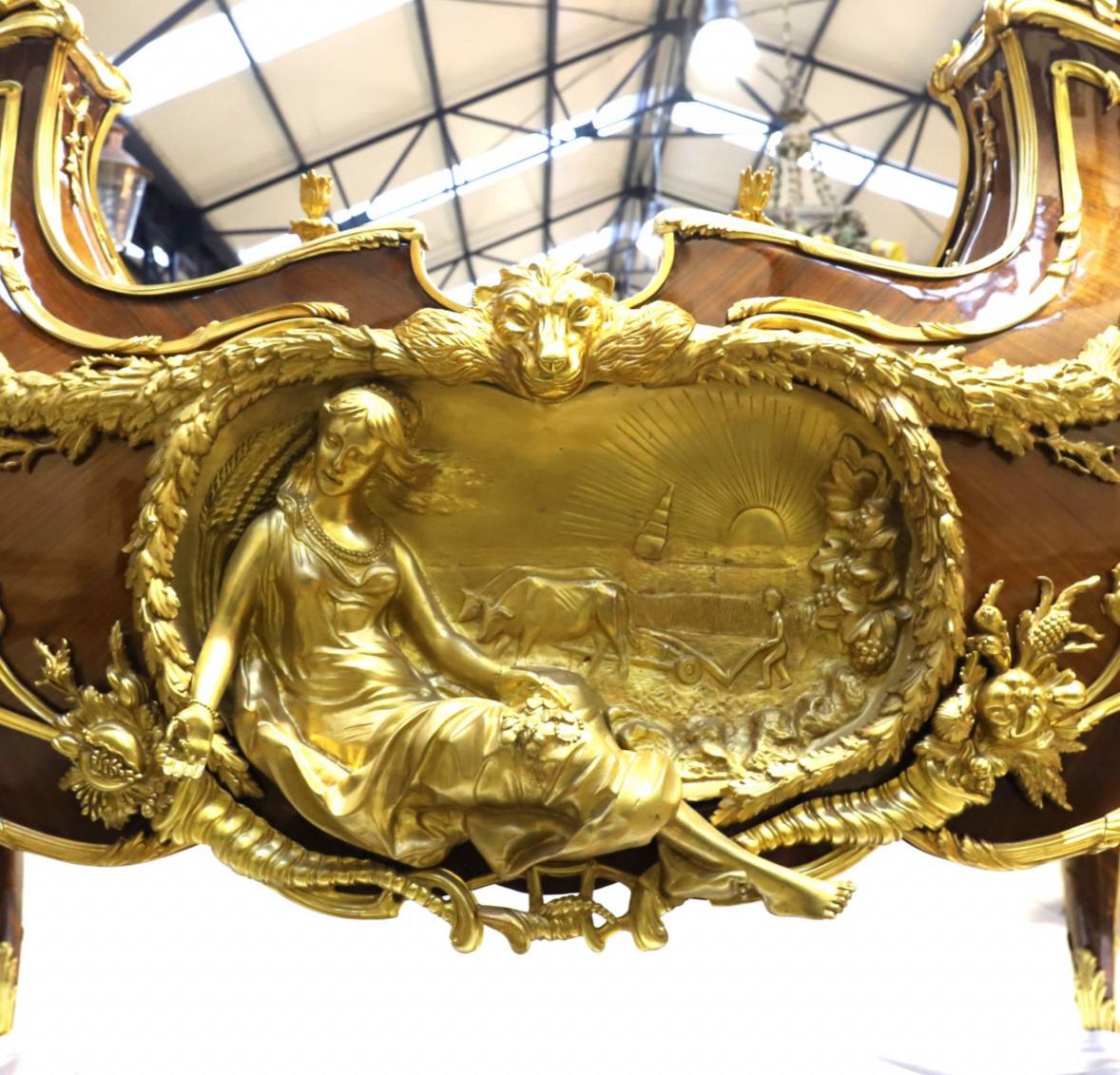
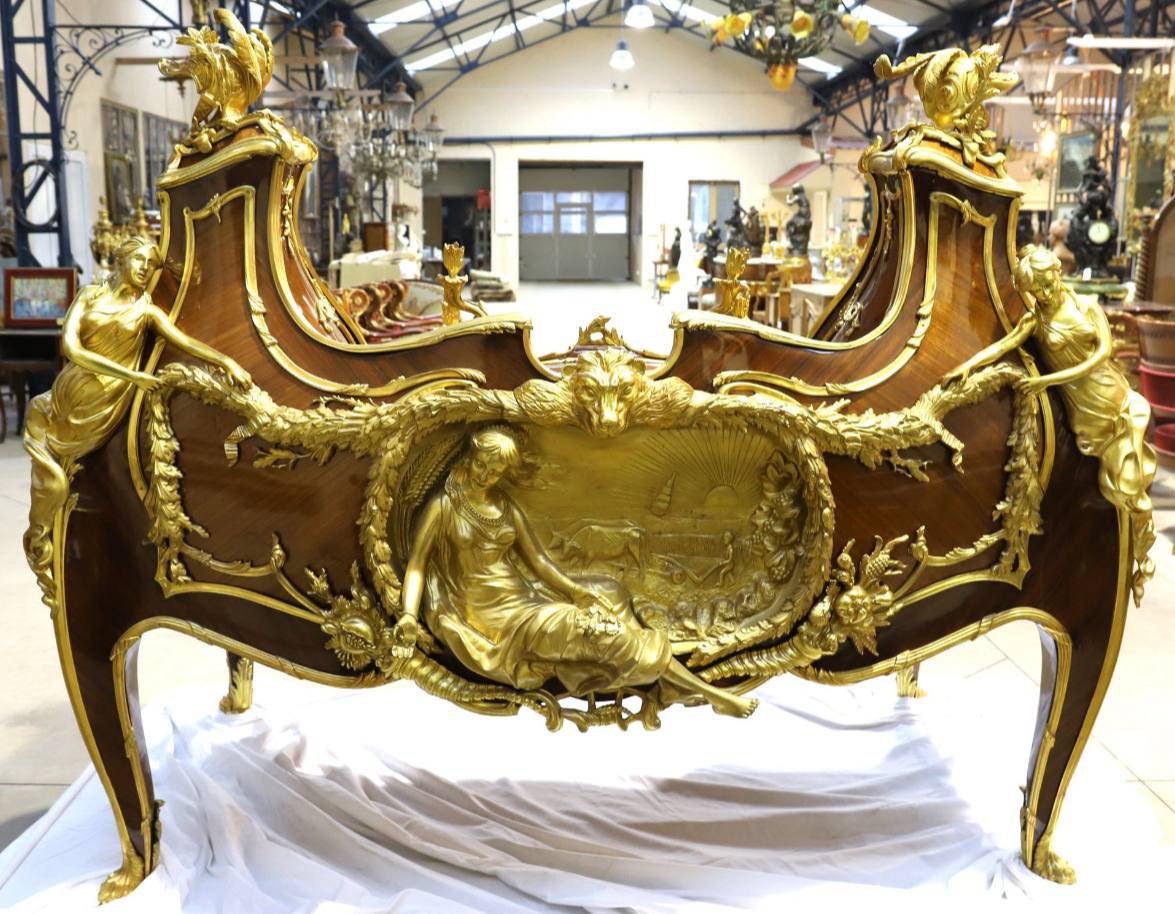
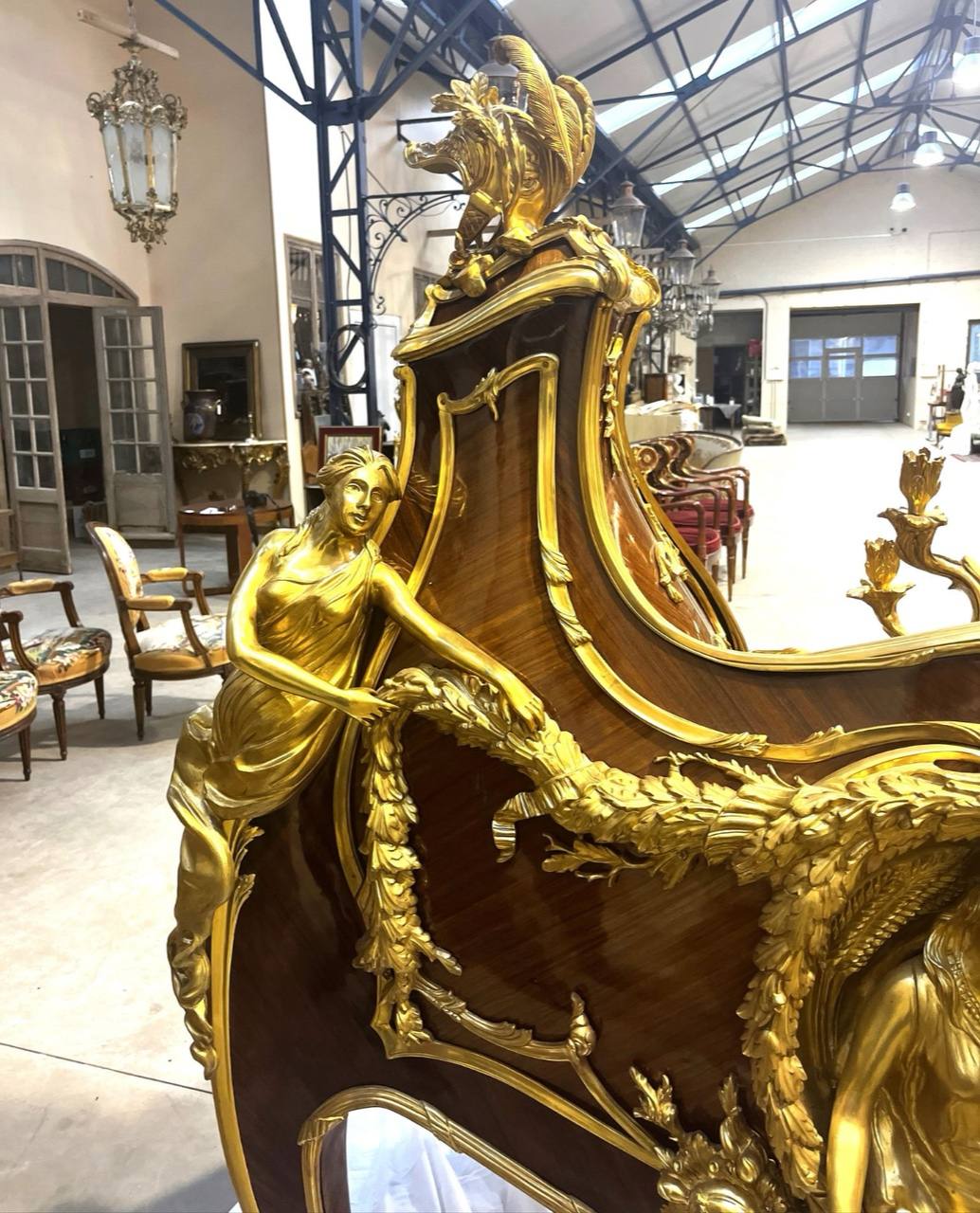
The desk is richly decorated with gilt bronze in the form of foliage, flowers and frames that pick out every line of the piece. On the front panel are a pair of angels at the corners; on the back of the desk is a massive oval relief personifying agriculture and trade, framed by an elongated female figure symbolising abundance. The arms of the chair rest on dolphins.
François Linke was, beyond doubt, the most distinguished Parisian cabinet-maker of his day. He began as an apprentice in his native town of Pankrác in Bohemia, arrived in Paris in 1875 and six years later set up his own workshop at 170 Faubourg Saint-Antoine. Around 1900 he stood at the head of a veritable guild of ninety workmen.
At first he worked for private clients and as a subcontractor to well-known furniture houses, and most of his "early" pieces were not only left unsigned, so as not to reveal to those houses' customers that the furniture had really come from an outside master, but sometimes even bear other people's stamps.
Yet long anonymity did not prevent Linke from winning, by 1900, a reputation as one of the foremost makers of high-quality furniture, when he took part in the Exposition Universelle in Paris, showing a number of outstanding works in the settings of furnished rooms, among them the Grand Bureau, for which he received a gold medal.
Like his contemporaries, such as Beurdeley and Dasson, Linke produced copies and pastiches inspired by the successive styles of the eighteenth century or by the most celebrated royal furniture, some of it reproduced exactly. Linke, however, blends the Louis XV style (Rococo) with Art Nouveau, which lends his works greater originality.
For many years he collaborated with the celebrated sculptor Léon Messagé. In 1904 he became an Officier de l'Instruction Publique and took part in the St. Louis exhibition in the United States. In 1905 he was appointed a member of the jury of the Liège exhibition, and in 1906 he received the Legion of Honour. At the height of his career he became purveyor to the wealthiest families, capitalists and aristocrats the world over, among them King Fuad I of Egypt, for whose residences he made more than 1200 items of furniture and objets.
The asking price is 50,000 euros. One should buy.