In the instruction issued by His Imperial Majesty to Alexander Rumyantsev by the College of Foreign Affairs before his departure for the Swedish embassy, there is an important clause on the conclusion of an armistice, that is, peace with Sweden
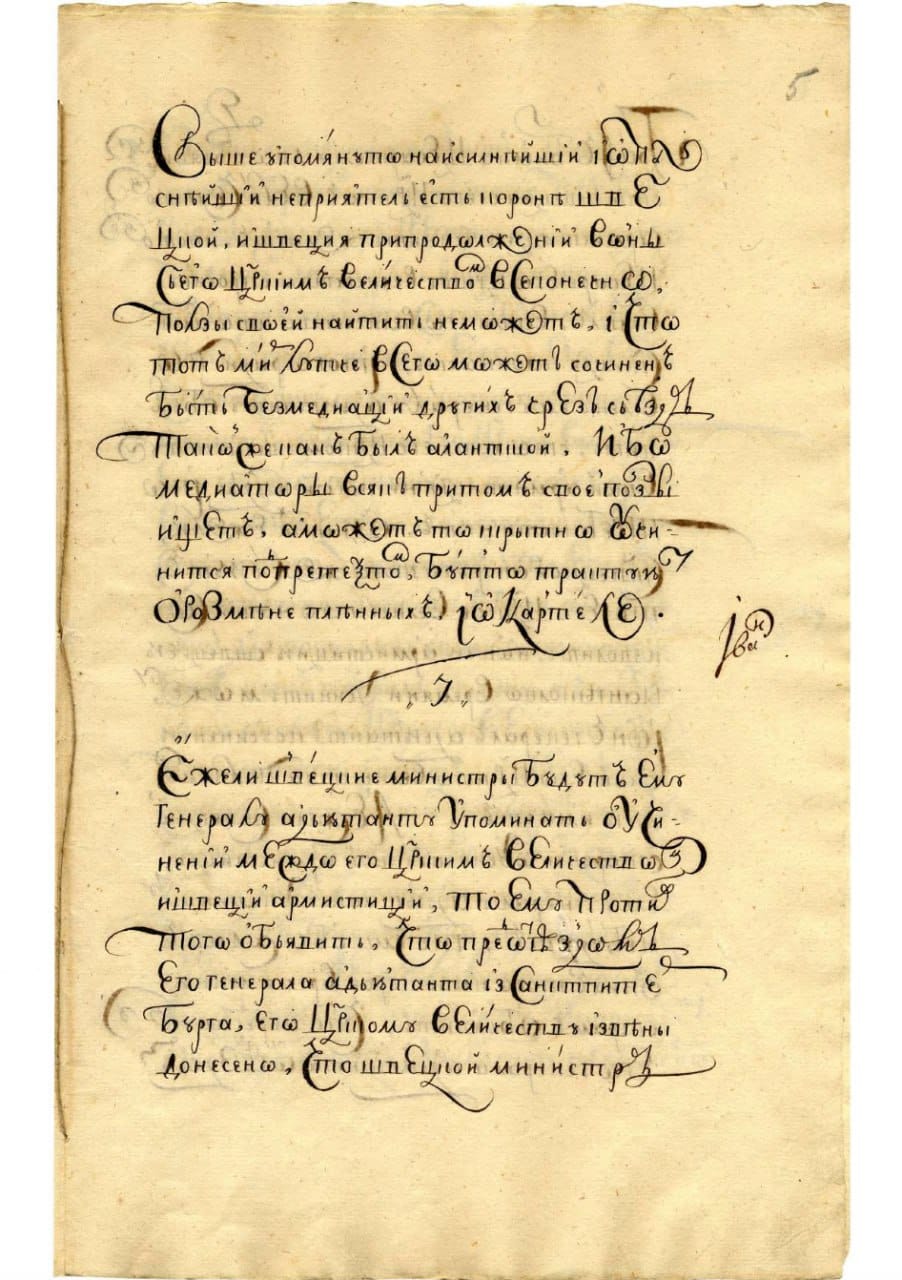
In the seventh clause Peter orders Rumyantsev to tell Frederick plainly of the reports known to him that the Swedish side wants a peace agreement, and to ask whether this is truly so, informing him that Peter has no need of a peace agreement, but that if Sweden wants one, His Tsarist Majesty is ready to conclude it. And indeed Rumyantsev conveyed the Tsar's will to the Swedish king word for word, and the latter really was seeking an opportunity to make peace, which would be achieved by the signing of the Treaty of Nystad a year later.
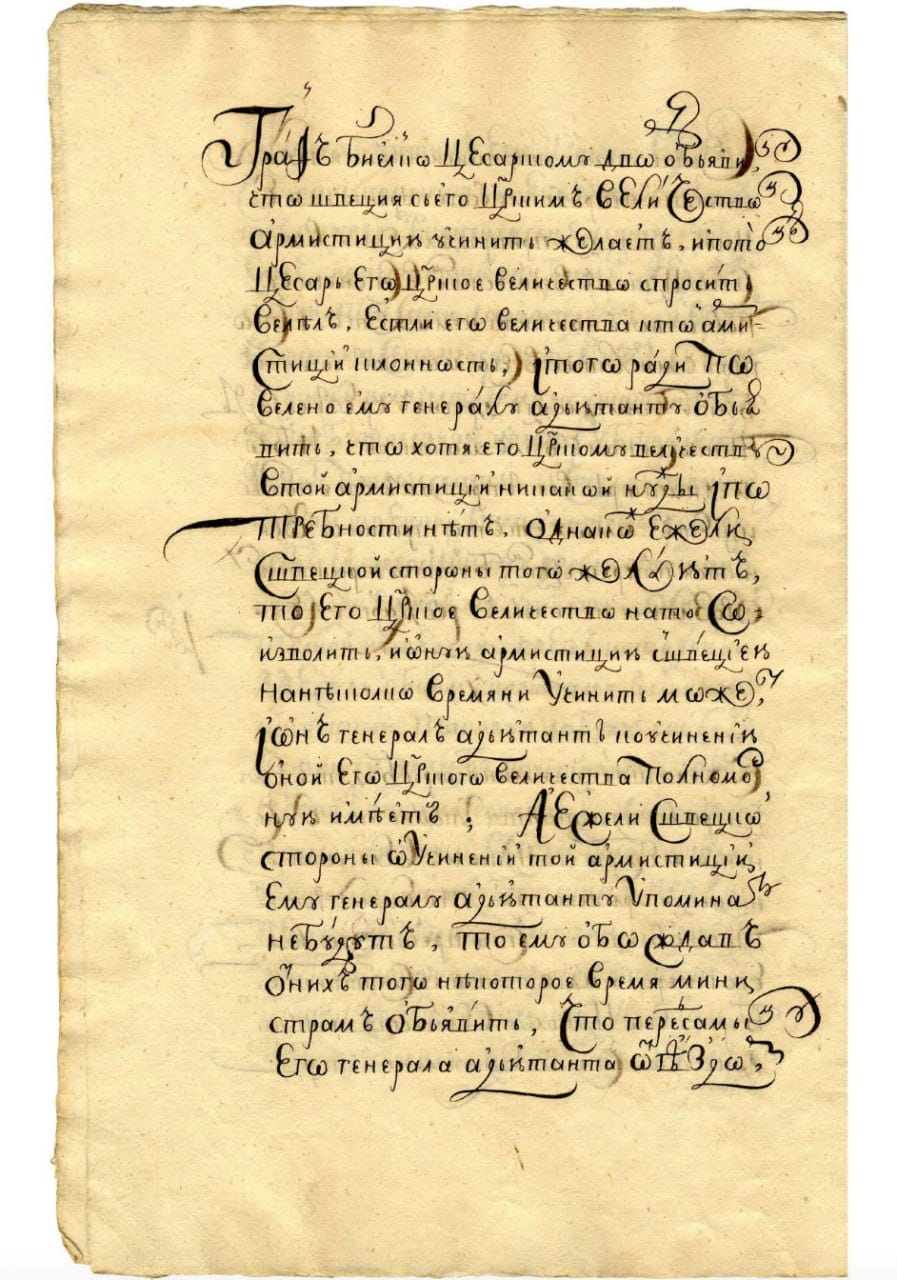
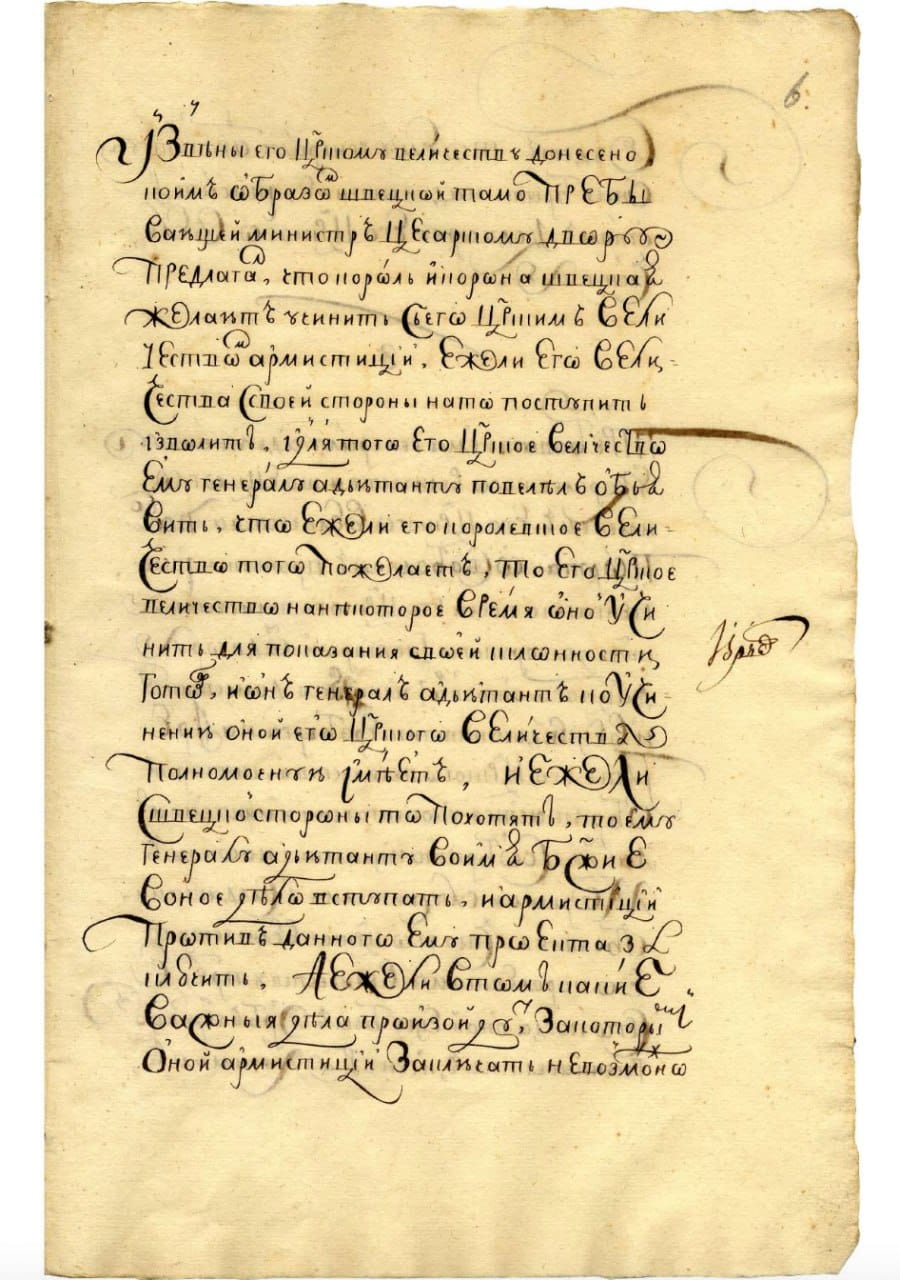
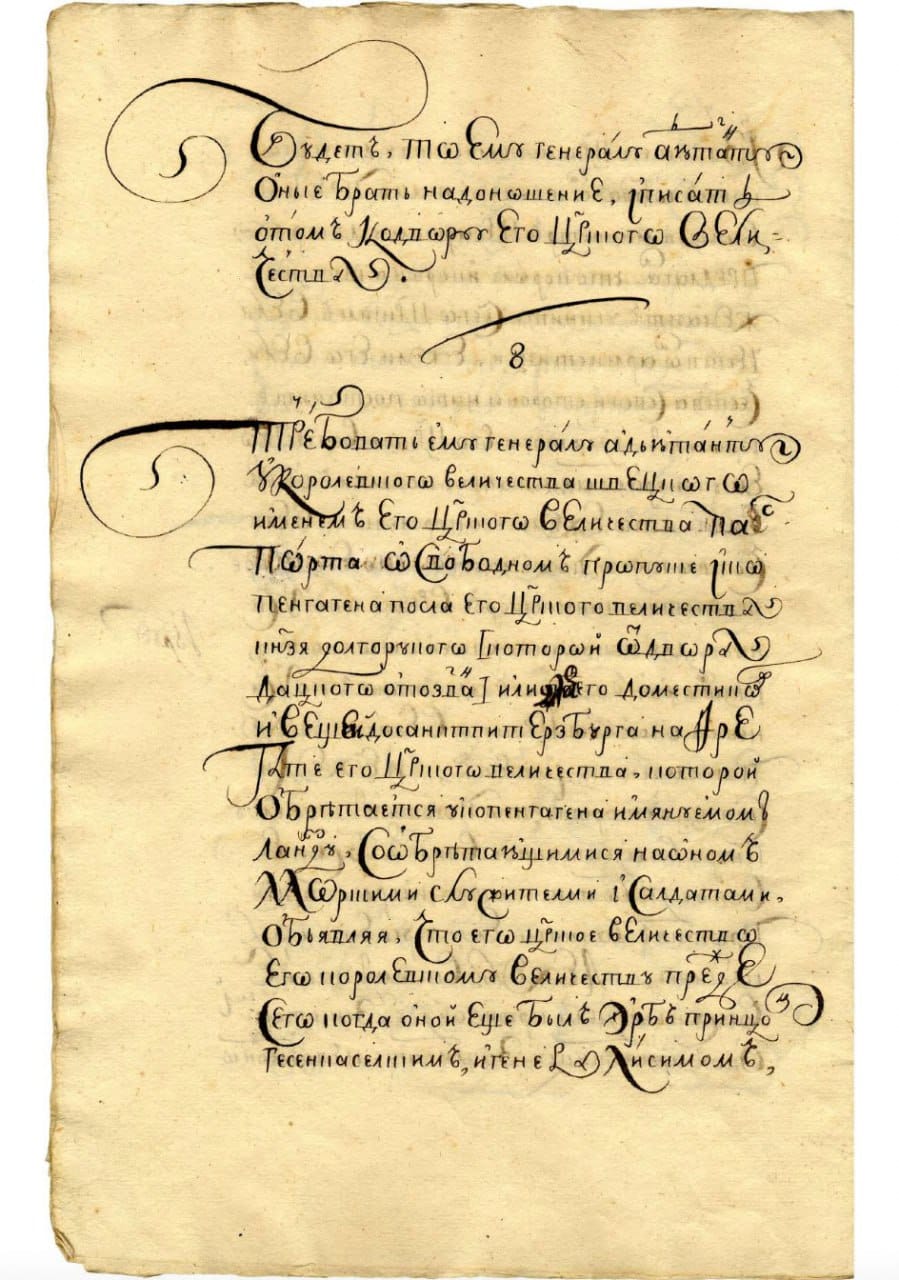
The instruction itself is most curious and conveys Peter's wit. I give the text from the copy of the document in the Archive of Ancient Acts; I do not know where the original signed by the Tsar is to be found.
"If the Swedish ministers should mention to him, the general-adjutant, the concluding of an armistice between His Tsarist Majesty and Sweden, he is to declare to them that before his, the general-adjutant's, departure from Saint Petersburg it was reported to His Tsarist Majesty from Vienna that the Swedish minister Count Bielke had declared to the imperial court that Sweden desires to conclude an armistice with His Tsarist Majesty. And therefore the Emperor commanded that His Tsarist Majesty be asked whether His Majesty has an inclination toward that armistice. And to that end he, the general-adjutant, is commanded to declare that although His Tsarist Majesty has no need nor necessity whatever of that armistice, nevertheless, if the Swedish side desires it, His Tsarist Majesty is pleased to consent to it and to conclude the said armistice with Sweden for some length of time. And he, the general-adjutant, may have full powers from His Tsarist Majesty for the concluding thereof. But if the Swedish side should not mention to him, the general-adjutant, the concluding of that armistice, then he is to wait, and after some time declare to the ministers that just before his, the general-adjutant's, departure from Vienna it was reported to His Tsarist Majesty in what manner the Swedish minister residing there had proposed to the imperial court that the King and Crown of Sweden desire to conclude an armistice with His Tsarist Majesty, if His Majesty on his side should deign to proceed thereto. And to this end His Tsarist Majesty has commanded him, the general-adjutant, to declare that if His Royal Majesty should so wish, His Tsarist Majesty is ready to conclude the same for some time, in token of his inclination. And he, the general-adjutant, has full powers from His Tsarist Majesty for the concluding thereof. And if the Swedish side should desire it, then he, the general-adjutant, is in God's name to enter upon that business and to conclude the armistice according to the draft given to him. But if any matters of moment should arise on account of which the said armistice cannot be concluded, then he, the general-adjutant, is to take them under advisement and write of them to the court of His Tsarist Majesty."