Henry V, the settlement with Welsh rebels, the execution of Oldcastle and the siege of Rouen
In Shakespeare's lines Henry V appears as the warlike Harry; historians describe him as given to aggression, cunning and duplicity.
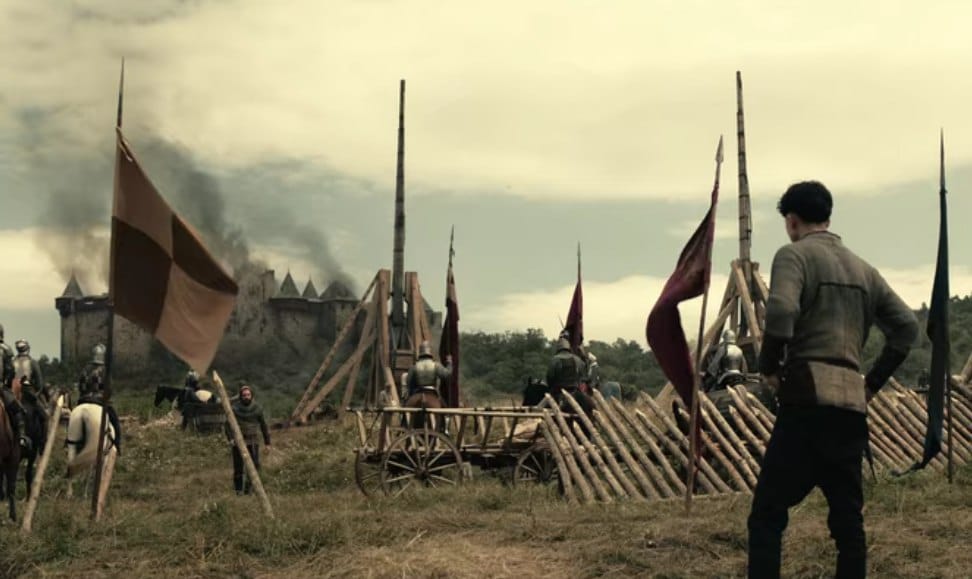
Where the new king did manage to lower the level of his father's ferocity was in the matter of the Welsh rebels, who had risen against the usurper Henry IV, the man who had stolen the crown from his cousin Richard II. Yet the amicable settlement with the Welsh rebels was more than offset by the bloody reprisal against the Lollard protests led by John Oldcastle: he was simply put on a stake. Oldcastle was in fact the prototype of the jolly bearded companion of the young Harry, Shakespeare's Falstaff, who also appears, for instance, in the film by Joel Edgerton.
In the six-month siege of Rouen, which is not articulated in the film, Henry V starved thirty-five thousand townspeople. And when, in keeping with military custom, it was permitted in winter to drive out the dependants and the infirm from the city, Henry barred the way to children, pregnant women, the crippled and the aged, and left them to die of cold in the fortress ditch.