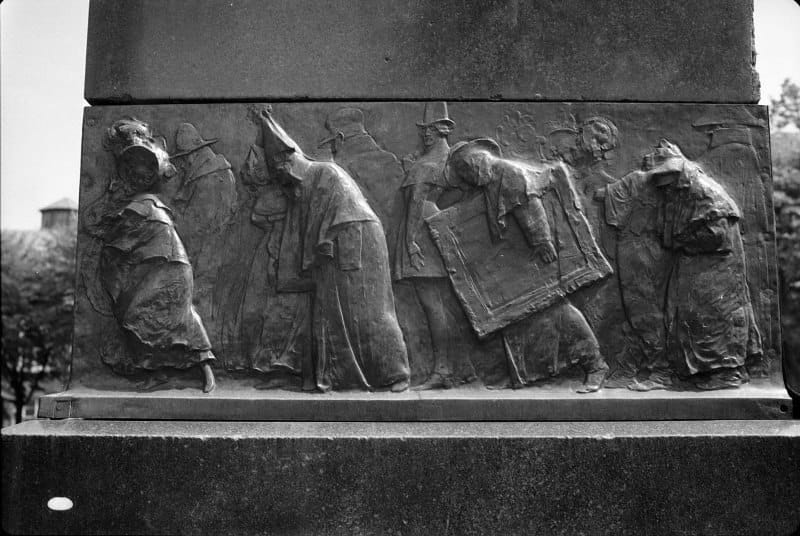
In the Middle Ages, ugly images were meant to frighten, and through that fright to achieve certain didactic, admonitory ends
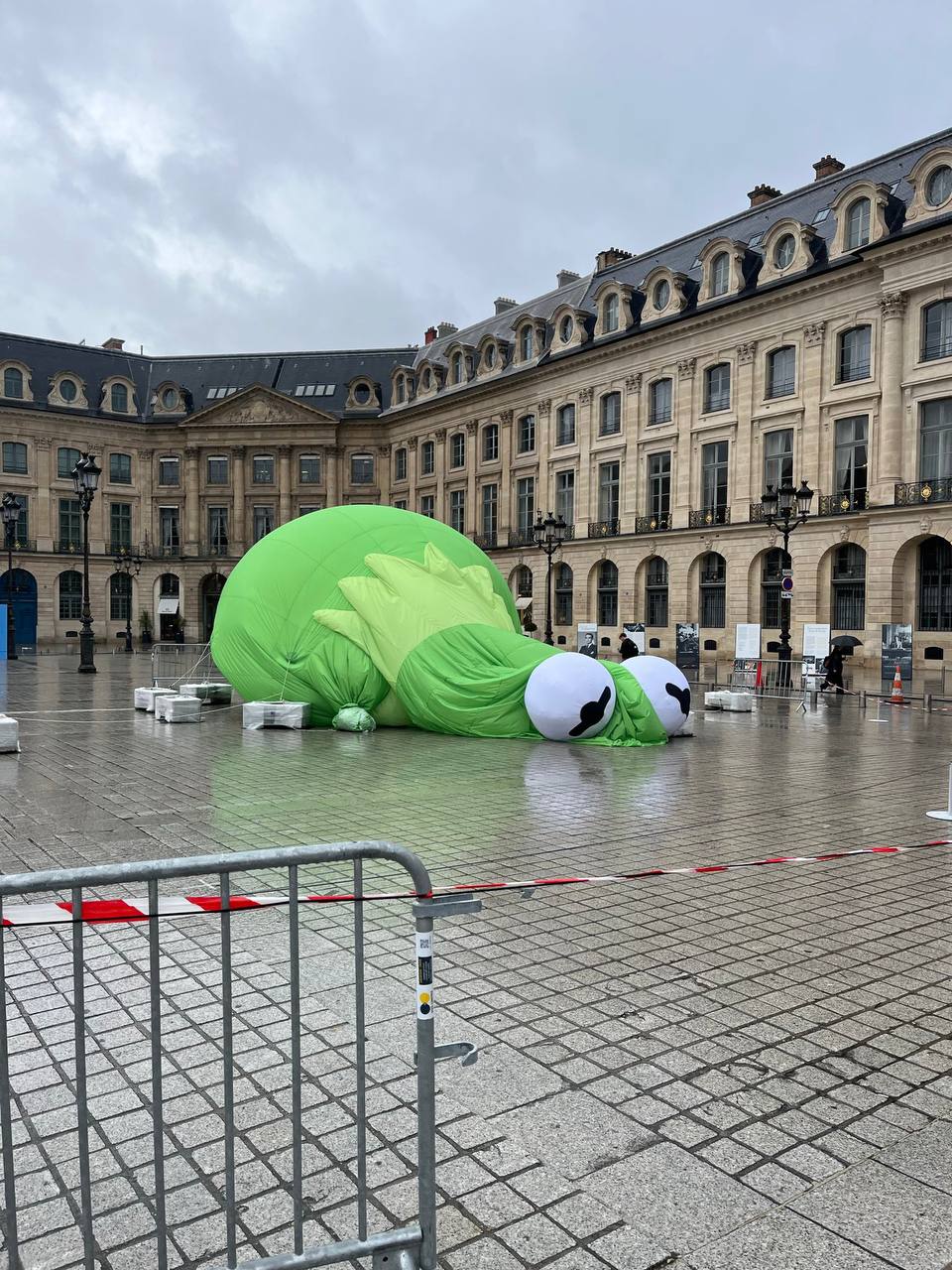
In the Middle Ages, ugly images were meant to frighten, and through that fright to achieve certain didactic, admonitory ends. In the Baroque era, ugliness is used for emotional engagement; in the age of modernism, the unlovely aesthetic calls for revolt against the bourgeois idea of beauty; postmodernism and post-postmodernism make a problem of the very notion of aesthetic value.
Yes, we have heard about the conventionality of beauty, and contemporary fashion, cinema and art confirm this thesis by default. It is hard to dispute that the notion of beauty, and all the modern flirtations with the unbeautiful, are bound up with power, politics, economics, spheres of influence and so on. All this seems fairly simple and clear, as does the fact that contemporary art is for the most part ugly not because artists can no longer draw beautifully, or draw at all, although that supposition, too, is worth considering as one possibility. In principle, if beauty was the companion of harmony, order, ideals and the norm, then now, in an age of enforcing anti-values, disorder, cacophony and chaos, the fitting aesthetic doctrine is unloveliness and artlessness.
That is how it must be. Hence artists choose the path of untalentedness, mediocrity and ugliness; hence everything beautiful (faces, bodies, clothes, images, music, paintings) departs from the canon; hence the materials of low culture rise to the top; hence subjects that provoke disgust, aversion or fear predominate; hence pure forms give way to grubby stylistics. All because there is a commission for it.
No one has suddenly begun to think or feel differently, and for no one has any of what I have listed become a standard of the beautiful, yet everyone understands, hears and reads off what the decision-making powers are now demanding be produced. There is no longer a dictatorship of taste, but now people admire the ugly, because there is a dictatorship of tastelessness.
And this is a peculiar cultural gesture, part of a cultural programme, though we are assured that this programme reflects the power of a work to change our perception, that the ugly compels us to ask questions, to reflect, and in the end to admire our own capacity to think, to rethink and to grasp the complex. But the hardest thing is to grasp that all these fine speeches are simply a deception, and to admit that you yourself were deceived by them. Can it be that the beautiful changes nothing in a person and does not make him ponder and revise any worldly postulates? Can it be that beauty does not contribute to judgement? That the lovely does not inspire admiration? That before idyllic pictures our brain ceases to work and the soul falls asleep? All this is nonsense. Both the beautiful and the unbeautiful call for mental labour. But an evident ideological prohibition of the beautiful ought to provoke additional analytical effort: why is this really happening, rather than in the convenient theory offered to the man in the street?
If visual experience and the experience of engaging with art are elements in a laboratory of moral and cognitive faculties, then it is time to ask who stole half the reagents, and for what reason, and who is still insisting that this is even better?