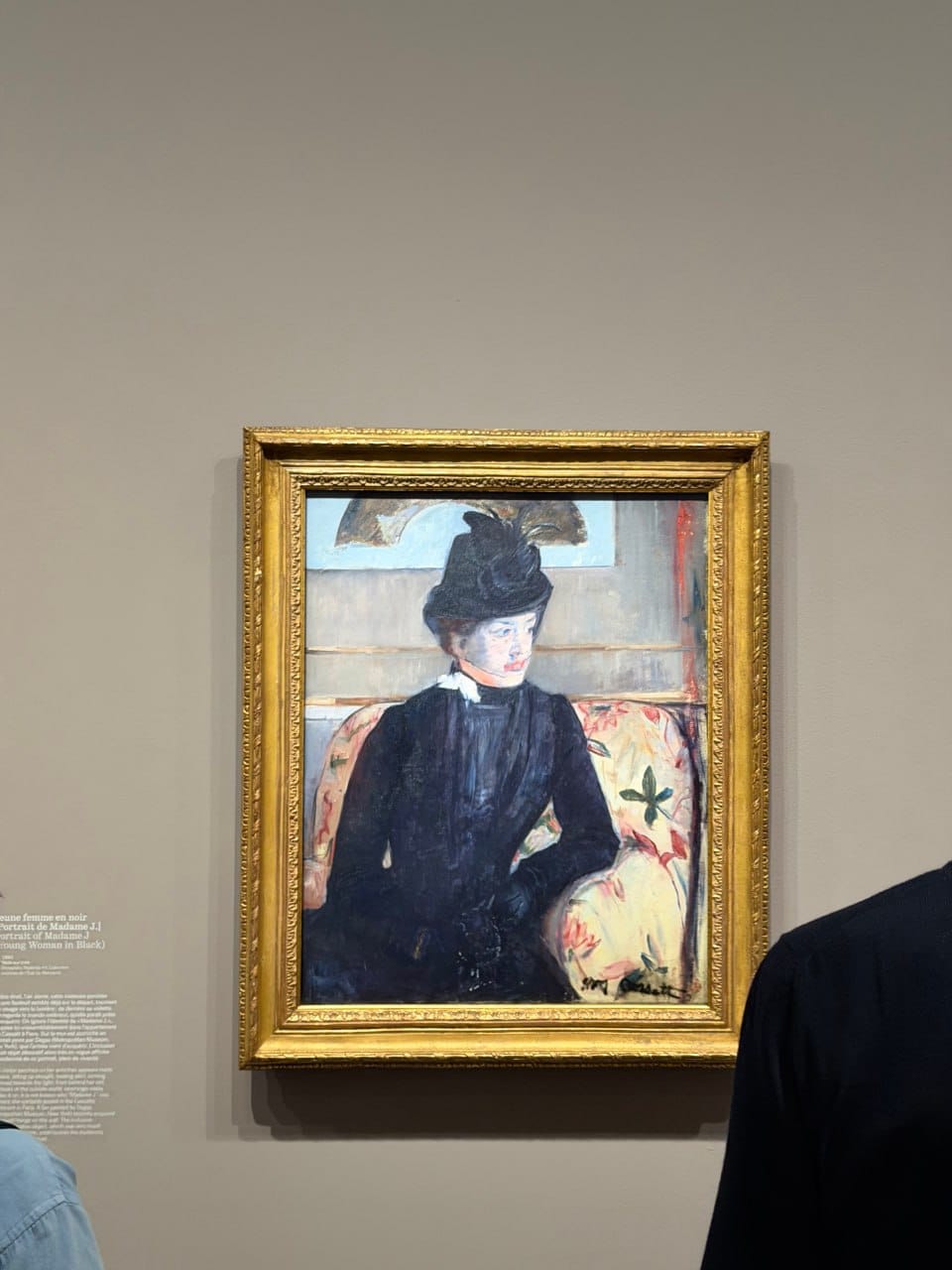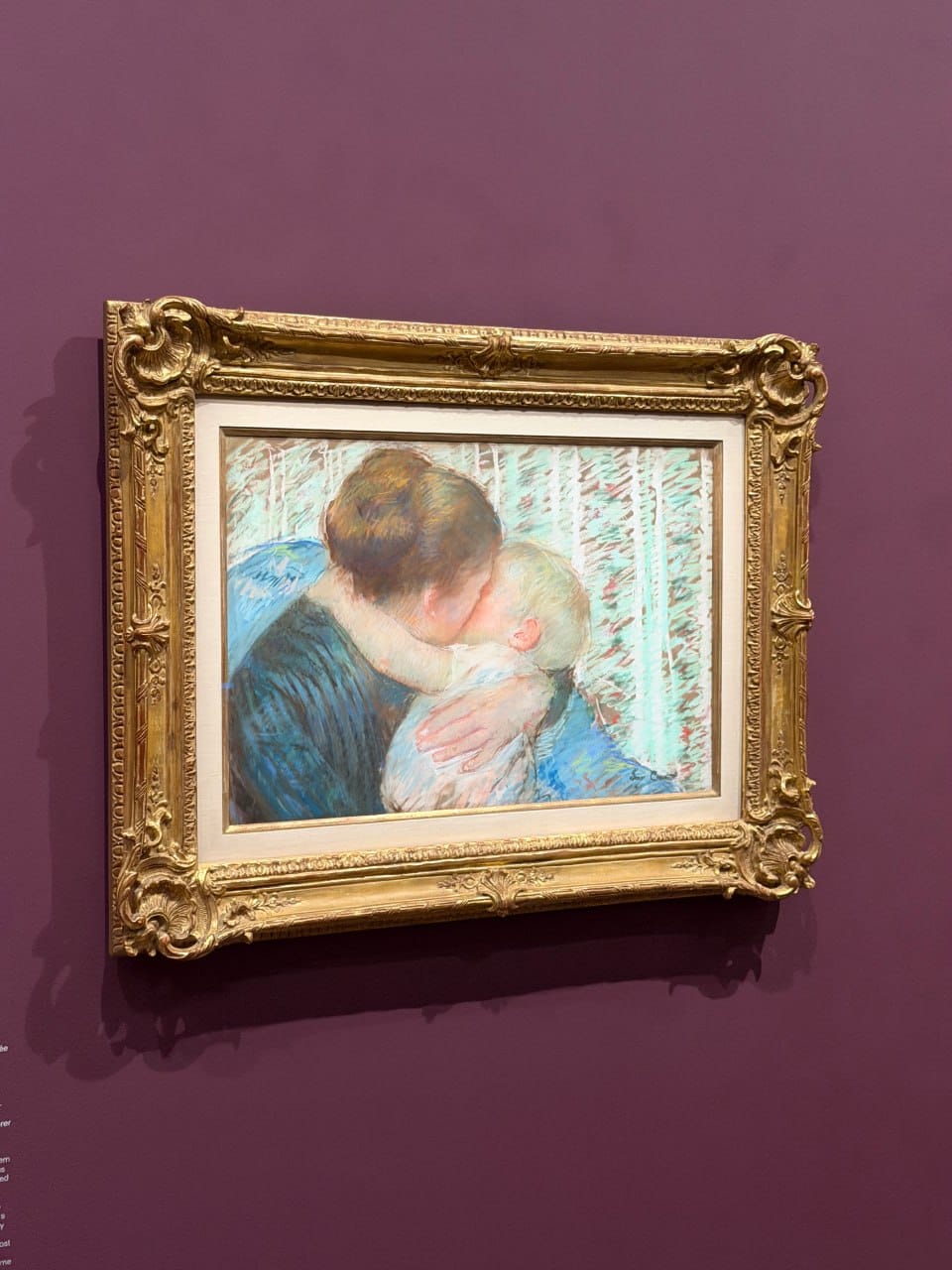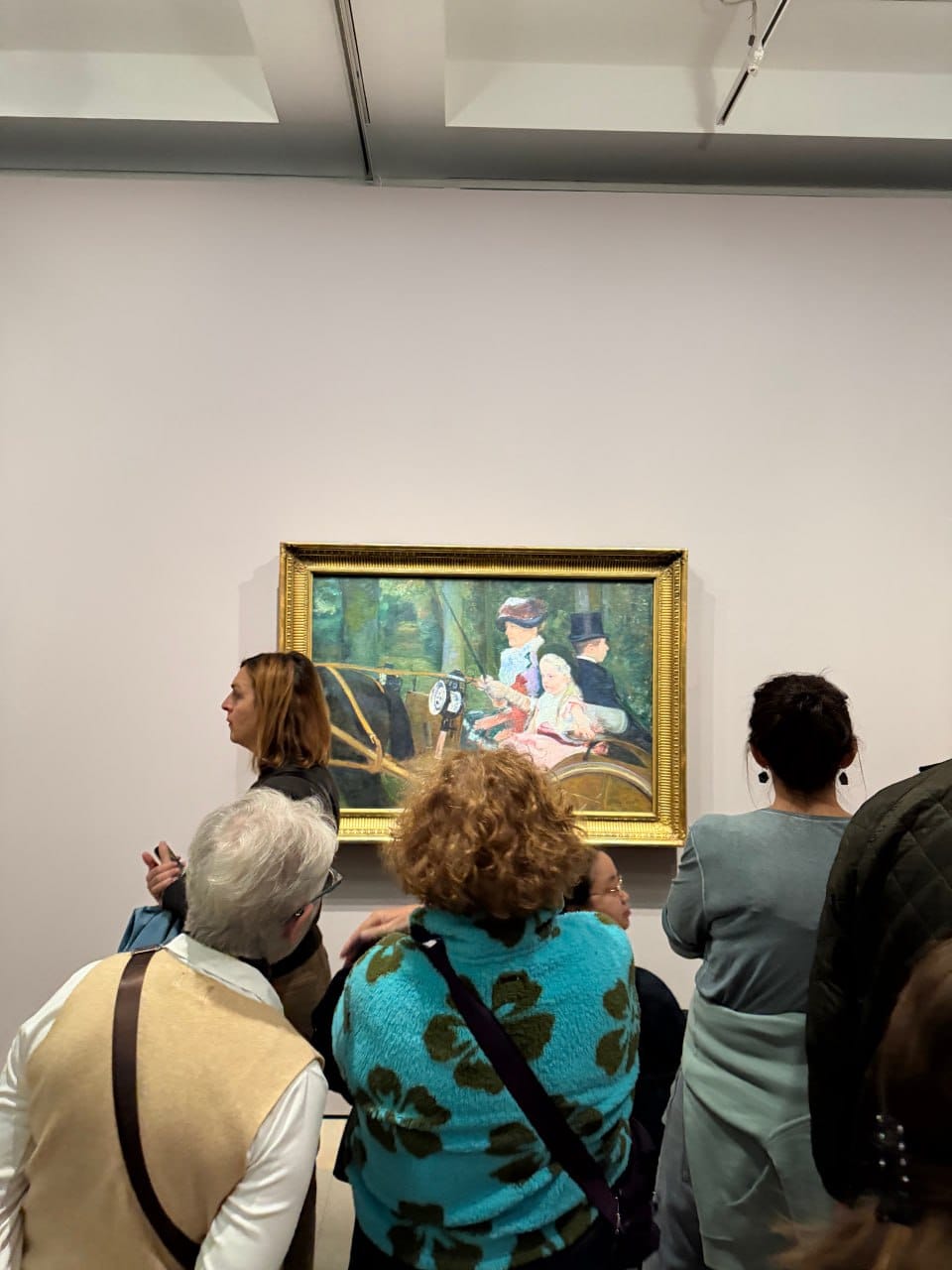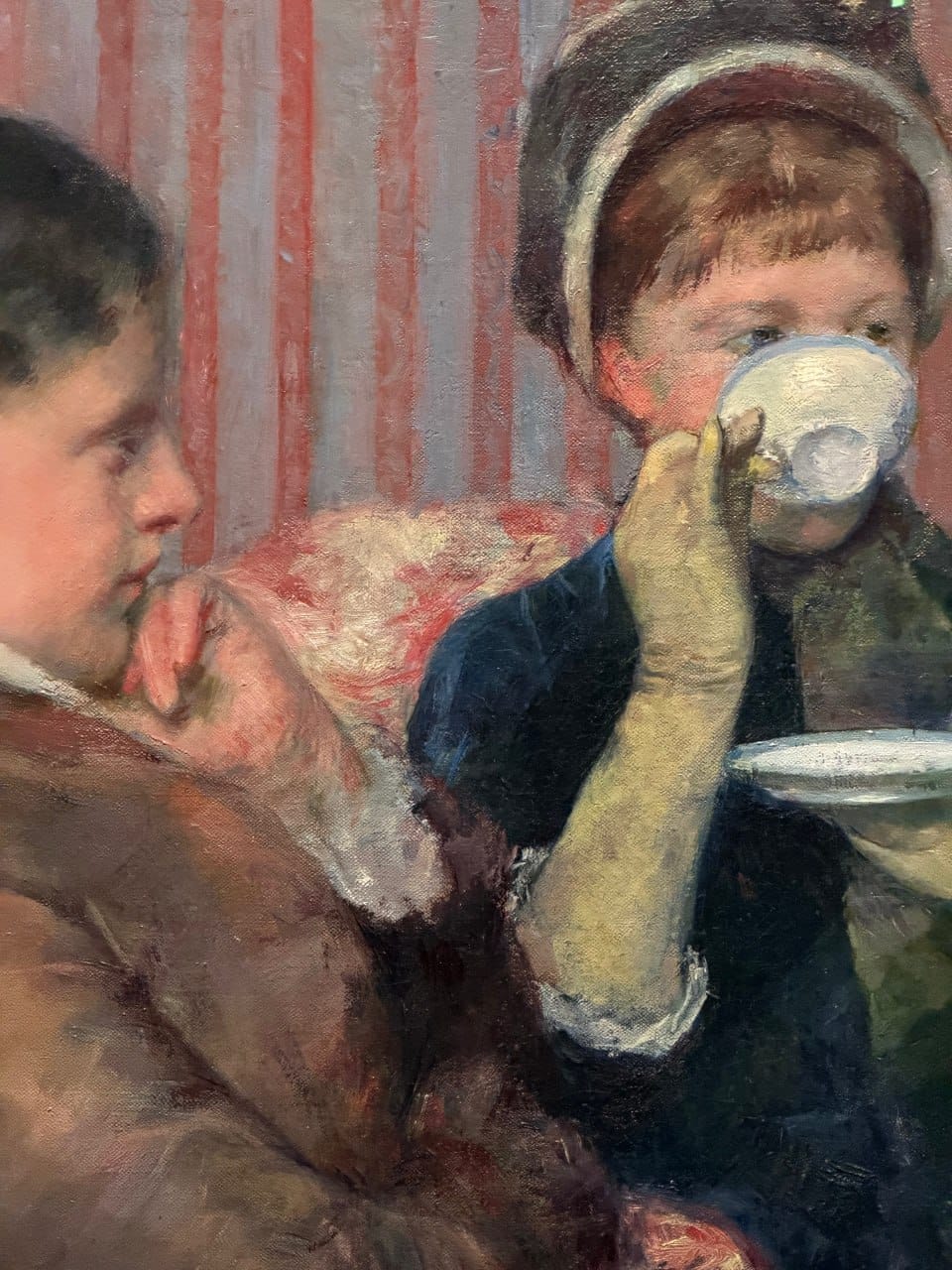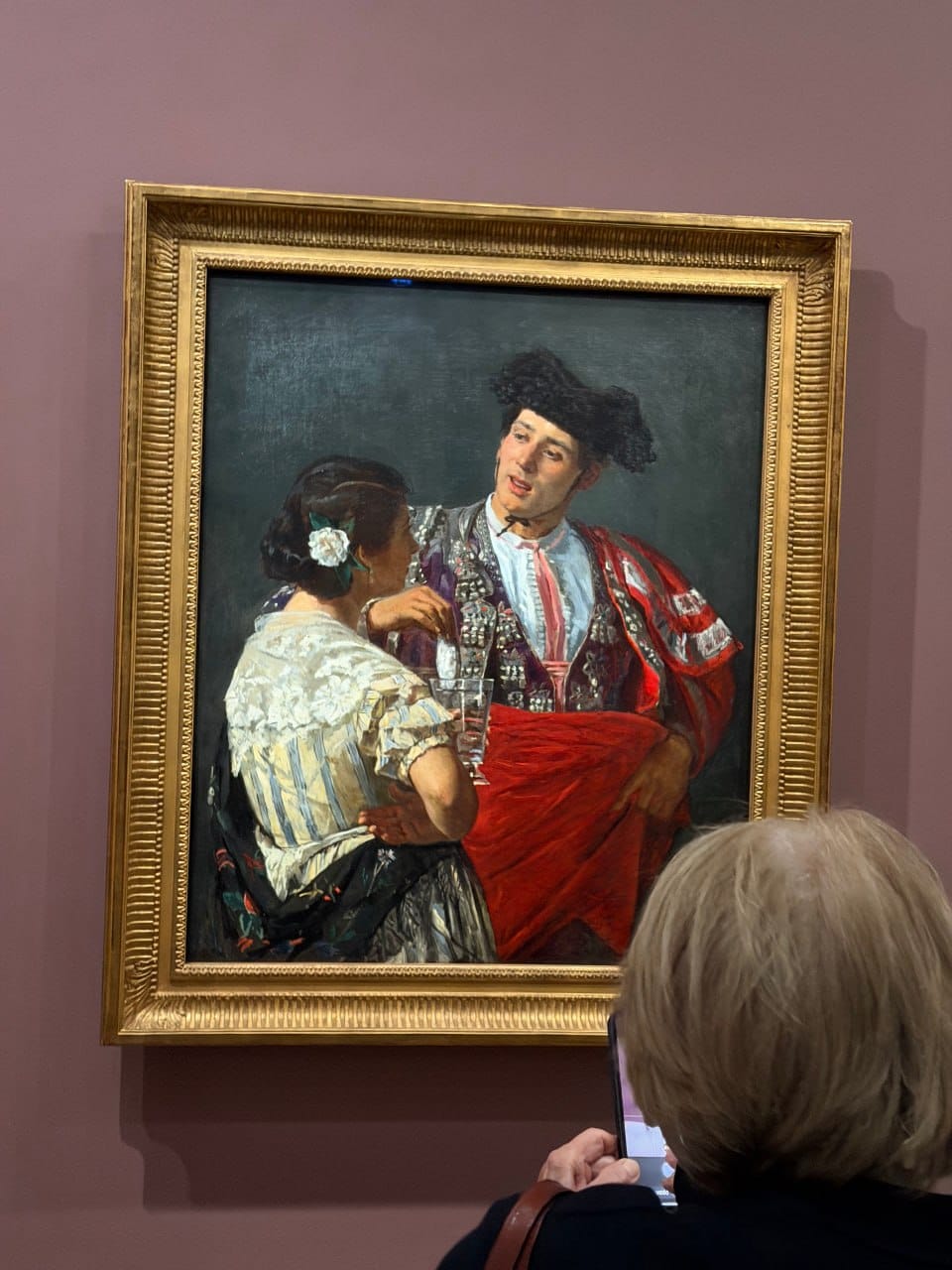
“Mary Cassatt. Independent” exhibition at the Musée d’Orsay marks a century since the artist’s death
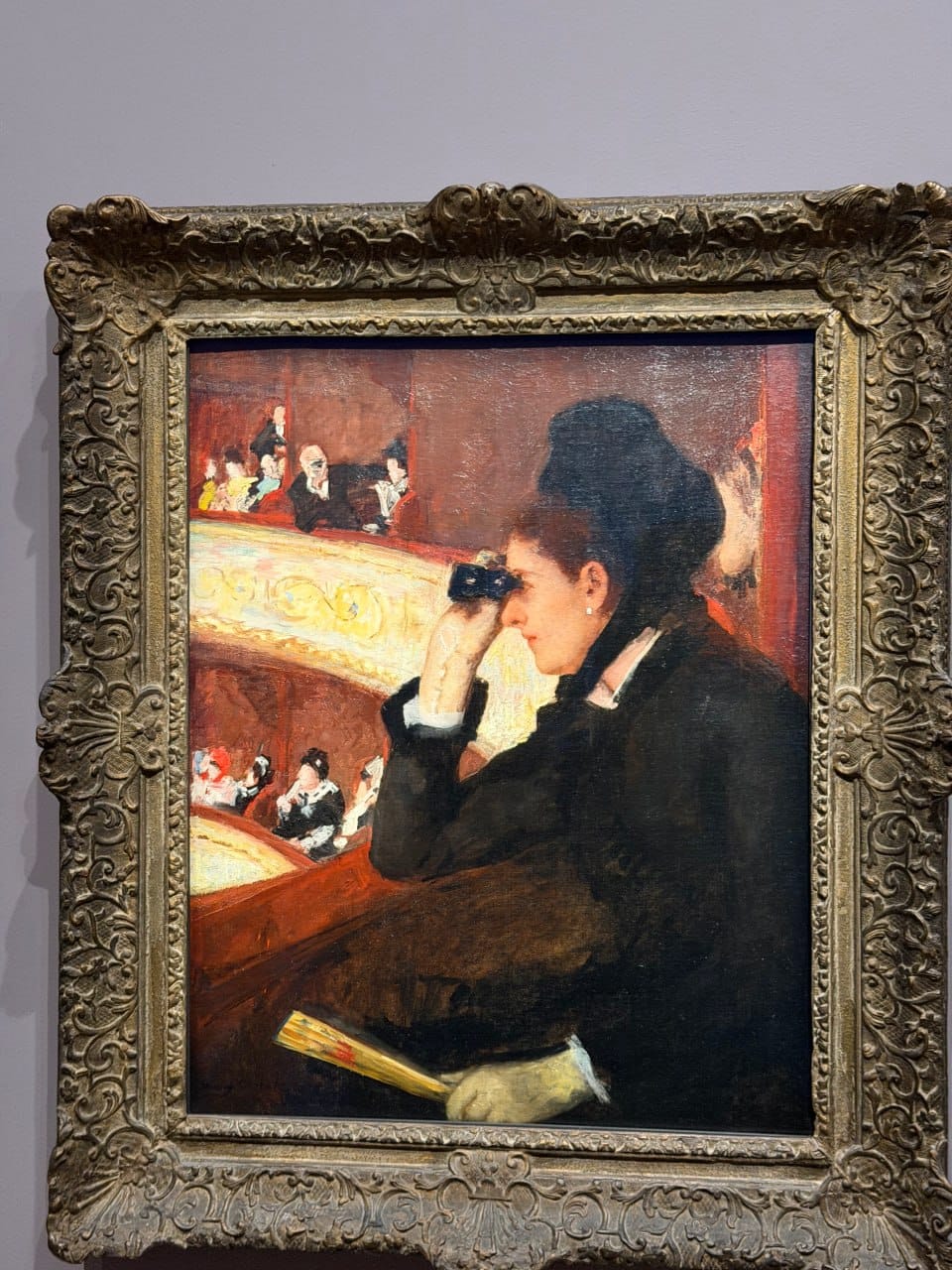
The Musée d'Orsay is currently showing "Mary Cassatt: An Independent", timed to the centenary year of her death. It is strange that, in a hundred years, this is essentially the first major retrospective of Cassatt at a French national museum.
Mary Cassatt was born in 1844 in Allegheny City, Pennsylvania, in the United States. She studied at the Pennsylvania Academy of the Fine Arts, and in 1866 moved to Paris, where she took private lessons from Jean-Léon Gérôme.
Cassatt did not come from a very wealthy family, as is often said of her. Her parents and brother prospered in business, but their fortune was not all that enormous, and they themselves were hardly what one would call generous. Nor did Mary herself wish to live on a family allowance. So she began painting portraits to commission in order to earn her living.
The exhibition includes a portrait of her mother from around 1873, and the caption tells us that the mother refused to pay models for her daughter. In other words, to put it mildly, the family did not particularly support Mary's talent.
None of this, however, prevented her from asserting herself so brilliantly that Edgar Degas invited her to take part in the Impressionist exhibitions. From 1879 Cassatt exhibited alongside them. What is more, she became the only American in that circle. By this time there was no question whether she could rent her own studio and pay her models herself.
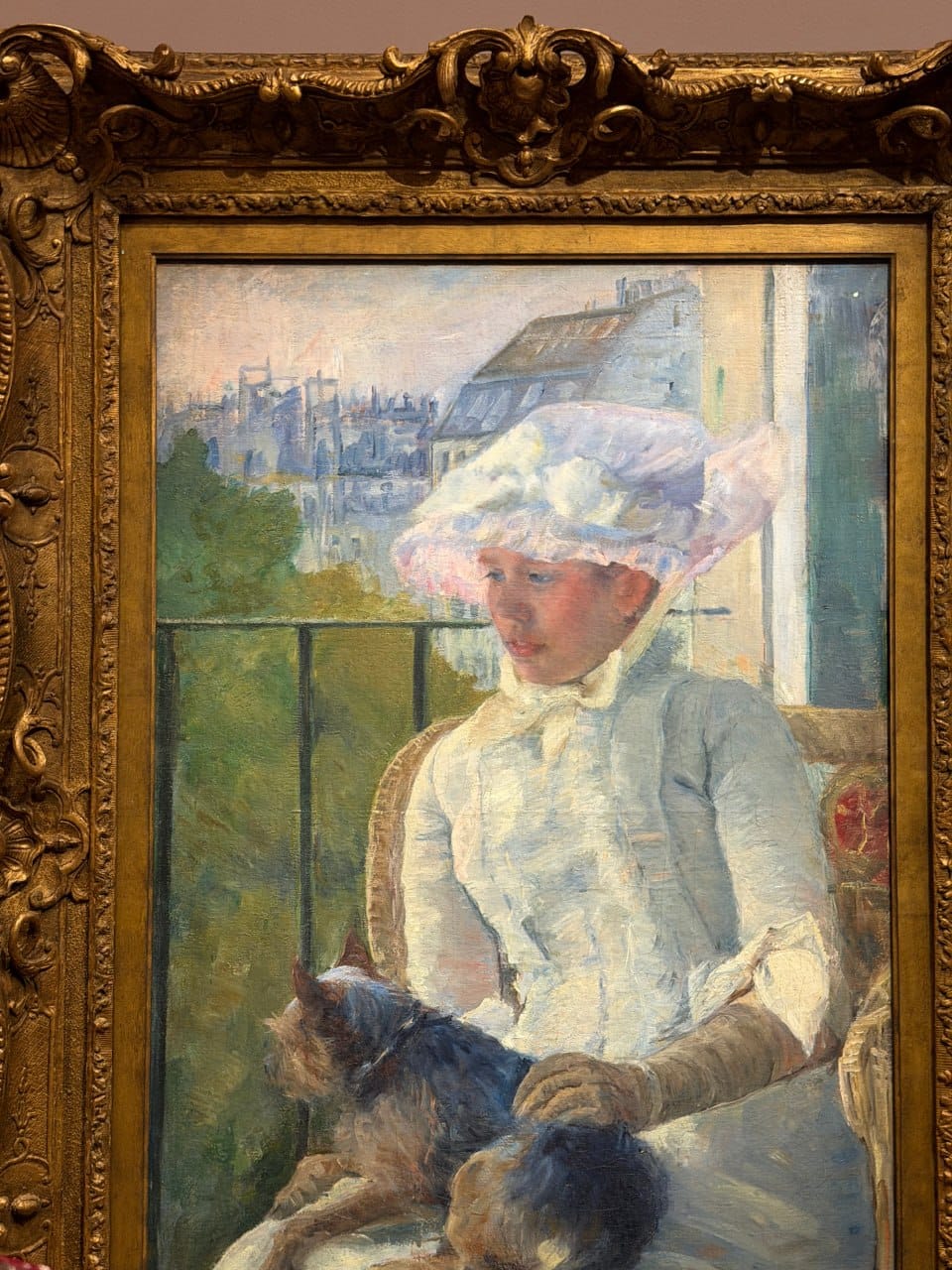
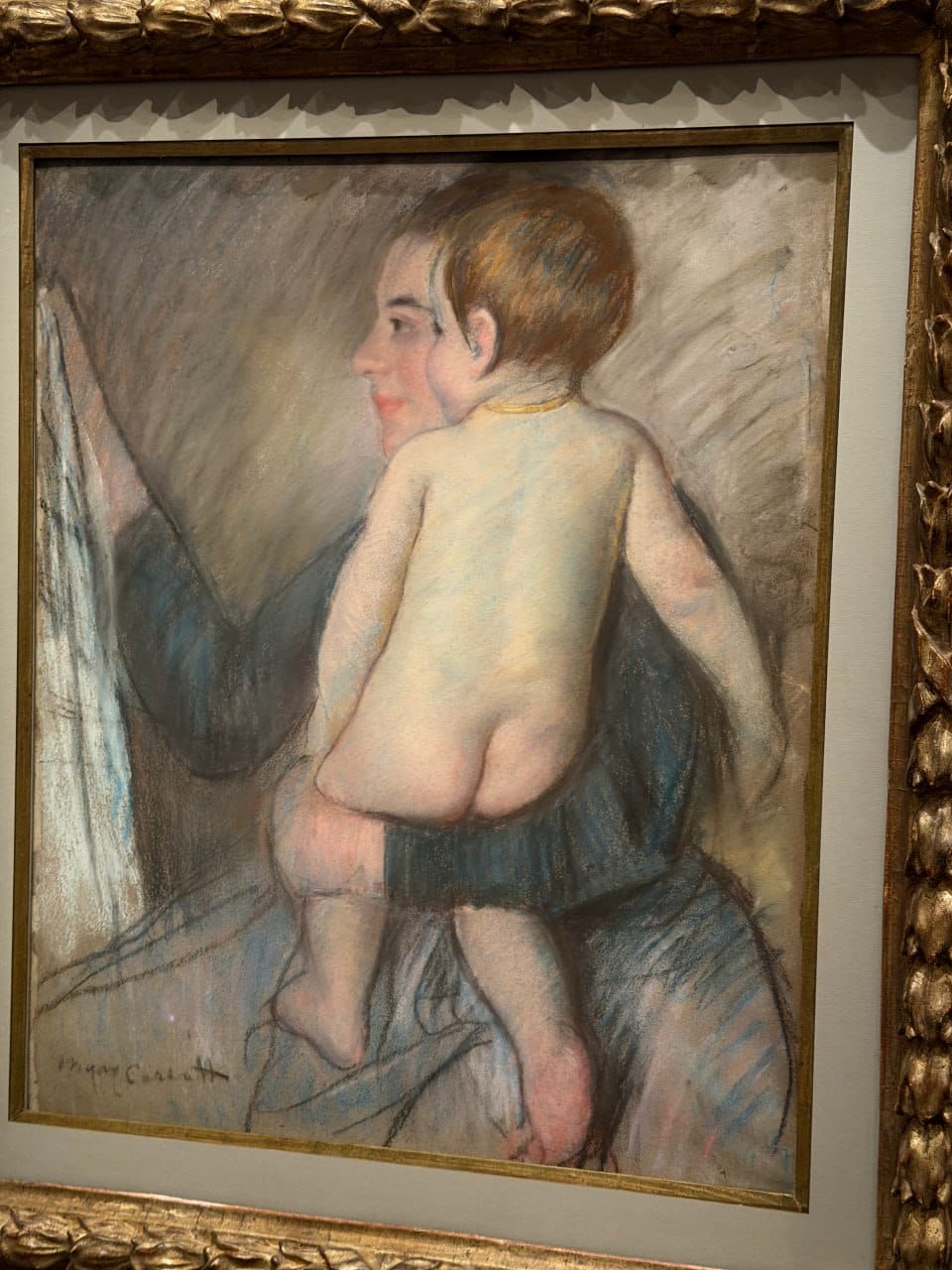
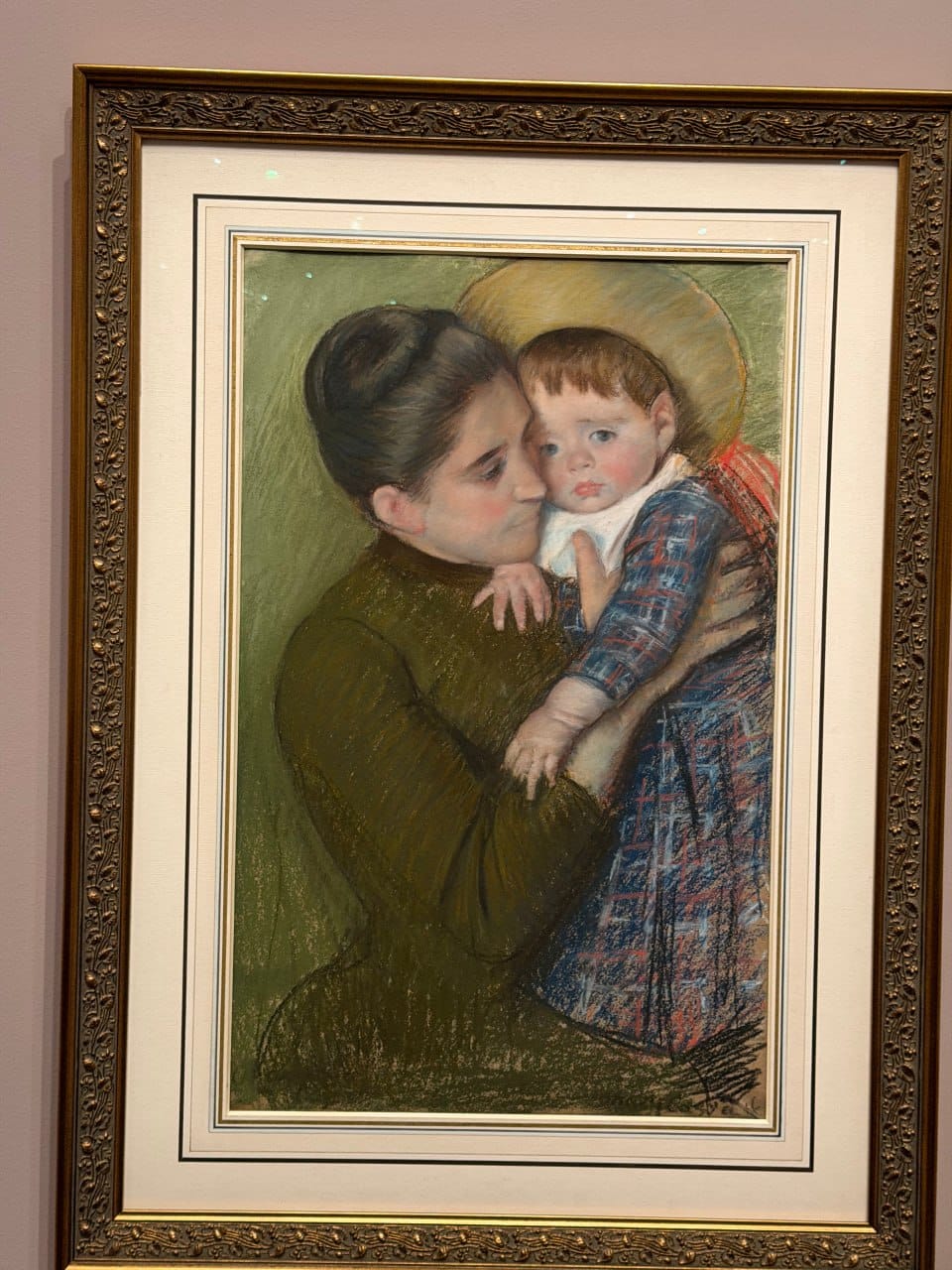
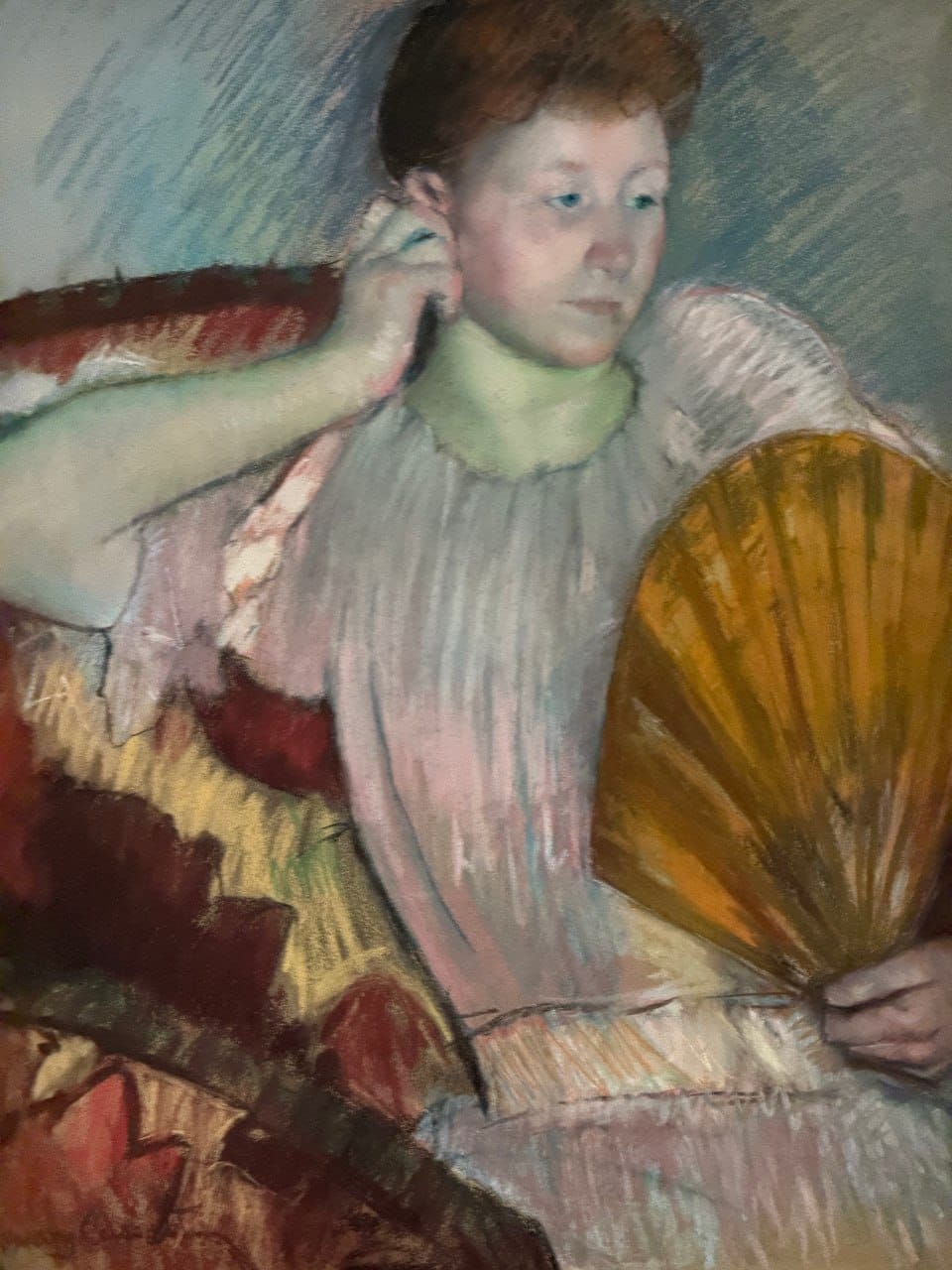
Cassatt mostly painted women, girls and little girls of her own time: at the theatre, at home, at tea and with their children. The organisers have brought her painting "The Tea" from Boston, and "Little Girl in a Blue Armchair" from the National Gallery of Art in Washington. These works have scarcely ever been shown in Europe.
Cassatt worked extensively in pastel, practised printmaking, and created prints inspired by ukiyo-e. There are some very interesting works in which she combined drypoint and aquatint on a single sheet.
In 1893 Cassatt painted a huge mural, "Modern Woman", for the Woman's Building at the World's Columbian Exposition in Chicago. The mural has not survived, and the Musée d'Orsay shows a digital reconstruction of it.
In 1894 Cassatt bought the Château de Beaufresne in the Oise department, north of Paris, and lived there until her death in 1926.
Interestingly, the artist advised American collectors, among them her friend Louisine Havemeyer. In 1915, Cassatt and Havemeyer, against the objections of Cassatt's family, organised an exhibition at the Knoedler gallery in New York in support of women's suffrage.
To understand the artist's path, it is important to know that she championed the emancipation of women but did not want to be celebrated for her sex and, according to critics, saw in this a kind of ghetto. The exhibition confirms that Cassatt was not merely a great artist among women, but a great artist, without qualification. I think this Musée d'Orsay project may rightly be called one of the most beautiful exhibitions of the autumn.