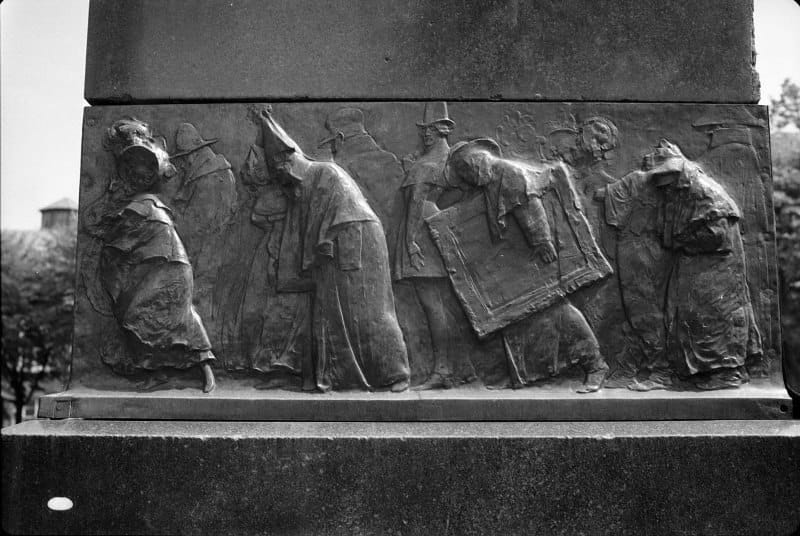
Depictions of Arius in Christian art and the legends of his death
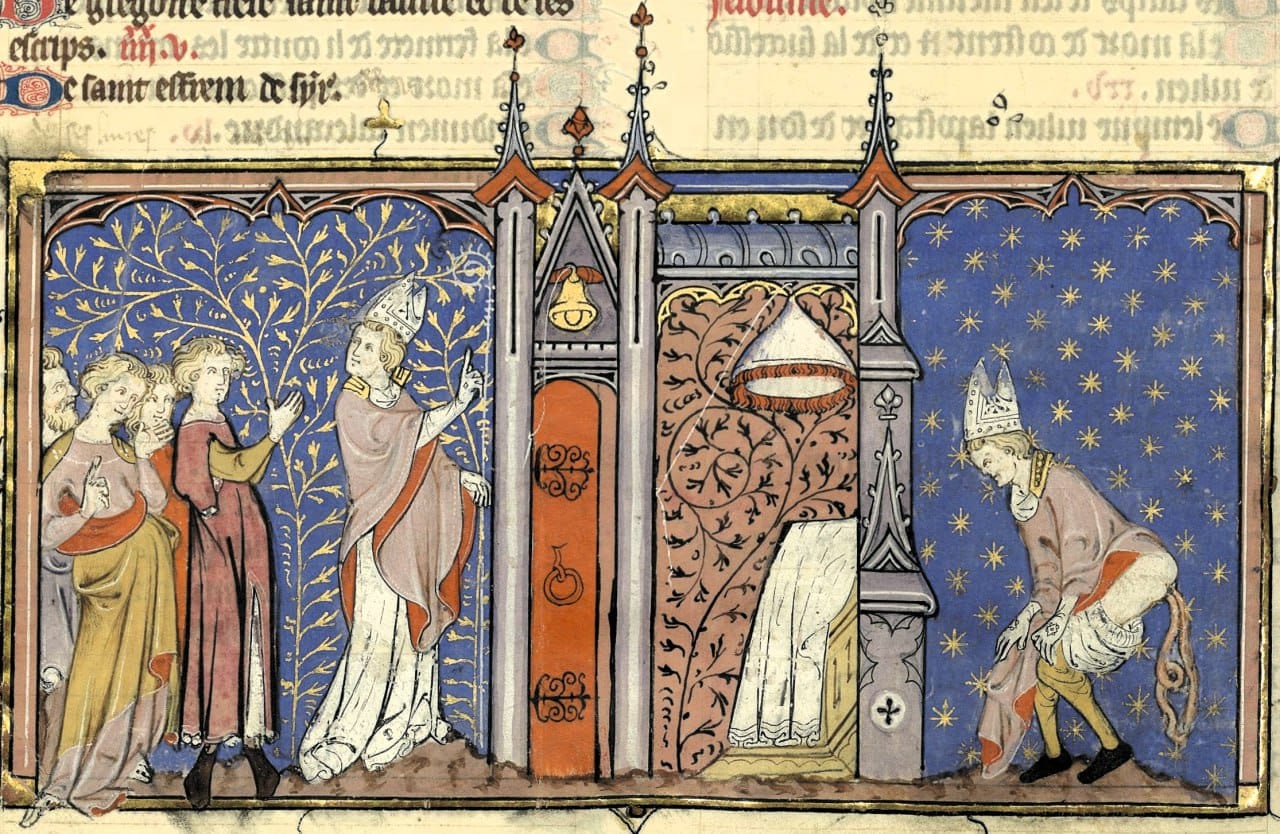
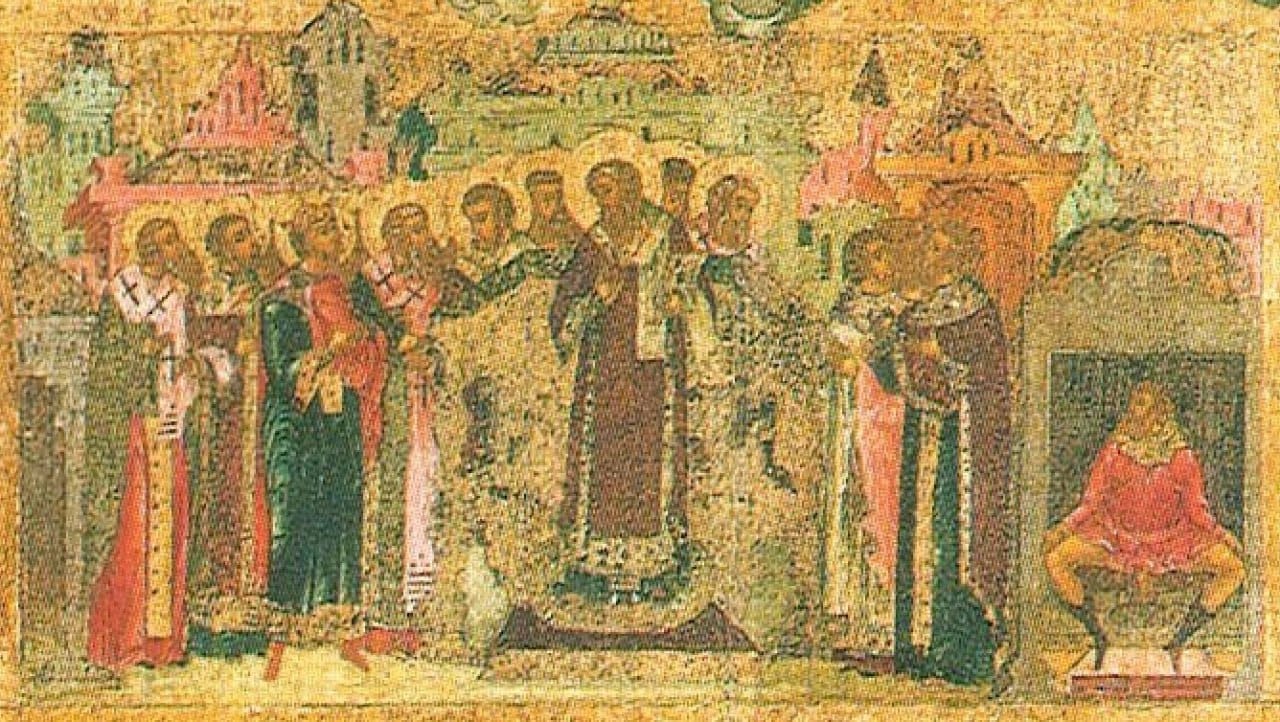
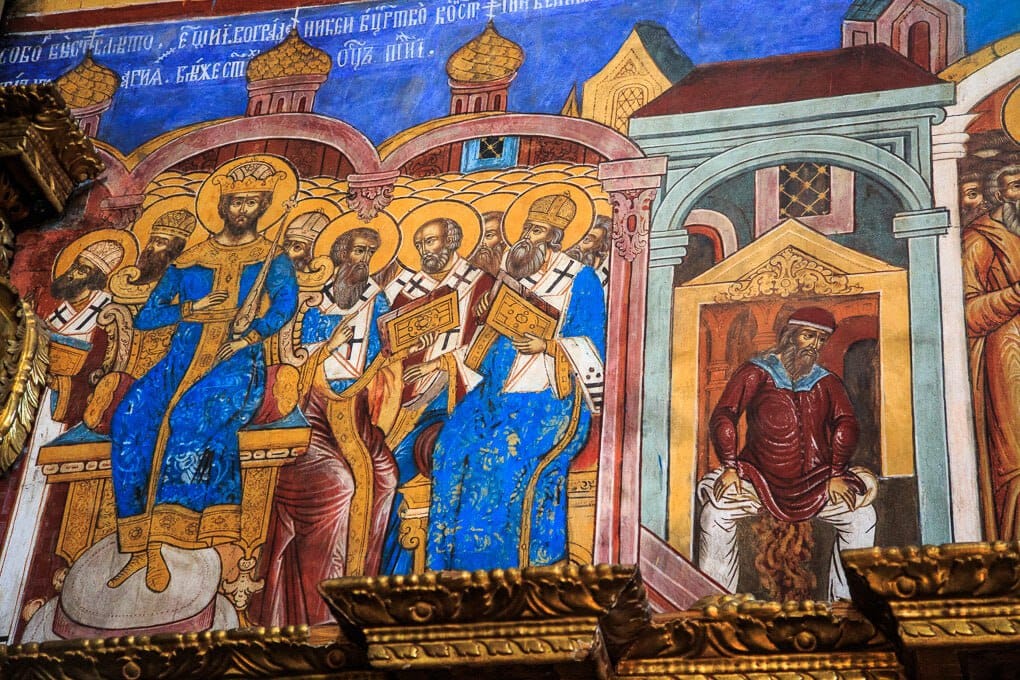
In Christian iconography, both Eastern and Western, the subject of a bishop with his bowels spilling out is not a rare one. Examples include a miniature from the Arsenal Bible, a fragment of the seventeenth-century Russian icon "The Creed" and a fresco in the Church of the Resurrection in Tutaev. This is how Arius (250-336) is usually depicted, the man styled an arch-heretic, the very founder of Arianism, or the Arian heresy, which was banned by the First Ecumenical Council at Nicaea.
The essence of Arianism is that the Son is not equal to the Father, is not coeternal with him and is not one with him in substance, but is merely a creation. In its day, adherence to Arianism might have changed the whole history of the Church. It must be said that Arius and his ideas were extraordinarily popular during his lifetime and, after his death, remained fairly influential across the greater part of the Christian world.
The hatred borne towards the Libyan presbyter of the Church of Alexandria by his opponents was so great that when he died at the age of more than 80, his death became overgrown with legends containing most unpleasant physiological details. The most innocent way in which Arius is shown in church art is lying at the feet of the Emperor Constantine and the bishops at the Council of Nicaea; for the most part, however, his images record what is essentially a piece of gossip about his demise while relieving himself, when his internal organs fell out of him, including the liver and the spleen.