New Literary Observer has published "Doctor Zhivago as a Historical Novel", by the philologist Konstantin Polivanov, a study of Boris Pasternak's principal novel, of the prototypes of its heroes, of Pasternak's spiritual and political evolution, and of ho
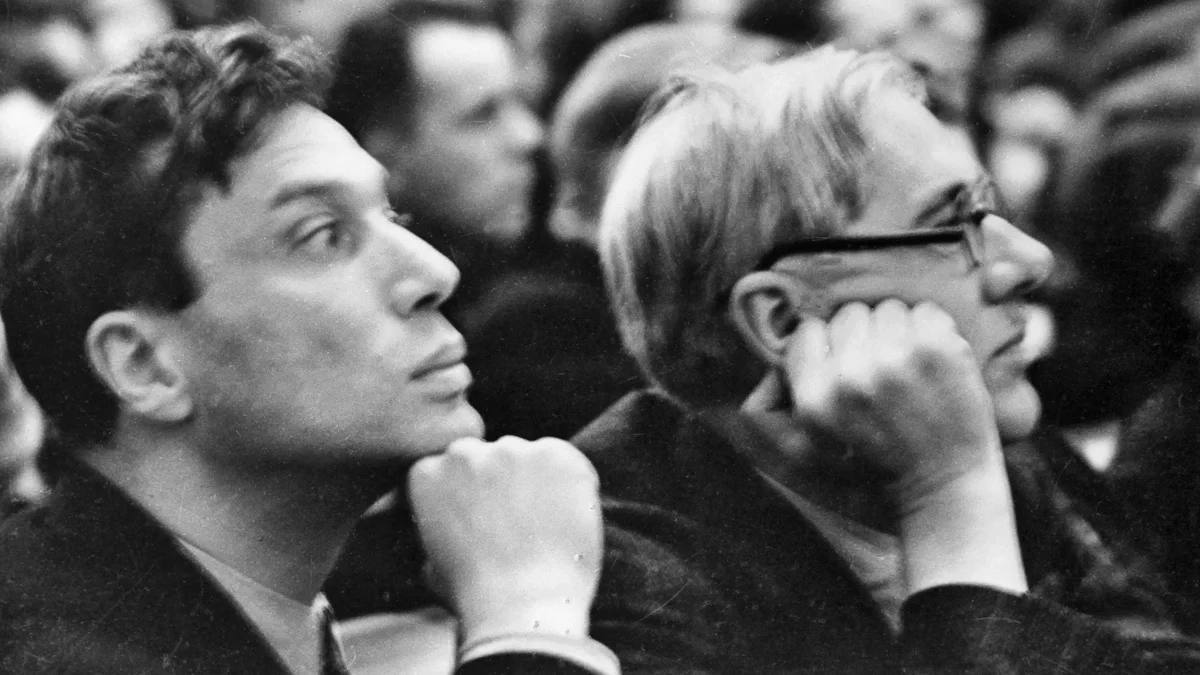
New Literary Observer (Novoye literaturnoye obozreniye) has published "Doctor Zhivago as a Historical Novel" by the philologist Konstantin Polivanov. The book deals with Boris Pasternak's principal novel, the prototypes of the heroes of his famous work, Pasternak's spiritual and political evolution, and the way in which genuinely free works come to be created in the bleakest of years. In the wake of the news, I share extracts from an interview with Konstantin Polivanov in Kommersant:
Pasternak has a rather peculiar notion of Christianity, of what it means "to be faithful to Christ" <…>. He writes that one can be an atheist and yet dwell in the same spiritual space: it is there that mathematical discoveries are made, symphonies written, and so on.
For him Christianity is not an ethical doctrine but the necessity for a person to follow his vocation, to lead a fruitful existence <…>. Zhivago must write his poems; that is his purpose. Pasternak kept insisting that he did not like his own style before 1940, that the most important thing in poetry had been said neither by himself nor by his contemporaries Blok, Yesenin and Mayakovsky. Zhivago's poems are precisely what needed to be said. They fill a lacuna and tell how the world is ordered. That is the artist's task, and fidelity to Christ consists in fulfilling it. <…>
It was recently fashionable to write that the 1920s were a time of cultural diversity and political pluralism, but for Pasternak's hero, and for Pasternak himself at the time of writing "Doctor Zhivago", the twenties were the formation of that cruel, senseless and monotonous world which would be fully revealed in the thirties and forties. And here we come to the link with his understanding of Christianity. <…>
Pasternak himself, unlike Zhivago, joined every literary association going, published in Soviet journals and belonged to the Union of Soviet Writers. He was part of that official cultural context with which his hero wants to have nothing to do. In the 1920s and early 1930s Pasternak, like most of his contemporaries, believes that everything taking place is the direct continuation of the revolution and not a caricature of it. <…>
In 1935 he wrote the poem "The Artist", which is about Stalin: "In those same days, at a distance, behind an ancient city wall, lives not a man but a deed: an act the size of the terrestrial globe…" <…>
But six years later Pasternak published the collection "On Early Trains", from which all the stanzas about Stalin had been cut out of "The Artist". That is already a significant step: contemporaries certainly remembered that these lines had been in the newspaper version of the poem. He began to distance himself from the authorities with the Moscow trials, from the moment writers were required to sign letters demanding executions. The turning point was 1936, when, after he refused to sign the letter calling for reprisals against Zinoviev and Kamenev, it appeared all the same with his signature. Pasternak builds the novel as his own alternative biography. One might say that he sits in judgment on his own fate.