Catherine I introduced square copper plate money in 1726 due to a silver shortage
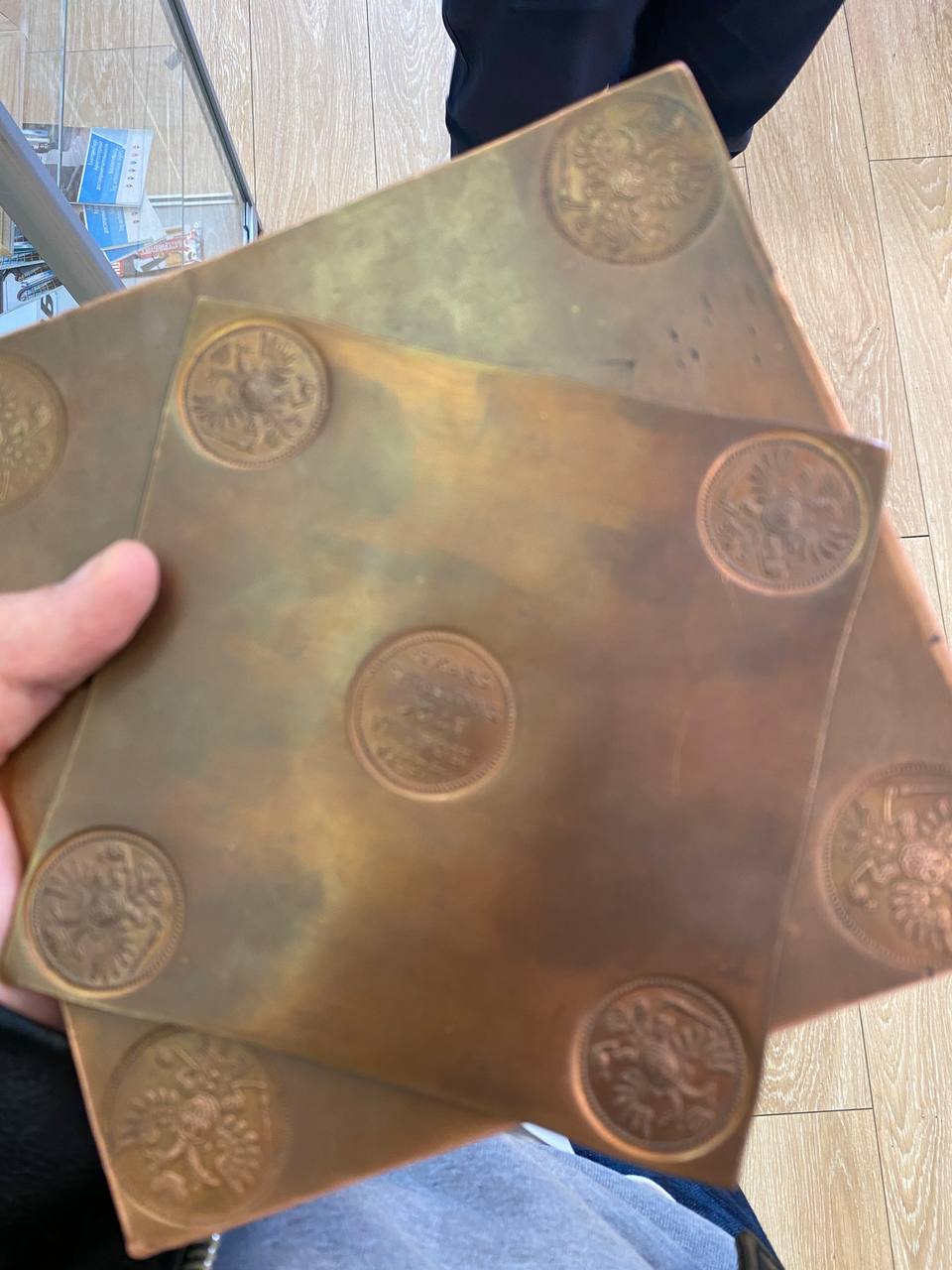
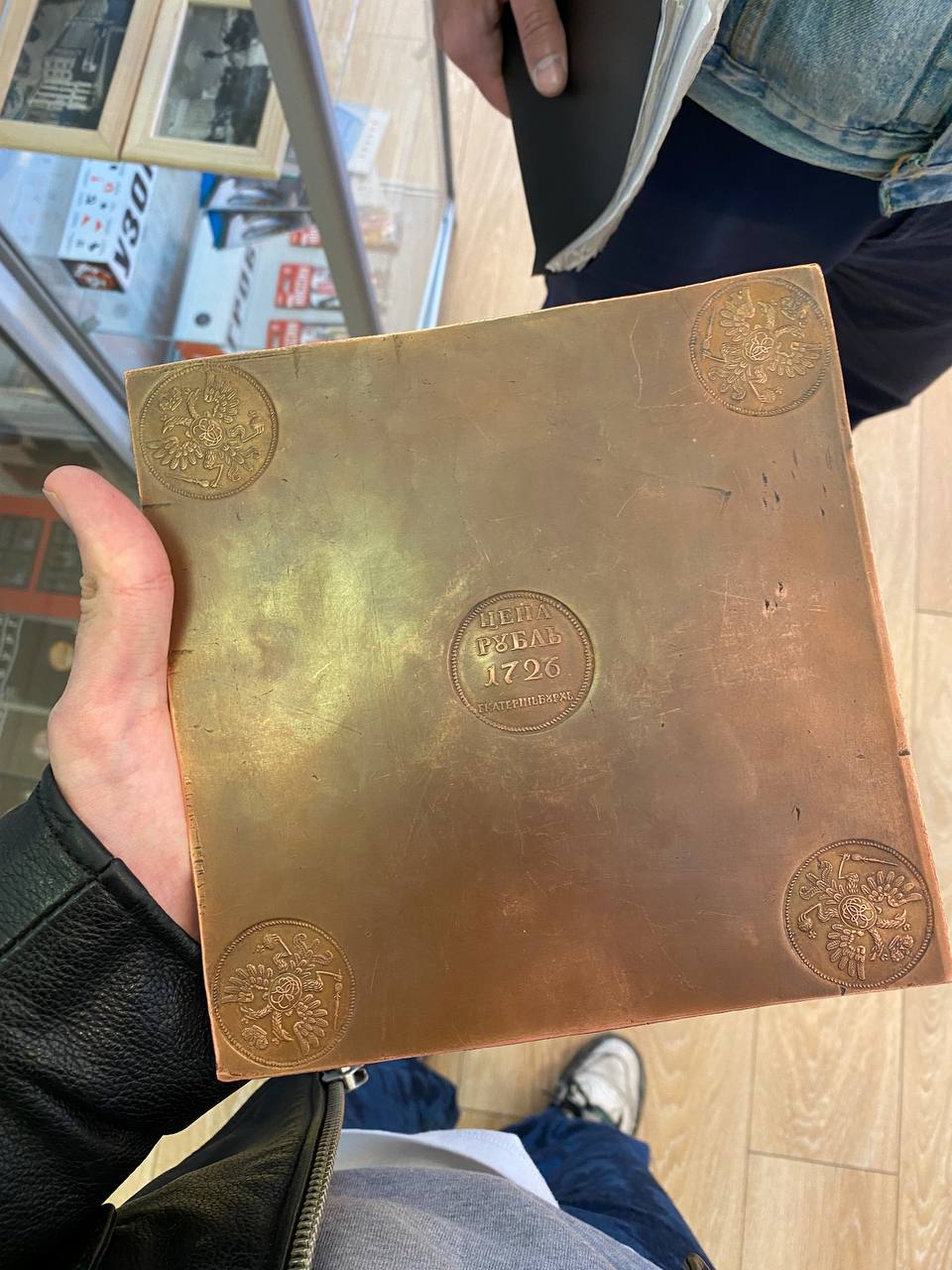
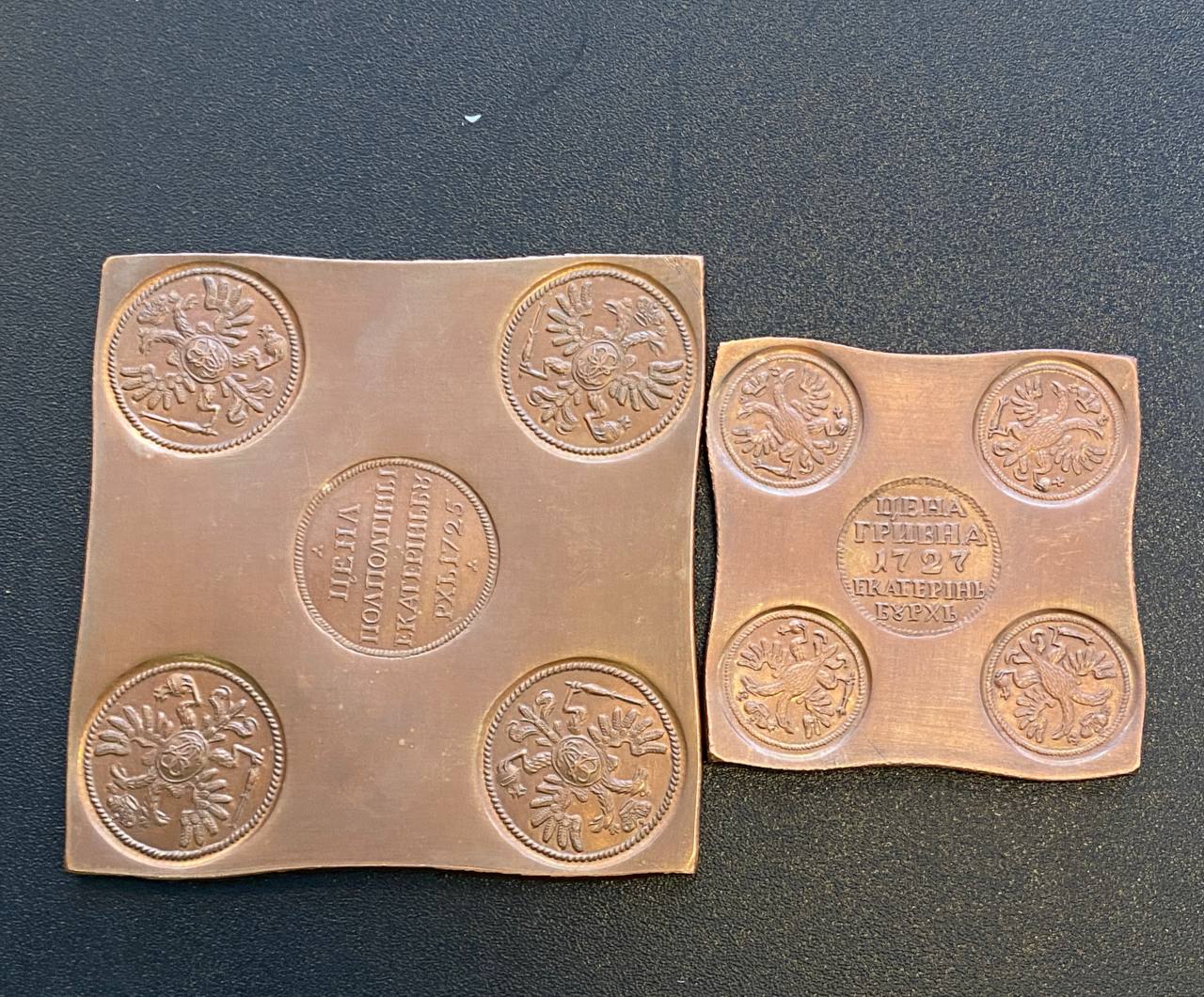
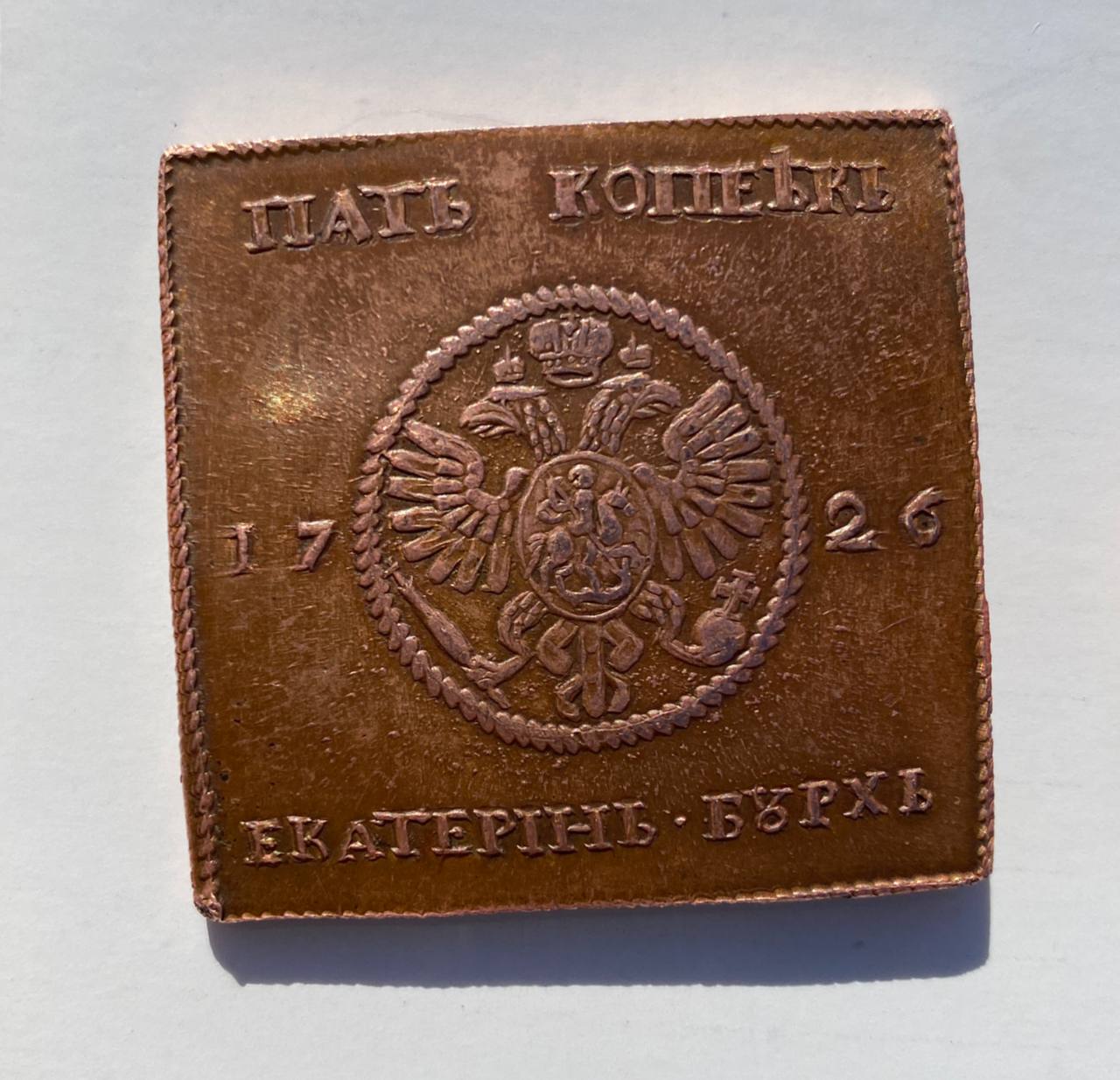
Russian history once knew a period of square money. These were copper plates in denominations of a rouble, a poltina, a half-poltina, a grivna, 5 kopecks and 1 kopeck, issued by the Yekaterinburg Mint.
Catherine I signed the decree on the minting of copper plates on 4 February 1726: "To make plates from pure red copper and to stamp the value in the middle and a coat of arms on each corner."
The decision to put so unusual a coin into circulation was connected with the crisis that followed the death of Peter I. The shortage of silver made matters worse, and red copper, which was mined in the Urals in sufficient quantities, helped to solve the problem. The square plates were minted for only a single year, after which they were withdrawn from circulation and exchanged for silver. By then square copper to the value of 43 thousand roubles had been struck. The convenience was that each plate genuinely secured its value by the weight of the current metal it contained, yet this was also its defect: first, such money was simply awkward to use, and, besides, people did not always understand the new money.