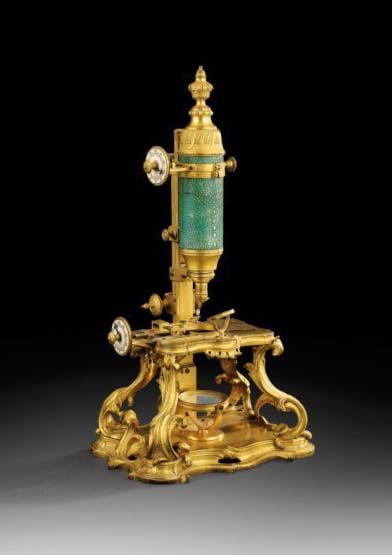
In the drawing room of the antiquary Michel Meyer stood a microscope, an intriguing trinket, though many would call it heaven knows what, neither the most decorative nor the most useful item in the furnishings
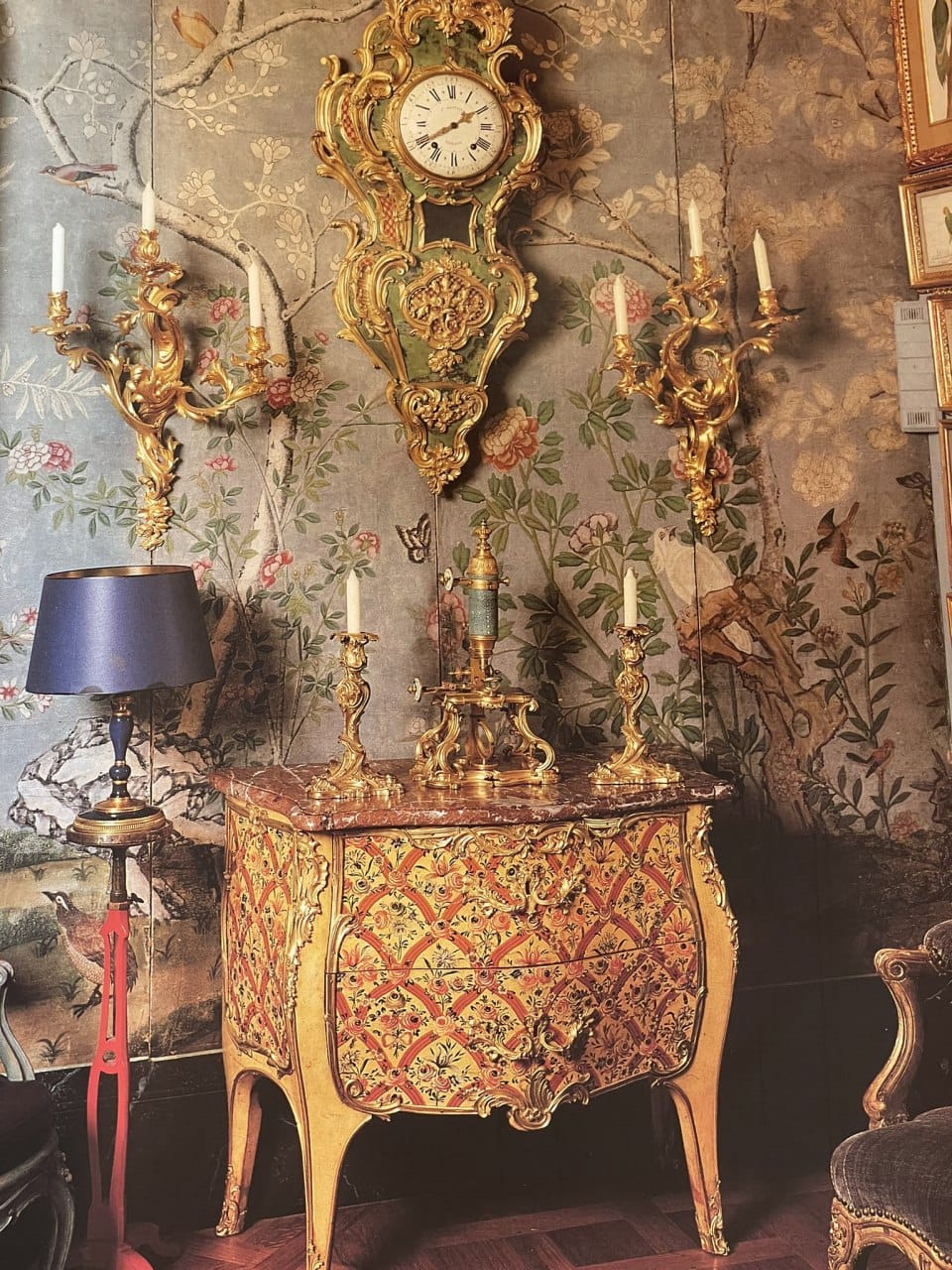
In the drawing room of the antiquary Michel Meyer stood a microscope, an intriguing trinket, though many would call it heaven knows what, neither the most decorative nor the most useful item in the furnishings. Good for propping up books, perhaps, or weighing down the sauerkraut? Yet this microscope dates from the time of Louis XV, around 1750, and was made under the direction of the celebrated astronomer, physicist and president of the Academy of Sciences, the Duke of Chaulnes, Michel Ferdinand d’Albert d’Ailly. At any rate, a school textbook on optics ought to say of it: the new model of the Duke of Chaulnes’s microscope was the most famous microscope of the eighteenth century. Chaulnes made an identical one for Louis XV, and Madame de Pompadour had exactly the same instrument. Why? In those days, for the most refined aristocrats, scientific instruments, especially ones so demonstrative, were what a new Tesla is today: people chased after novelties of science and technology, then sat in their boudoirs examining fingernails magnified four thousand times and frightening one another with the sight of tardigrades, which, however, were discovered only in 1773.
In 2008 this contraption was sold for nine hundred thousand euros