In these pots before you is narrow-leaved catchfly, a plant of the pink family (Caryophyllaceae) common in tundra conditions
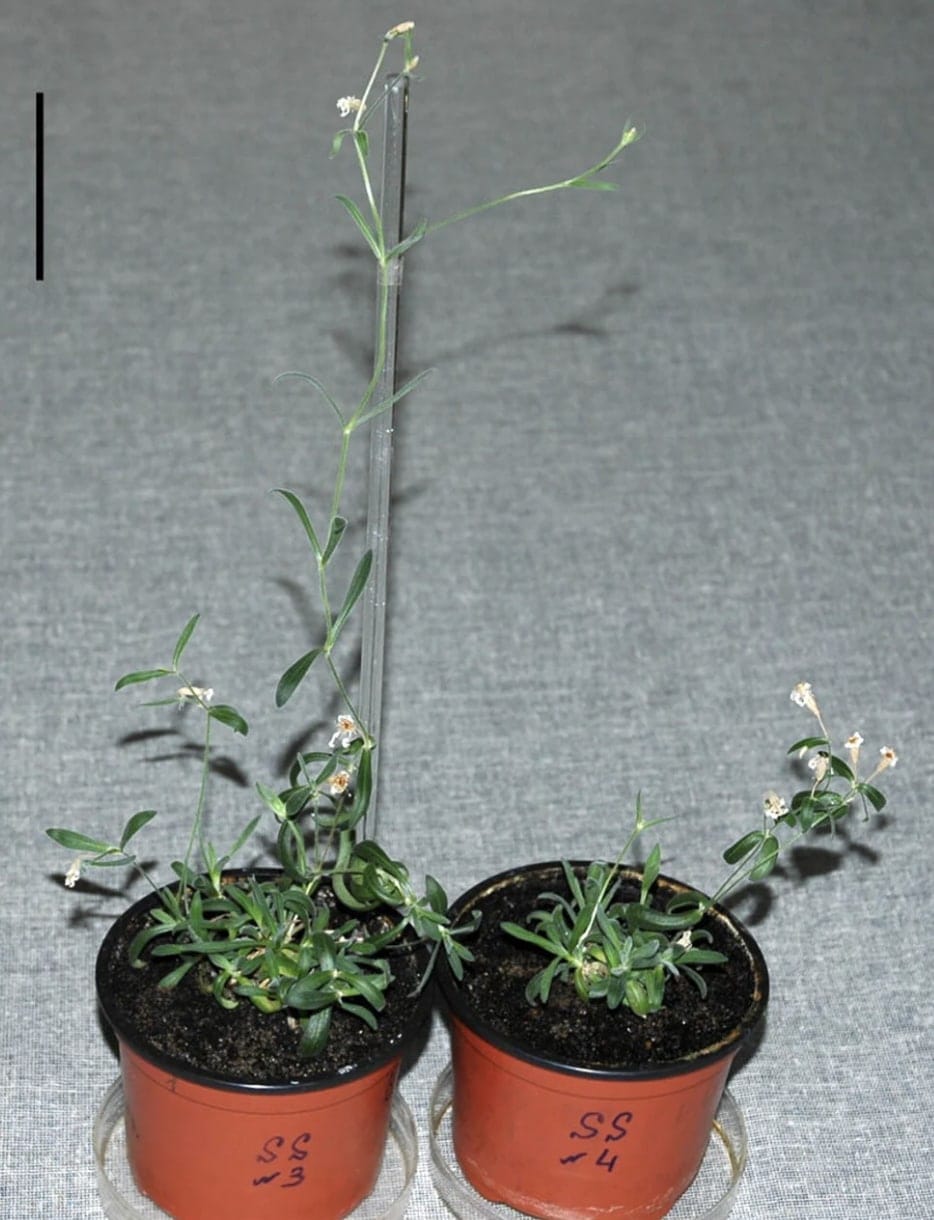
In these pots before you is narrow-leaved catchfly, a plant of the pink family (Caryophyllaceae) common in tundra conditions. What is so special about these unprepossessing flowers? If nothing else, that they were grown from the tissues of a plant 38,000 years old, preserved in the permafrost. As the millennia-old permafrost thaws, it reveals not only the remains of animals but also parts of plants and seeds. Russian scientists have examined a great many rodent burrows frozen tens of thousands of years ago, which proved to be veritable storehouses of ancient seeds and fruits. To regenerate these plants, tissue was taken from immature seeds and fruits, whose cells had retained the ability to divide: the ground squirrels had originally dug their burrows at a depth that touched the frozen layer, so that they kept their provisions, quite literally, in a refrigerator. And when those burrows too were frozen solid, they became cryochambers for ancient species of plants. In our day the stores of Pleistocene seeds lie at a depth of 35 metres below the boundary of the permafrost, and in all their history they have never once thawed