In the Chilean City of Chillán, a Monumental Mural Painted Over on Pinochet's Orders Is Being Restored
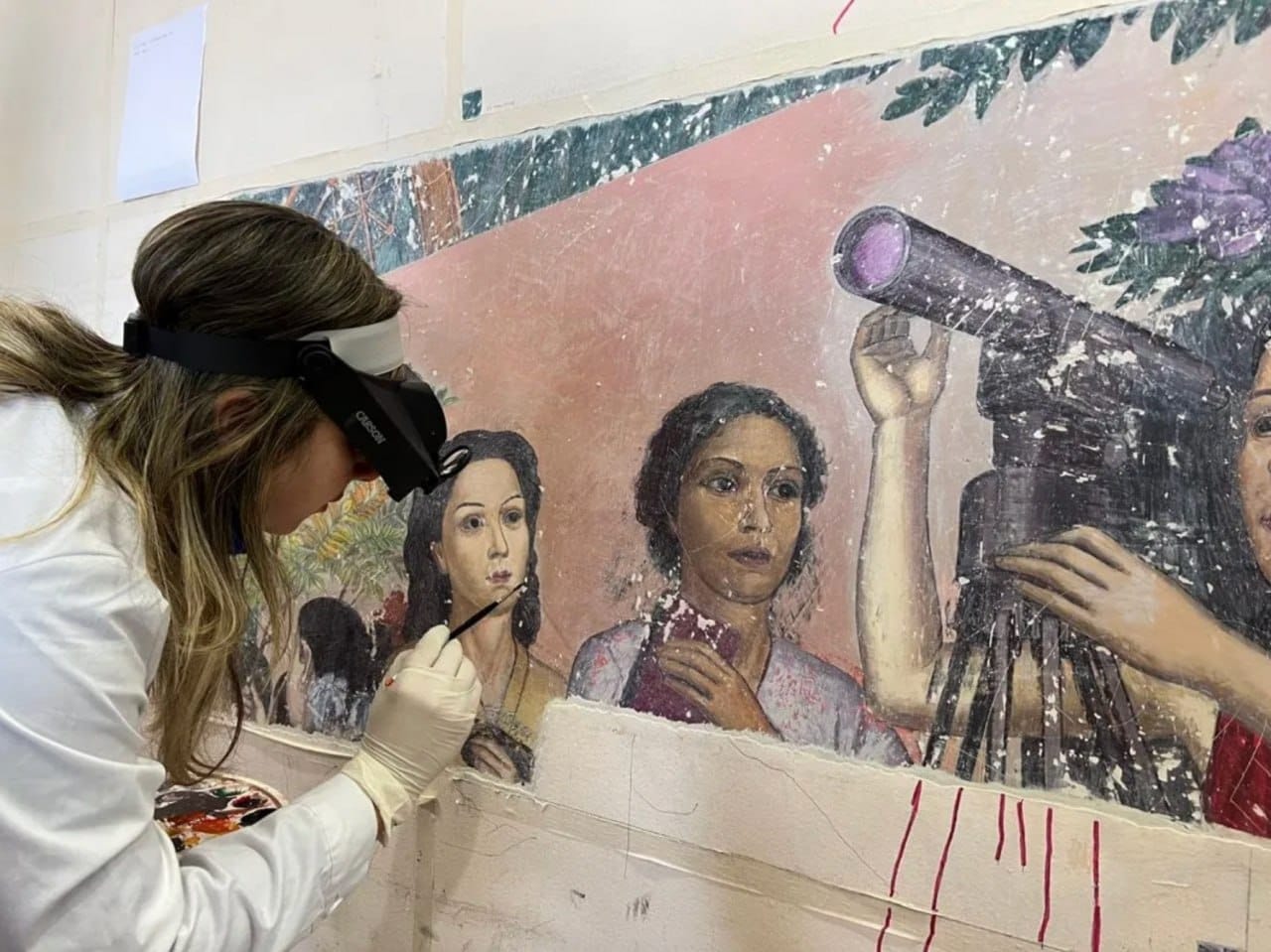
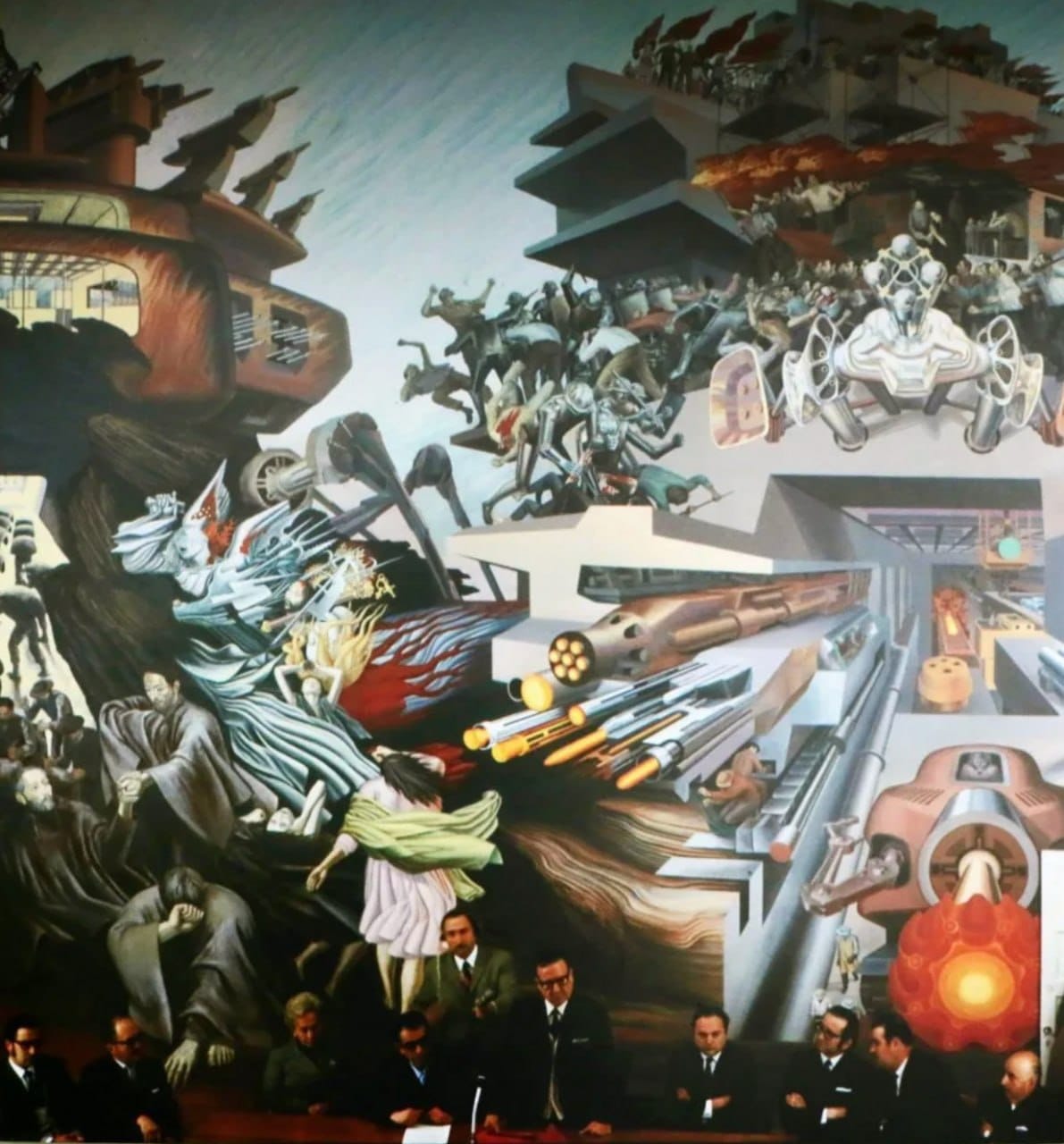
Julio Escámez's mural "Beginning and End" was commissioned in 1969 for the ceremonial hall of the municipal building and took two years to complete. Its theme will be familiar to our own readers: the life of workers and peasants, oppression by the ruling classes, and the possibility of social transformation through comradeship and unity.
The unveiling was a great event. The Nobel laureate Pablo Neurad wrote a solemn address for the occasion, and President Allende visited Chillán two months after the official opening in June 1972, made a speech and had himself photographed against its background. Pablo Neruda called the work a repository of the most extraordinary essences of creation. The allegory of its title and content carried the viewer from the beginning of the class struggle in the country to tranquil prosperity at its end, and, broadly speaking, the mural was ideologically in keeping with the programme of Salvador Allende, who died in the course of Pinochet's coup.
That was precisely its chief failing in Pinochet's eyes. One might ask why a dictator should trouble himself with a painting in a provincial town hall. Had the mural not become so conspicuous an iconographic image of the Allende regime, and had not every leading figure been photographed in front of it, no one would have remembered it in particular. And so, after the coup of 1973, Pinochet ordered the destruction of the mural, tied as it was to the left-wing project, while its author was very swiftly pushed out into exile in Costa Rica.
For half a century the mural was considered irretrievably lost; it was said to have been hacked off with bayonets or smothered in tar. But not long ago, in 2021, some inquisitive researcher found orange glimmers beneath layers of white paint: the flame of a national monument of monumental painting. It eventually emerged that the work was larger than had been supposed, although part of it had been cut away to make room for a second floor and a window had been hacked through the main image. Today the two-part mural, with an area of about 42 square metres, has been recognised as a national monument, and its restoration is planned for completion by December 2027.