In the 1790s, campaigns arise in England against the currents blowing in from France, alarming for their backdrop of bloody reprisals and the overthrow of a monarchy
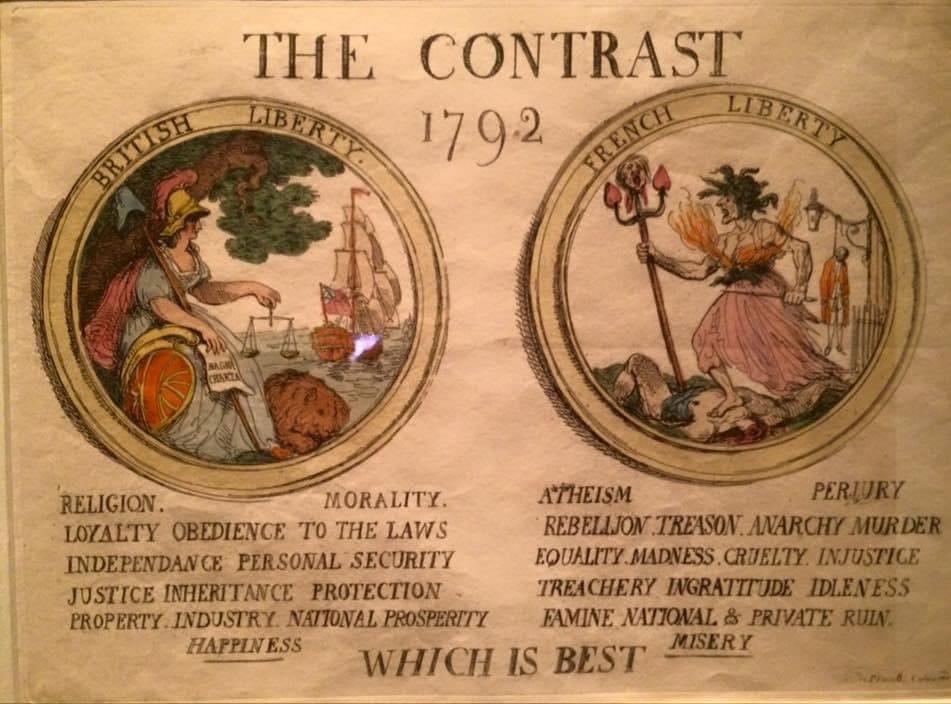
In the 1790s, campaigns arise in England against the currents blowing in from France, alarming for their backdrop of bloody reprisals and the overthrow of a monarchy. A propaganda broadsheet sets two allegories of Liberty side by side: Britannia, with the scales of justice, Magna Carta under the protection of the imperial lion, and a staff topped with a Phrygian cap, naively borrowed from the French, set against a hideous French Medusa, attended by destruction and death. I do not know whether it is worth recalling Tocqueville's idea that liberty and equality cannot exist at the same time. Or, say, reflecting on the overwhelming majority of Britons, who in the 1790s lived in extreme poverty, while the handsome posters spoke of industry, national prosperity and happiness. And what, in the end, in historical perspective, is better: religion, morality and lawfulness, or atheism and anarchy?