In 1990, off the coast of Benicarló, at the underwater site of Piedras de la Barbada in eastern Spain, 43 iron helmets were raised from a depth of six metres
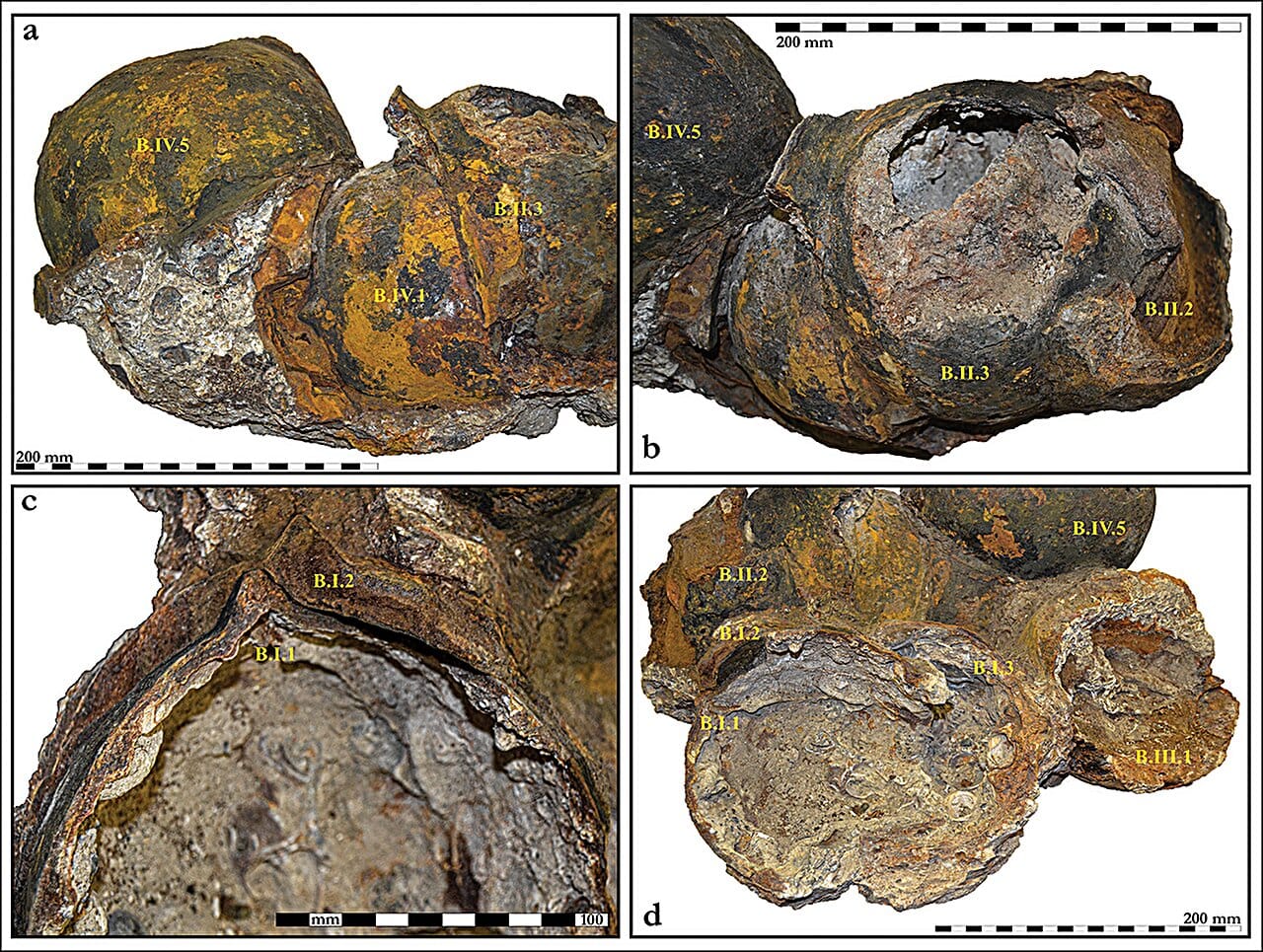
In 1990, off the coast of Benicarló, at the underwater site of Piedras de la Barbada in eastern Spain, 43 iron helmets were raised from a depth of six metres. For over thirty years they were held to be Roman, if only because helmets are a commonplace Roman find in Iberian waters. Besides, they turned up in the same zone as Roman anchor stocks, amphorae and bronze helmets. By proximity, then, they were attributed to Rome.
A new study has taken that logic apart. A team led by Manuel Fralliciardi of the universities of Alicante and Salerno carbon-dated the textile lining that survived inside the iron shells beneath the marine concretions. The result pushed the helmets back to the late fourteenth or early fifteenth century, making them more than a thousand years younger than first thought. It appears, then, that this is the largest hoard of medieval helmets in the western Mediterranean: of regional manufacture, equipment for light infantry, dating from before the standardisation of fifteenth-century plate armour, in a time of maritime instability off the Valencian coast. Raimon Graells, a co-author of the study, calls it direct evidence of large-scale trade in arms.