Paul I's tutor, Platon, Archbishop of Moscow and Kaluga, in his sermon on the feast of the Kazan Icon of the Mother of God, 22 October 1779, reasons on good and ill fortune, paying due respect precisely to the state of misfortune
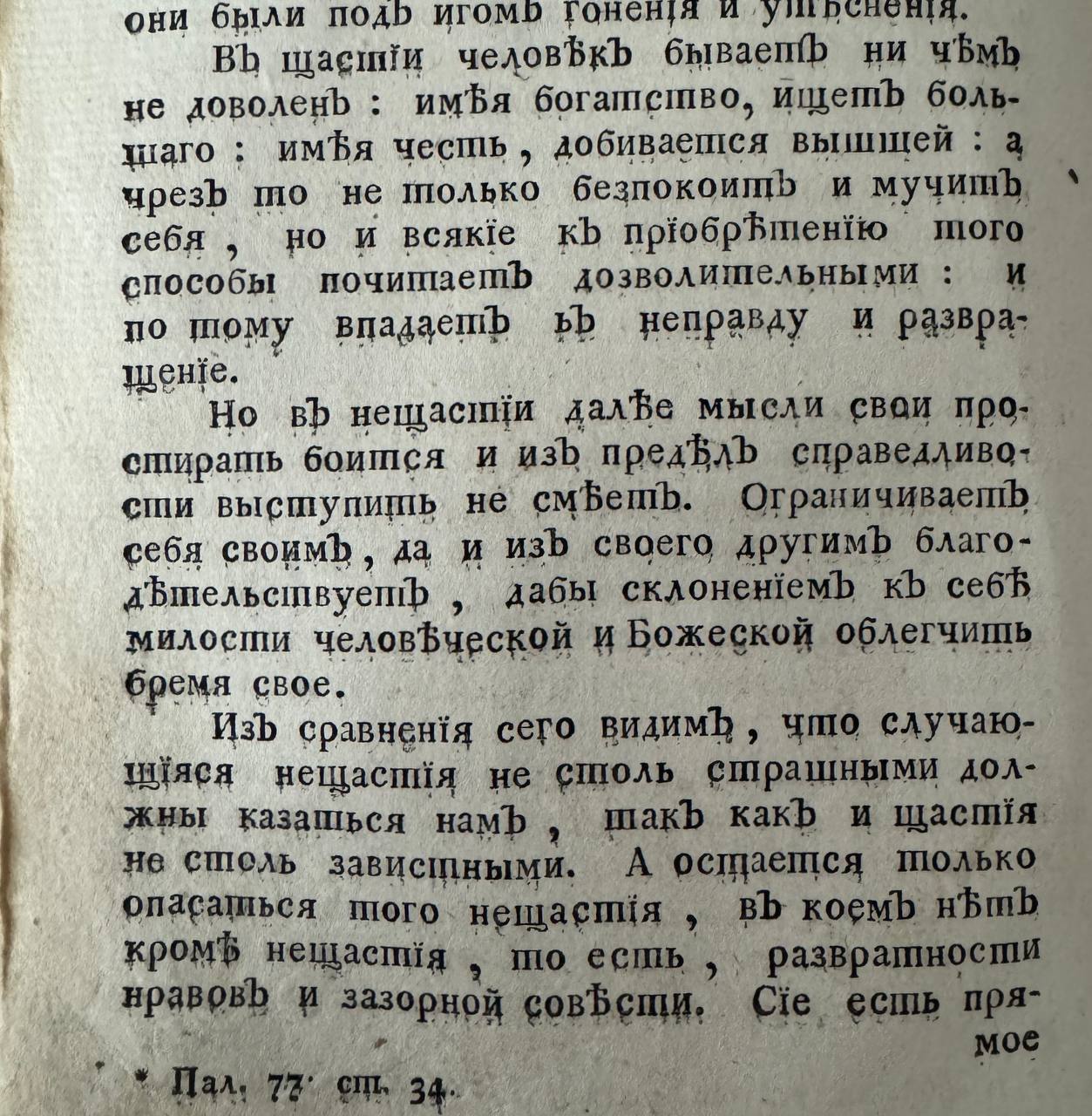
According to Archbishop Platon, we reckon as misfortunes those occurrences that run contrary to our wishes, because we discern in them no hidden benefit, whether from our natural deficiency of understanding or from paying too little heed to things.
The heavenly physician hands us a cup of bitterness, in the draining of which a saving remedy is contained. Such bitterness cannot be accounted bitterness, for it holds the sweetness of a cure; just so, outward calamitous occurrences cannot be accounted misfortune if through them we are guided towards the better.
Platon nevertheless draws his flock's attention to this: where there is no wholeness of honourable morals, no untainted conscience, where purity of morals is lost and the conscience is burdened with vices, that condition of a man is the truly unfortunate one, the result not of God's good will but of human depraved self-will.