At Lamoda's "Pygmalion's Fitting Room", one of the strangest stands at Cosmoscow, created by Valeria Titova and Daria Tishkova, they recall the story told by Ovid of the Cypriot sculptor who carved a figure from ivory and…
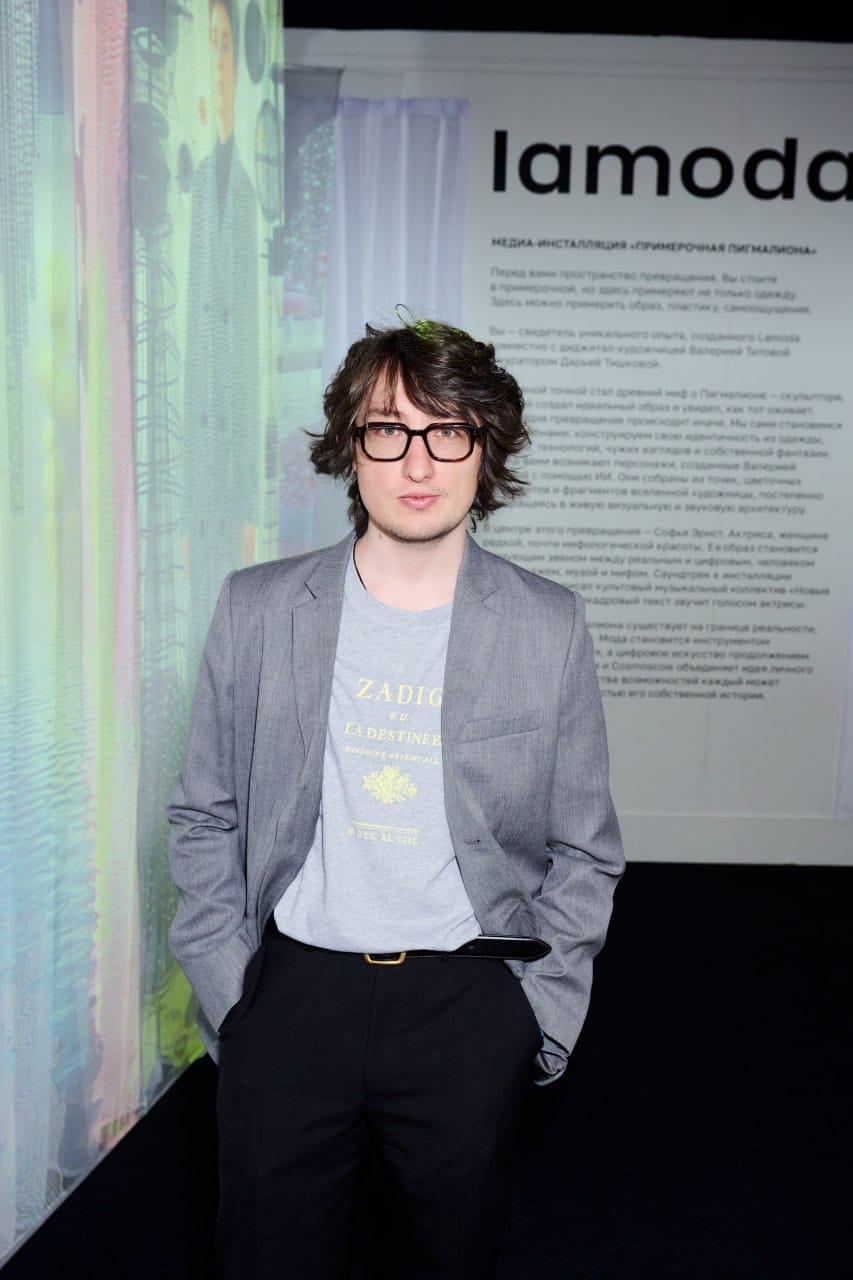
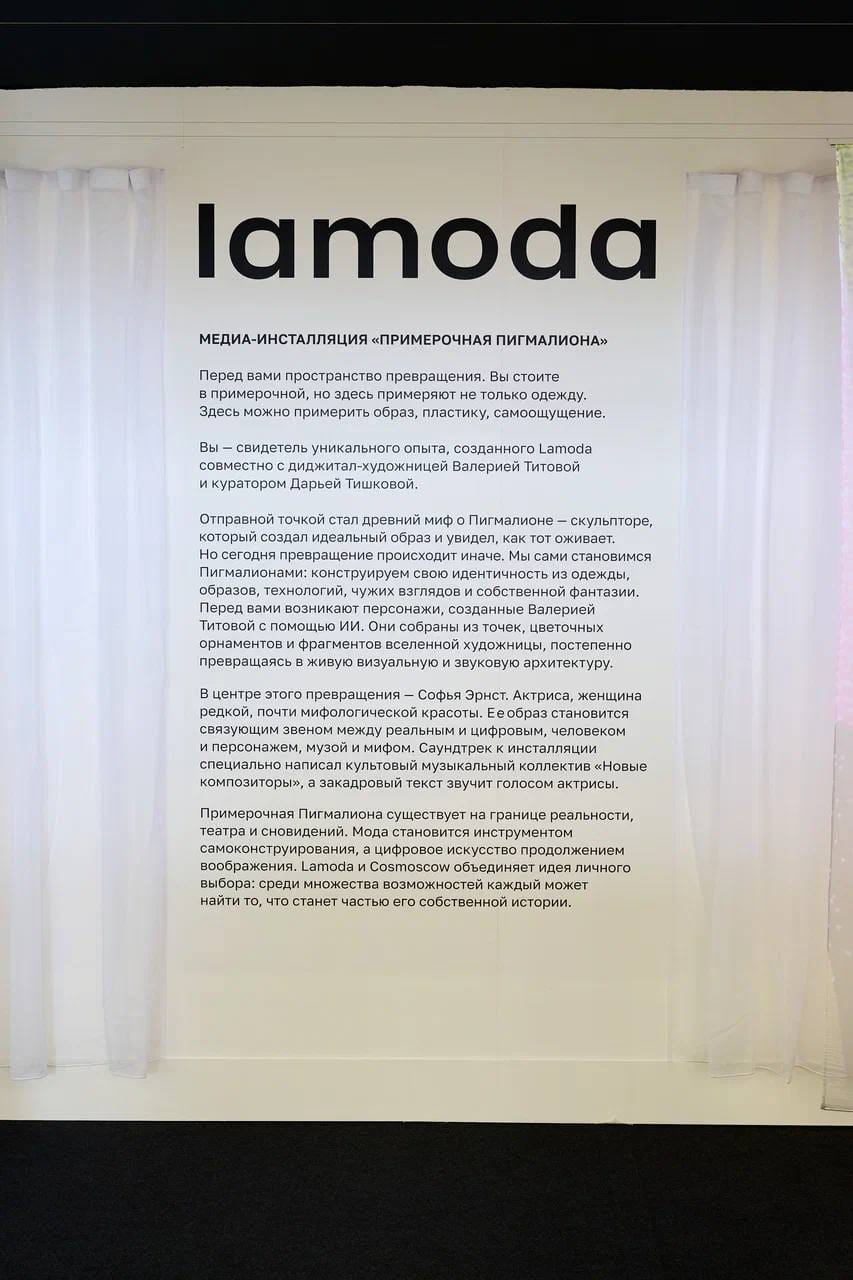
At Lamoda's "Pygmalion's Fitting Room", one of the strangest stands at Cosmoscow, created by Valeria Titova and Daria Tishkova, they recall the story told by Ovid of the Cypriot sculptor who carved a figure from ivory and fell in love with it. People usually leave the textbook plot unfinished, but Pygmalion brings his beloved gifts: amber, shells, smooth pebbles, lilies, painted balls, little birds; he dresses her in gowns and ornaments of pearl. And he waits for her to answer with a living impulse.
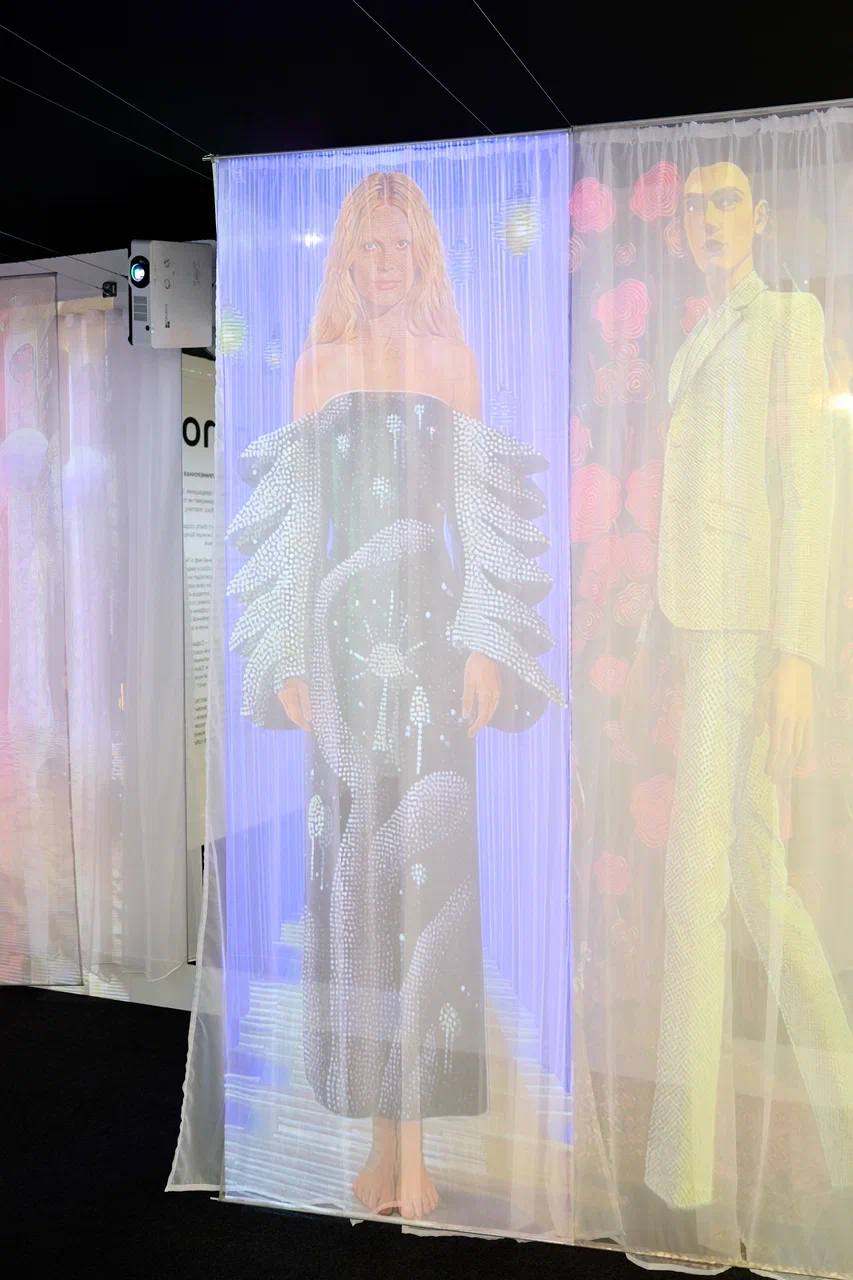
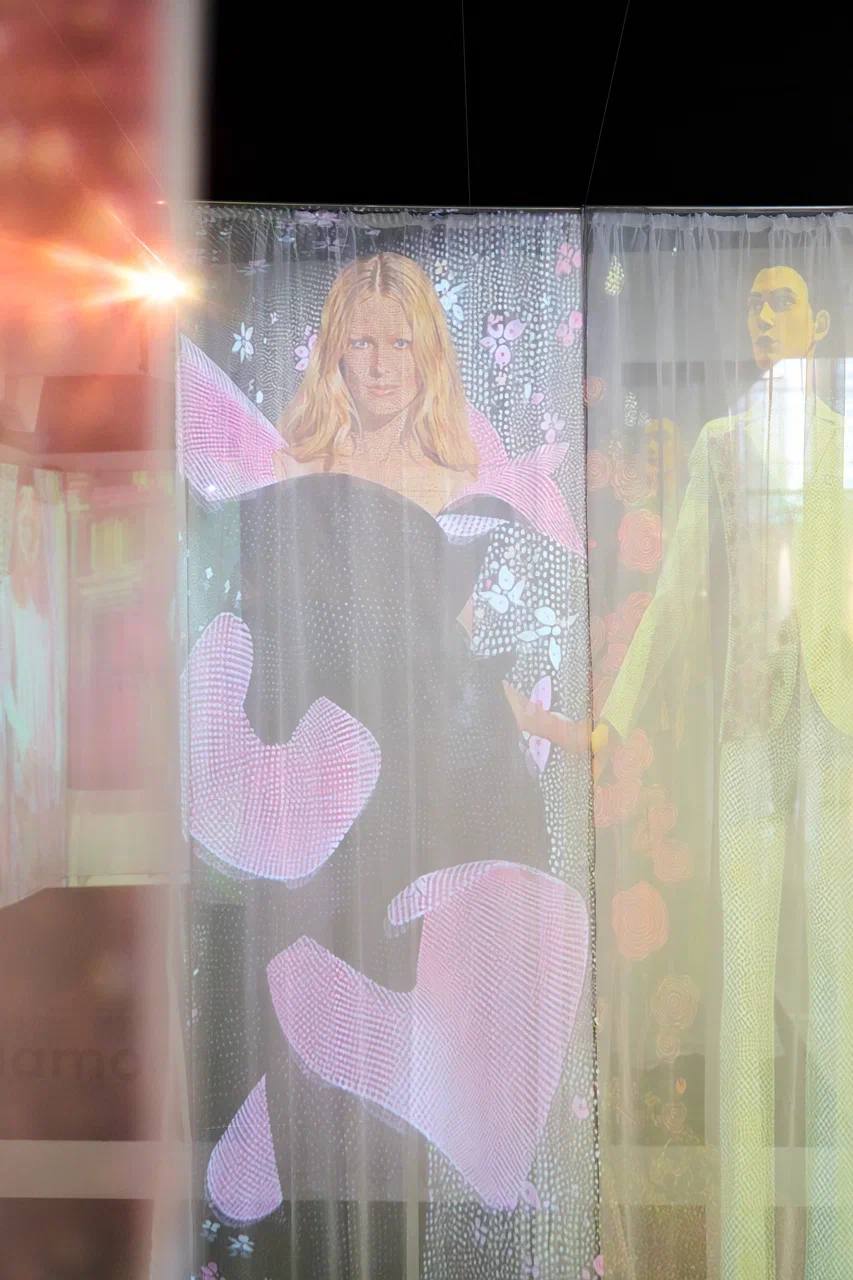
Lamoda's "Pygmalion" takes a slightly different angle. The space is assembled entirely from projections. You find yourself in a fitting room, but there are no hangers and no garments: first you enter, and then your image passes into the mirrors and comes back to you. Clothing becomes light, and the figures assembled with the help of AI from dots, floral ornaments and scraps of memory unfold into an architecture of which you yourself become a part. The authors invite us to ask whether the body ends where the image begins.
All this takes place to a musical accompaniment by the Leningrad duo "Novye Kompozitory" (the New Composers), Valery Alakhov and Igor Verichev, whose name was once coined by Timur Novikov. These are legends who recorded Insect Culture with Kuryokhin, received from Frank Zappa a Prophet 2000 sampler in lieu of a fee, and invited Brian Eno to Petersburg.
But since we find ourselves not in a studio where a human creation is made but in a fitting room, I would suggest recalling not Rousseau, who first gave Galatea her name, nor Bernard Shaw, but Pushkin and Eugene Onegin:
Он три часа по крайней мере
Пред зеркалами проводил,
И из уборной выходил
Подобный ветреной Венере,
Когда, надев мужской наряд,
Богиня едет в маскарад.
Literal translation
He spent at least three hours
Before the mirrors,
And came out of his dressing room
Like flighty Venus,
When, having put on a man's attire,
The goddess drives to a masquerade.
Onegin was both sculptor and creation, and the dressing room became his laboratory, from which a deity emerged in borrowed vestments. Today only the number of mirrors would change, and their ability to look back. And the words heard in the installation, that "in the fitting room there are several versions of a person: the one who came in, the one who looks into the mirror, and the one who will come out", take on life well beyond the bounds of a single fair.