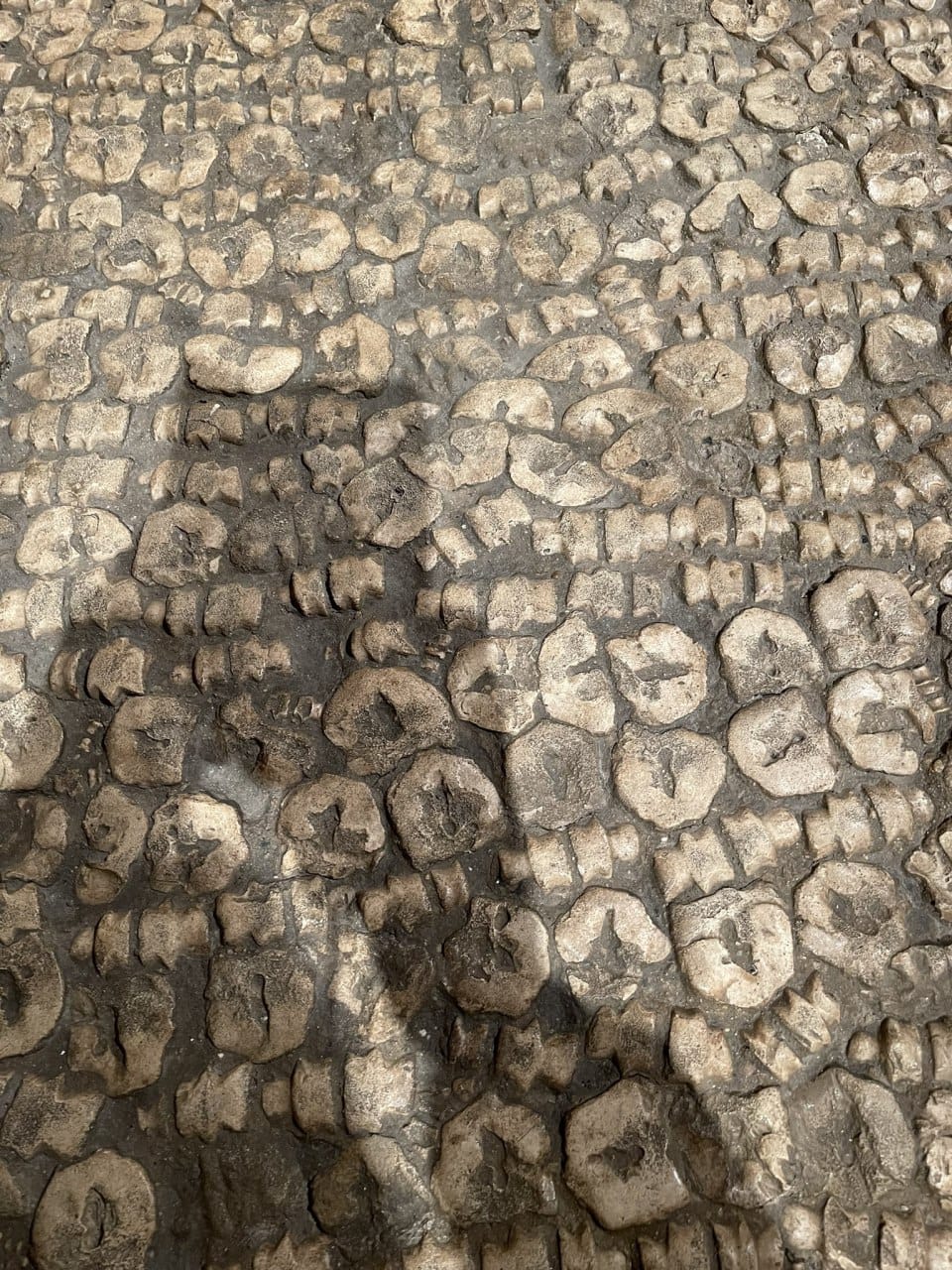
This is what a seventeenth-century road paved with cattle bones looks like in Oxford
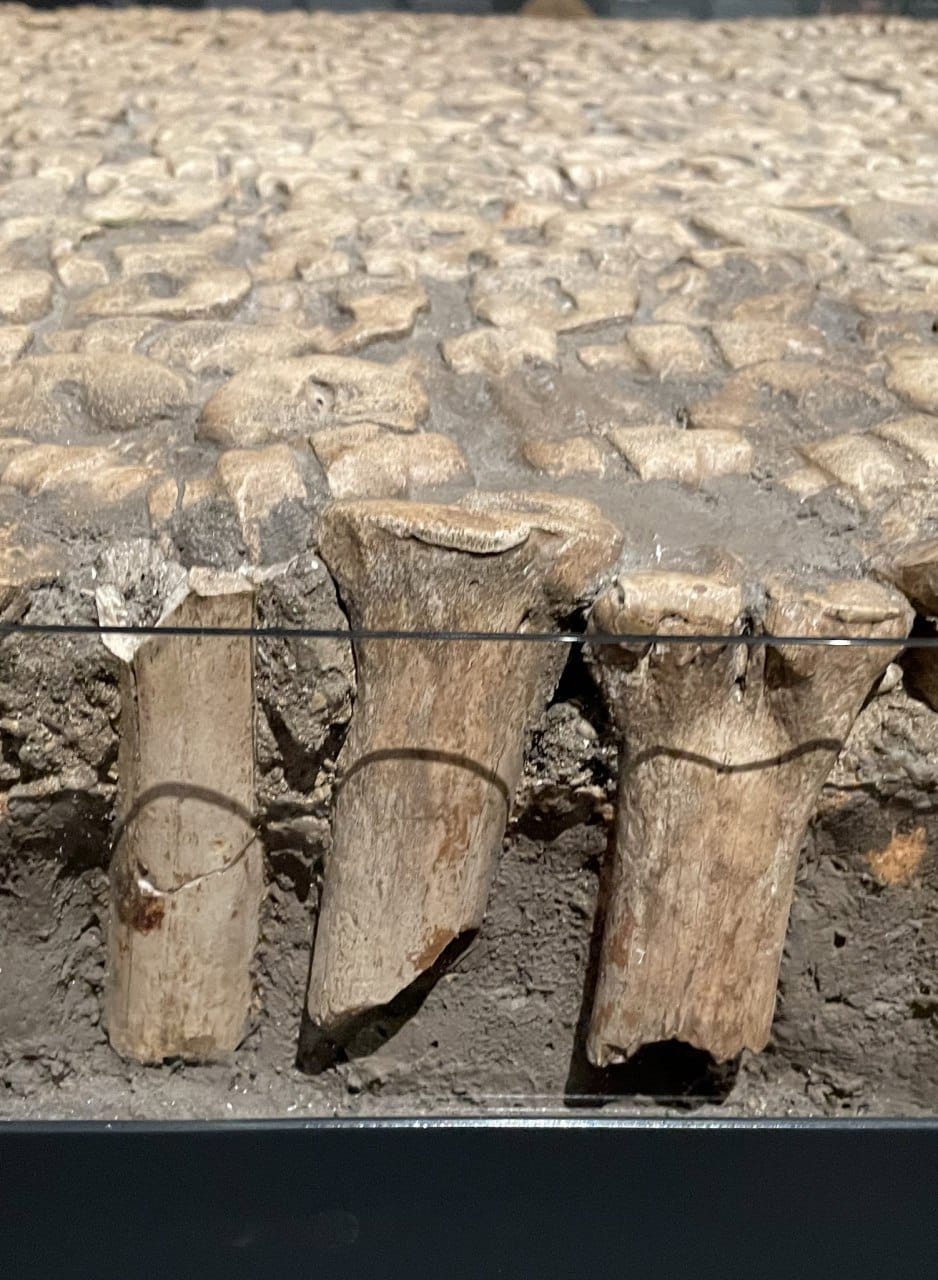
Bones as a road surface were used not only in England but more or less everywhere in Europe. In the Moscow Kremlin an entire street has been found, admittedly a far older one, dating from the twelfth century, which had been laid with the bones of domestic animals. The bone paving of this ancient Moscow street lay beneath the wooden planks of the roadway, and the bones in it were of every kind, mostly from cows and horses: ribs, teeth and jawbones alike. In places the layer of bone was from 20 to 50 cm thick, and in others, apparently where there was a hollow, it formed whole patches covered with a layer of bones.
So in a certain sense the inhabitants of many ancient cities are quite literally walking on bones