Among the Moscow state gymnasia, the Fourth stood in a class of its own
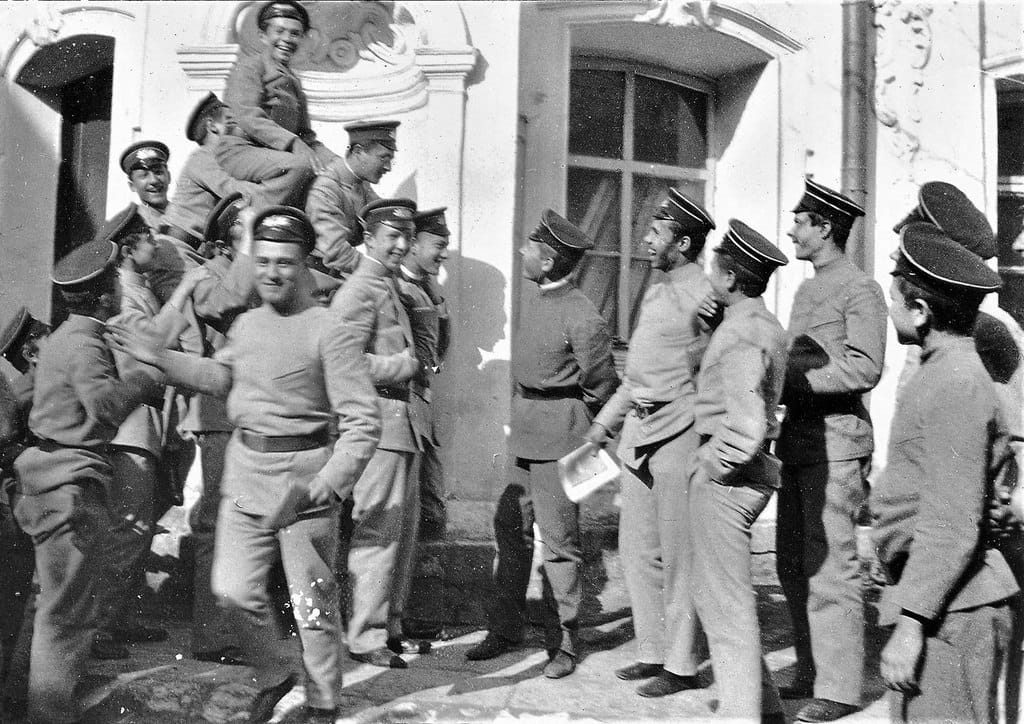
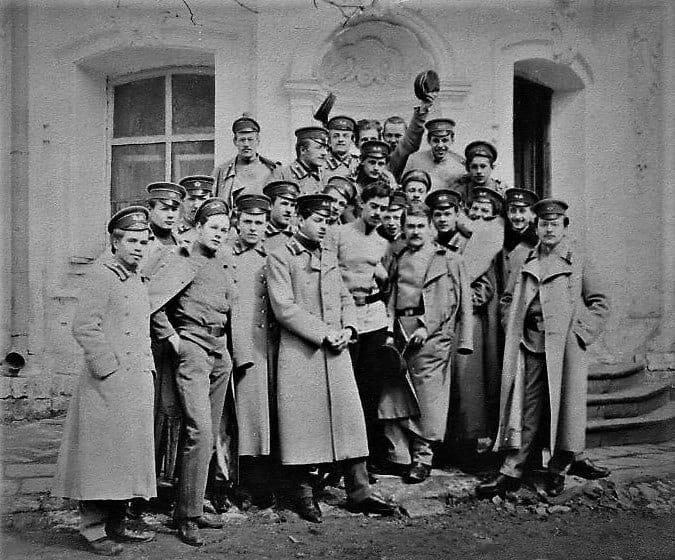
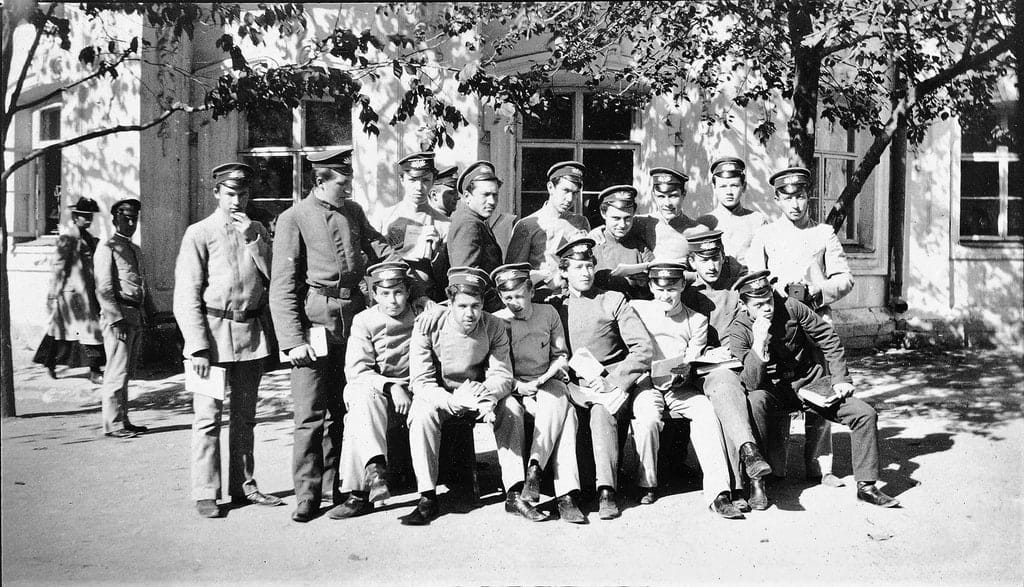
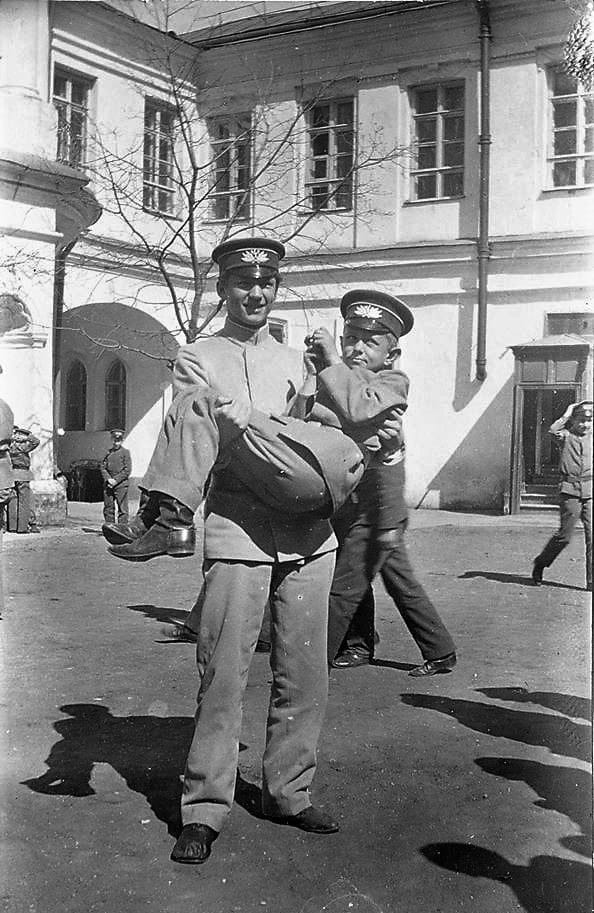
Among the Moscow state gymnasia, the Fourth stood in a class of its own. It was a classical school of the highest rank, with Latin and Greek, and with the right of direct entry to Moscow University. Its teachers were men of uncommon gifts: the physicist Kraevich, whose textbook outlived several generations of pupils, the literature master Polivanov, and the mathematicians Malinin and Burenin. Malinin knew how to turn a lesson into a duel, pupil against teacher, pupil against himself. It was evidently this spirit of contest that drew out of young Kolya Zhukovsky the future "father of Russian aviation": by the third form he was already the best in the gymnasium, and his friendship with Malinin determined the direction of his brilliant abilities. In 1864 Zhukovsky left the gymnasium with a silver medal.
Another pupil, Kostya Alekseev, who was destined to become Stanislavsky, decidedly disliked the place. His mother had opposed any gymnasium from the start: she feared the punishment cells, coarse classmates and contagious diseases. Kostya held out for three years and left. But the gymnasium did give him one thing: here he made the acquaintance of Savva Morozov, who in later years would become the chief patron of his theatre.
Alyosha Shakhmatov, admitted straight into the fifth form, remembered the gymnasium differently, with a gratitude he never abandoned to the end of his life. He was called a boy-legend, and not without reason. In his correspondence with the eminent scholar Sobolevsky he never revealed his age, and the latter addressed him as "my dear sir". A year before his final examinations Shakhmatov acted as an opponent at the defence of Sobolevsky's own master's dissertation. Ten years after the gymnasium he became an academician. His comparative-historical method turned the study of the Russian chronicles upside down.
The list of the gymnasium's graduates on Pokrovka looks almost incredible. The Bolshoi Theatre opera singer Khokhlov. The anthropologist Zograf. The zoologist Zernov, founder of hydrobiology and creator of the first Soviet institute of fisheries. Fyodor Getye, the first chief physician of the Soldatenkov Hospital and personal doctor to the Kremlin leaders. And Alexander Puchkov, a man compared to Dr Haass: where the latter gave his heart to the poor, Puchkov did everything to keep a person from dying at a critical moment. It was Puchkov who in 1923 created the Moscow ambulance service, and his crews who drove round the city after the bombings of the war years. To him also belong two inventions that millions of people use every day with hardly a thought for their origin: the metal combs at the ends of Metro escalators, so that feet are not injured, and the three-sided bottles for vinegar essence, which cannot be mistaken for ordinary bottles by touch in the dark.
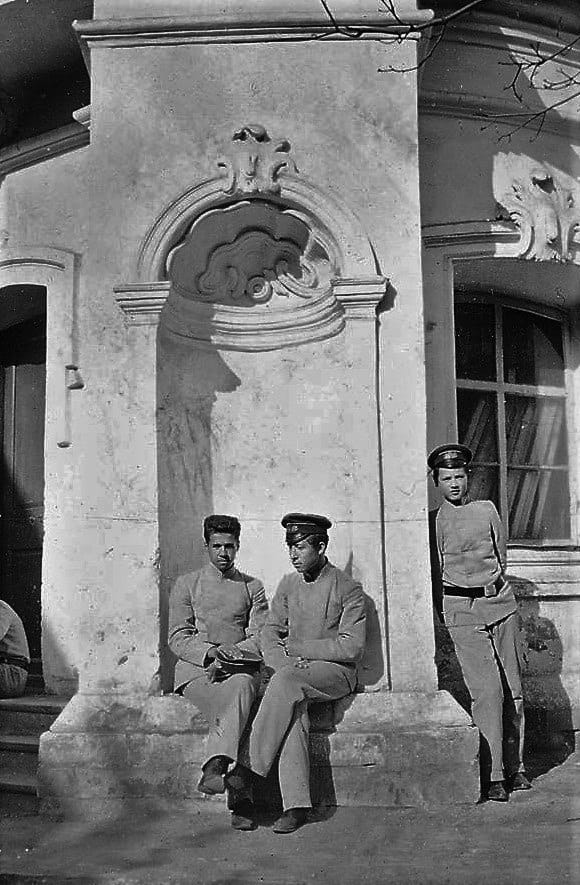
After the Revolution the gymnasium, like all the others, was abolished. The building at Pokrovka 22, the famous "chest-of-drawers house", the former Trubetskoy estate, passed first to communal flats and hostels, then, in 1958, became the House of Komsomol Members and Schoolchildren of the Bauman District. Today it houses the All-Russian Research Institute "Geofizika" and the Russian Foundation for Mercy and Health. The baroque façade with its columns and stucco still adorns the ensemble of Pokrovka, one of the few examples of Rastrelli baroque in Moscow, listed in every guidebook and in the public mind quite unconnected with the gymnasium that gave Russia the aviator Zhukovsky, the linguist Shakhmatov and the director Stanislavsky.