Excavations of the Sphinx from Thutmose IV to 1925 and Elihu Vedder's painting
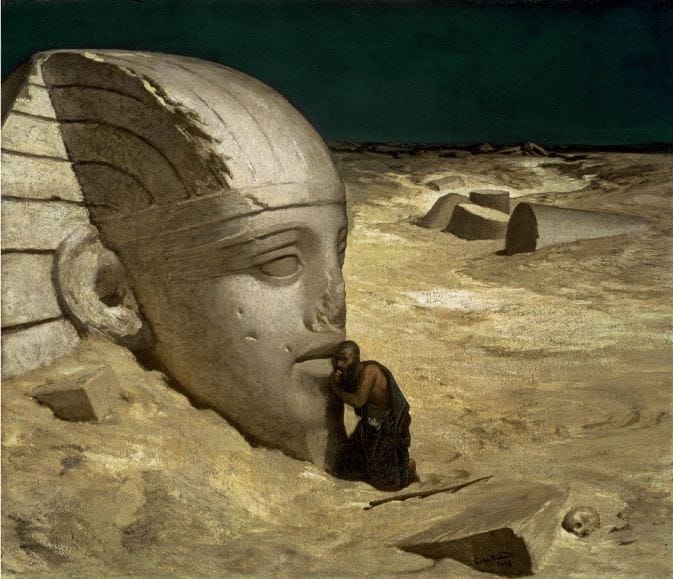
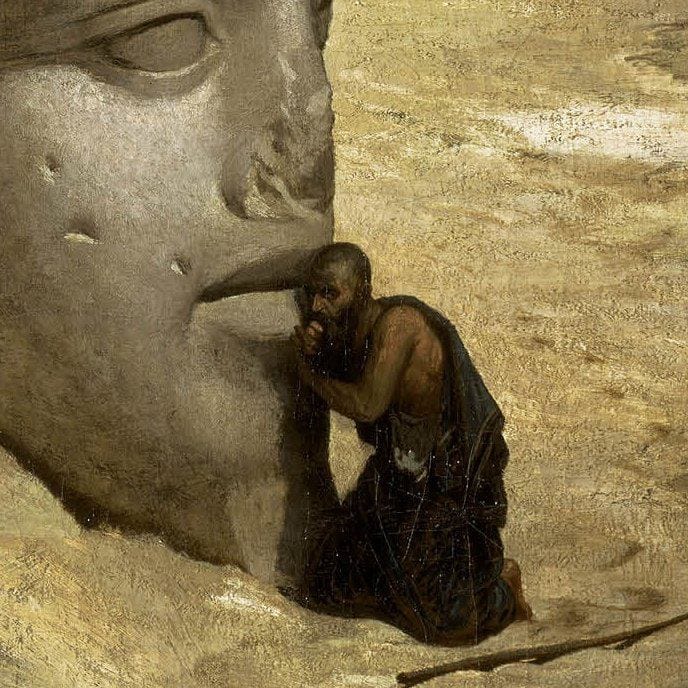
Created in 2500 BC, already within the first millennium of his long life the Sphinx had sunk into the sand up to his shoulders. Time and again attempts were made to dig him out: the majestic sentinel of the pharaohs buried nearby was cleared both by Thutmose IV in the 1390s BC and by Ramesses II in the second half of the 1200s BC. The Greeks and Romans, seeing his magnificence, tried to shore up his paws. But the sand always returned, hiding the figure carved from a single block of sandstone and leaving only the head in view. Nevertheless, in no period of history did the Sphinx lose his mystical significance for those who knew of his existence: tribes and religions changed, and new priests of new gods went on turning to the ancient figure with offerings and entreaties, in search of prophecies and signs. Not even the fact that for the greater part of his 4,500 years the great Sphinx lay wholly buried beneath the sand got in the way of this, as is shown in this painting of 1863 by the American Symbolist Elihu Vedder, “The Questioner of the Sphinx”. The wonder was freed from the sand completely only in 1925.