The Khludov Psalter, created in the mid-ninth century, has been recognised as a UNESCO monument and inscribed in the Memory of the World International Register
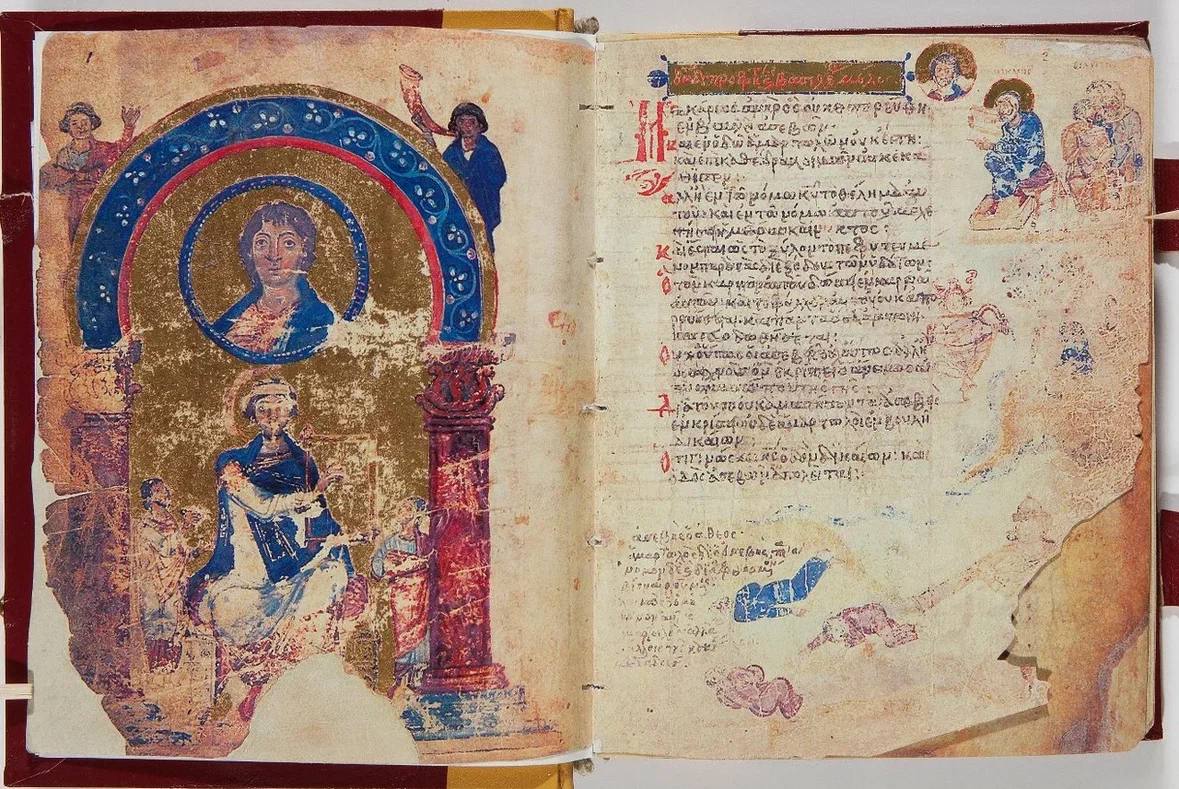
The Khludov Psalter is an outstanding work, and one of only three early monuments of Byzantine art to have survived to our day. It is kept in the collection of the State Historical Museum. Scholars believe that this unique monument of Byzantine manuscript culture was created between 843 and 867.
The uniqueness of the manuscript lies not only in its age or in the unprecedented number of beautiful miniatures in the margins of its leaves, but also in the fact that it is one of the first monuments of the post-Iconoclast era, produced after a long period of systematic destruction of Byzantine devotional images.
The Psalter is decorated with 208 painted miniatures and a frontispiece. The numerous miniatures fall into four groups. The first are Old Testament scenes, directly illustrating the text of the Psalter. The second are literal illustrations, depicting rivers, animals and plants. The third are typological, representing New Testament events that David had foreshadowed in the psalms. The fourth group reflects the realities of the day: townsfolk, clergy, soldiery and emperors. It is practically the only manuscript in which the living echoes of the polemic between the venerators of icons and the Iconoclasts are so plainly visible. Some miniatures even portray historical figures who took part in the Iconoclast disputes of the first half of the ninth century.
In the third quarter of the seventeenth century it was to be found not far from Constantinople, in the library of the Monastery of the Holy Trinity on the island of Halki. In the nineteenth century the Psalter was already on Mount Athos, in the library of the Iviron Monastery. There it was acquired by the well-known Russian Slavist Viktor Ivanovich Grigorovich during his scholarly journey through the Balkans, and in 1847 the manuscript was brought to Russia. Soon afterwards Grigorovich sold it to the benefactor and collector Alexey Ivanovich Lobkov, in whose collection the manuscript received its first scholarly description. After the owner's death the manuscript passed to the noted Old Believer collector Alexey Ivanovich Khludov. From that time it has been known as the "Khludov" Psalter. After Khludov's death in 1882, in accordance with his will, his collection of manuscripts and early printed books was transferred to the Nikolsky Edinoverie Monastery. In 1917 the monastery's collection was nationalised and handed over to the State Historical Museum.