A Case in Which the Image of an Ancient Nubian Ruler Could Be Mistaken for a Figure of Christ
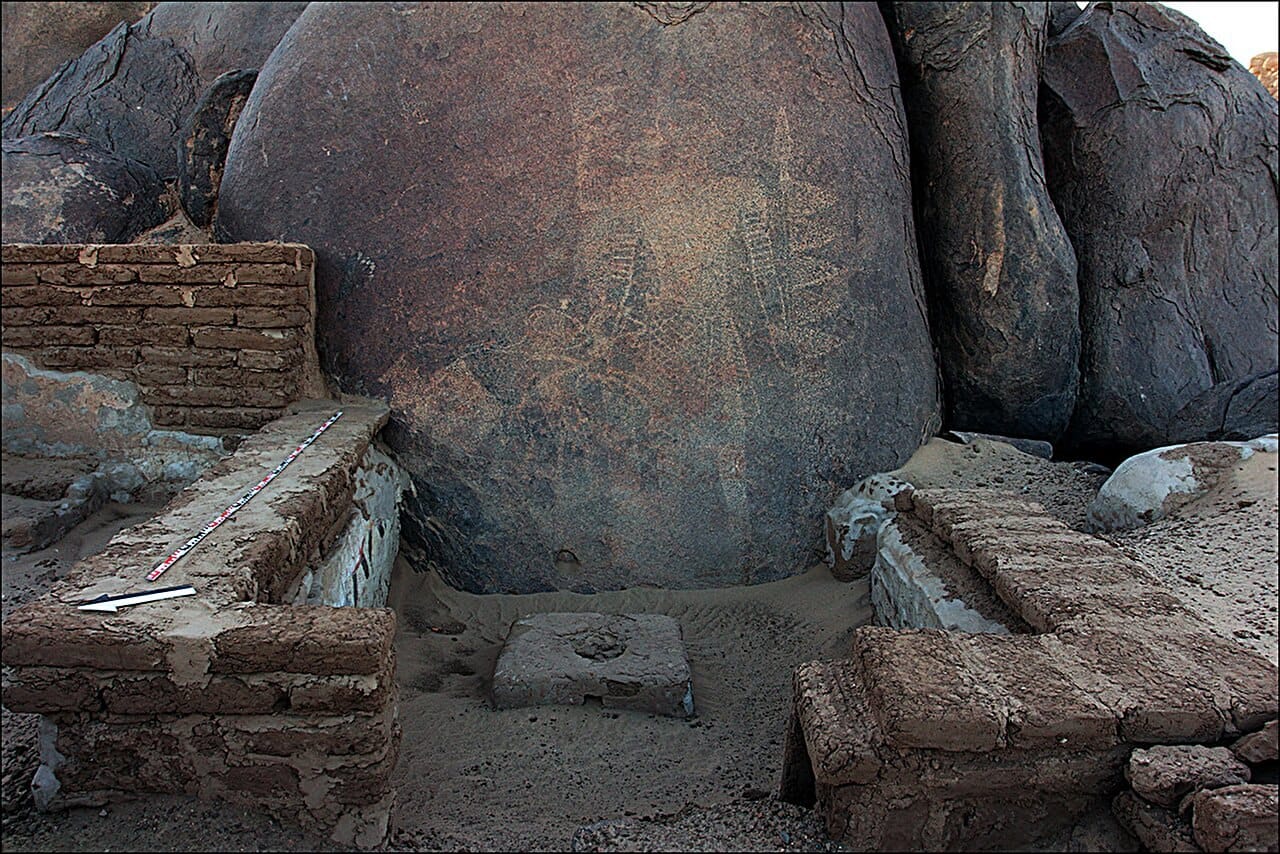
The petroglyph from Misida (2) in northern Sudan, near the Third Cataract of the Nile, consists of a male figure about two and a half metres tall and two goats. The figure is thought to depict a ruler of Kush, the ancient kingdom in Nubia, in present-day Sudan, whose kings in the 8th and 7th centuries BC also ruled Egypt.
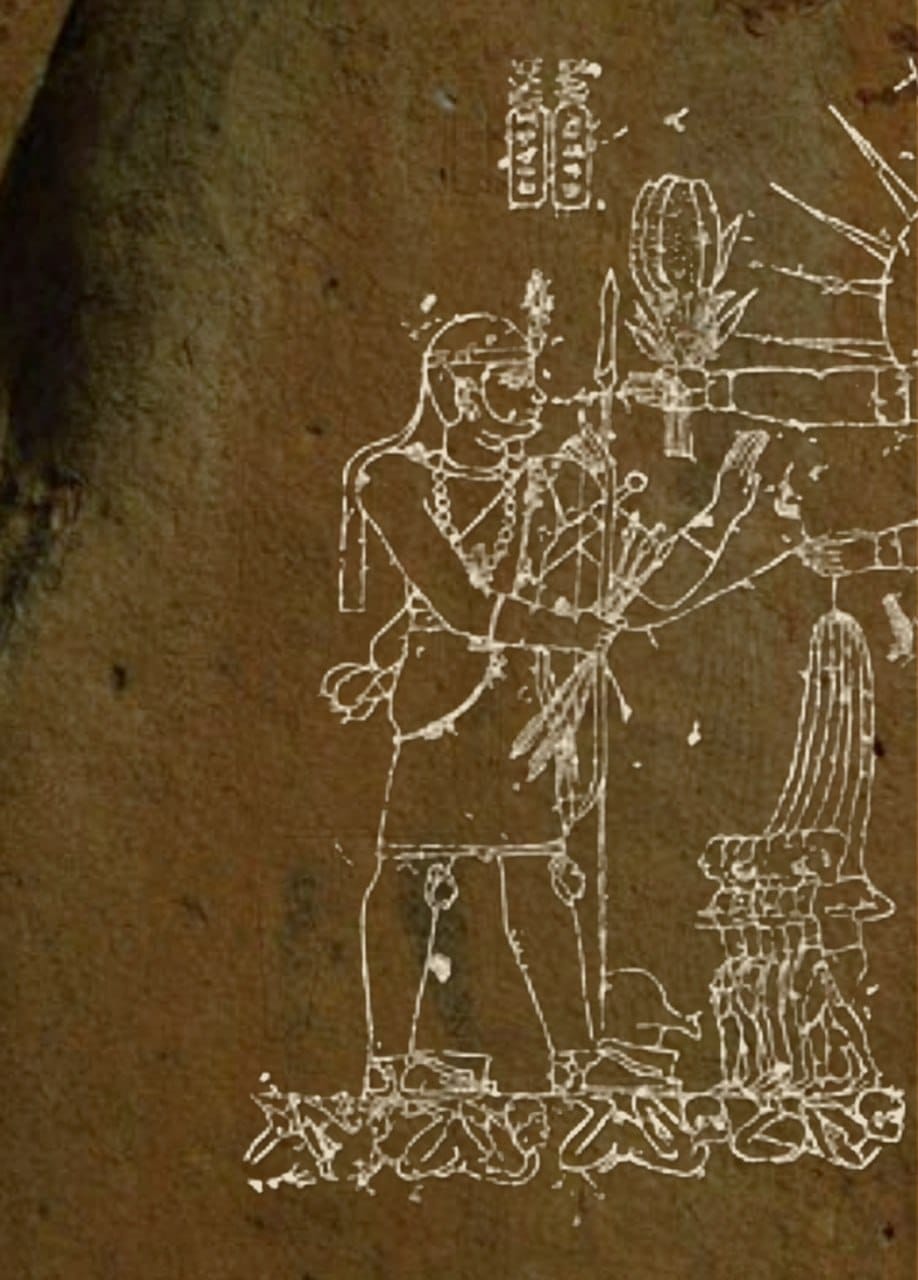
The authors compare the drawing with the relief of King Shorkaror on the rock of Gebel Qeili (1), who reigned from Meroë, the late capital of Kush, in the second half of the 1st century AD. I have tried to overlay a tracing of this relief on a photograph of the rock itself, so that it is clear what is being discussed. The inscription accompanying this relief remains the easternmost known inscription of the Meroitic kings.
In the researchers' opinion, both figures may have marked the border regions of the kingdoms.
What has Christ to do with it? In the 7th century AD the inhabitants of Misida built a church right up against the boulder bearing the figure, and it is doubly curious that the Polish archaeologists earlier named their project “The Good Shepherd of Misida”, because the figure with the goats recalled the early Christian image of Christ as a shepherd. On the surrounding hills the researchers also found large images of a lion, an elephant and, possibly, a rhinoceros, as well as Christian crosses and ships.
Meanwhile, the most ancient drawings of animals in this area date from the period of the Kerma culture, which existed in Nubia from roughly 2500 to 1500 BC.