Today, 2 August, the Orthodox tradition marks Elijah's Day
Today, 2 August, the Orthodox tradition marks Elijah's Day. It opens a series of significant feasts in August. Below is a brief survey with historical and cultural notes.
2 August: Elijah's Day (commemoration of the Prophet Elijah)
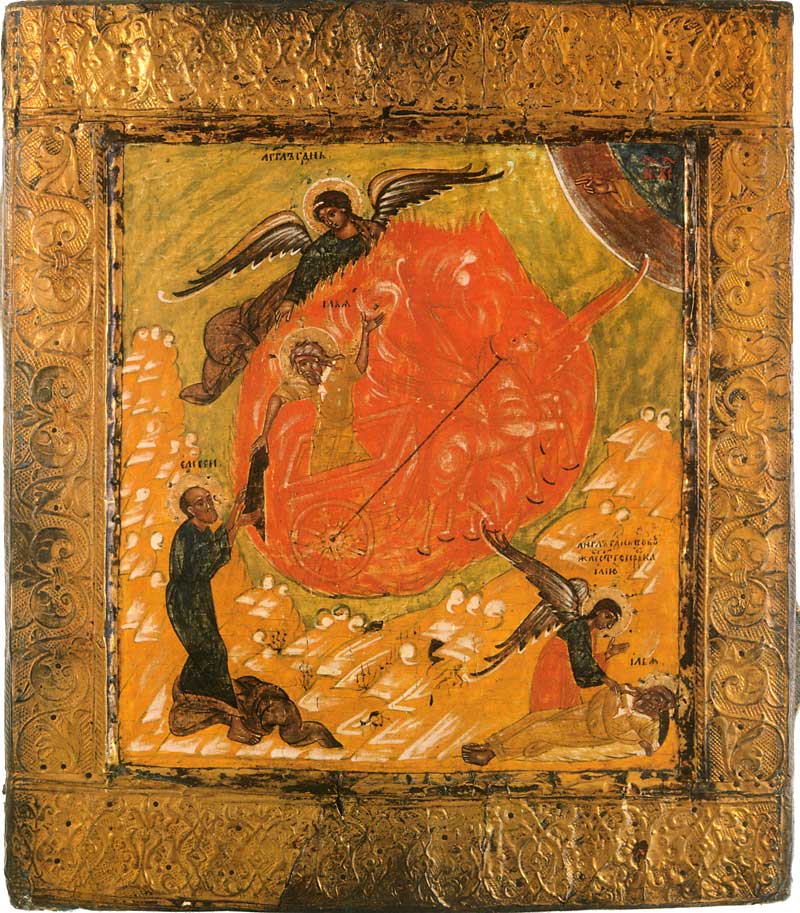
The Prophet Elijah was an Old Testament righteous man who lived in the 9th century BC. He spoke out against idolatry in Israel, worked miracles and was taken up to heaven alive, in a chariot of fire. In Christian tradition he is venerated as one of the greatest of the prophets, and in Byzantine and Slavic culture as a protector against drought and a wielder of thunder. In popular tradition this day marked the end of the bathing season: it was believed that after Elijah the water in rivers and lakes "turns cold" and becomes dangerous. The feast had particular significance for the peasantry: in churches the grain was blessed, and prayers were offered for rain and fair weather for the harvest. The weather on Elijah's Day was used to forecast the coming autumn and winter. Lightning on this day was reckoned "thunderless storms", a sign of Elijah's power.
11 August: Nativity of St Nicholas the Wonderworker
The birthday of St Nicholas, Archbishop of Myra in Lycia, one of the most venerated of Christian saints. St Nicholas is honoured as the protector of travellers, sailors and prisoners, and also as a "people's" intercessor and comforter, an image deeply rooted in Russian religious culture.
14 August: Procession of the Venerable Wood of the Life-Giving Cross of the Lord. The Honey Saviour
The feast of the Procession of the Venerable Wood of the Cross goes back to the Byzantine tradition: in August, when epidemics were especially frequent, the Cross was carried out for veneration and for the blessing of water. With this day were linked the beginning of the Dormition Fast and the first of the three Saviour feasts, the Honey Saviour. Beekeepers gathered the first honey of the new harvest and carried it to church to be blessed.
14–27 August: Dormition Fast
One of the four multi-day fasts of the Orthodox calendar. It is devoted to preparation for the feast of the Dormition of the Mother of God. The fast is considered strict and, by the rule, is equated with Great Lent, although it lasts only two weeks.
19 August: Transfiguration of the Lord. The Apple Saviour
One of the Twelve Great Feasts, devoted to the Gospel event of Christ's appearing on Mount Tabor. In popular tradition the day became the second Saviour feast, known as the Apple Saviour. On this day fruit of the new harvest, apples, pears and grapes, is brought to church to be blessed.
28 August: Dormition of the Most Holy Mother of God
One of the most important feasts of the Mother of God. On this day the Most Holy Virgin ended her earthly life and was taken up to heaven. In traditional culture the day was perceived as the symbolic close of summer. Peasants brought fruit and bread from the new harvest to church for the liturgy.