The most important thing I managed to discuss with Mikhail Piotrovsky was not the perpetual succession of museum directors in Moscow, nor the robbery of the Louvre, nor even the hysterics around "colonial museums", but a very specific and direct question:
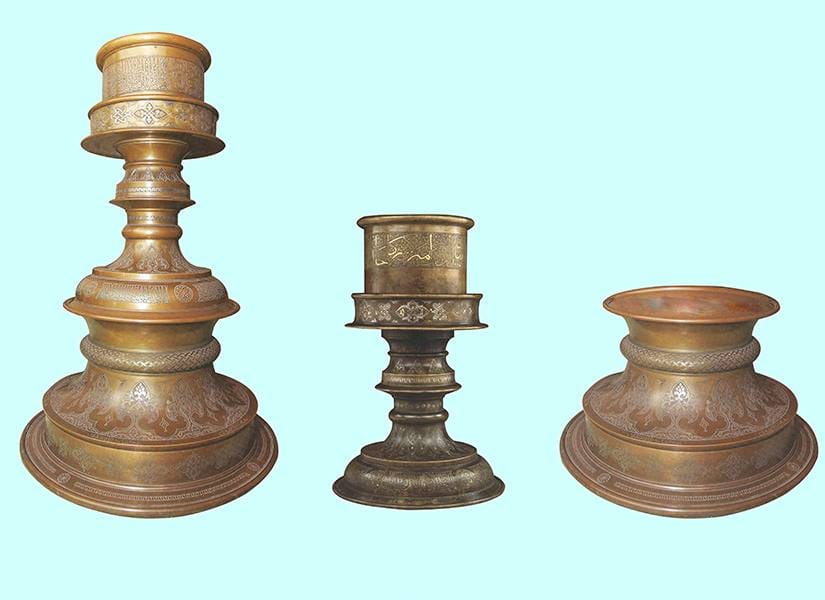
What lamps? Lamps of the 14th century, a fine example of Islamic applied art, once presented by Timur to the mausoleum of Khoja Ahmed Yasawi and kept there until the early 20th century. There were six such lamps in all. The Hermitage, it turned out, has two and a half, so to speak.
Where did the other three go? Those three lamps were stolen in 1905 and eventually sold to the Louvre, where they remain to this day. The Louvre has no intention of returning stolen goods.
And the Hermitage? Together with the lamps, other objects were taken out of Kazakhstan. It was held that they were not sufficiently safe in situ and lacked suitable storage conditions. Formally, however, they were removed for temporary safekeeping. It was then that the colossal taykazan, a ritual, richly decorated bronze cauldron, entered the museum; in 1989 the Hermitage handed it back to Kazakhstan, and today it is displayed in the mausoleum itself.
Mikhail Piotrovsky says the following about returning the lamps:
from the museum's point of view, I believe they should not be touched: let them remain in the Hermitage and go on fulfilling their role as monuments of Timurid art. The cauldron, having returned to the mausoleum, took its natural place there. But in the Hermitage it formed part of a broader narrative about the history of Muslim art, where it was seen as an outstanding masterpiece. Now it has become part of a story about the history of Islam in Kazakhstan. These are different contexts.
To understand his point of view, read the interview in full, and especially the first part of our conversation, devoted precisely to the decolonisation of museums and restitution. It is no accident that I began with this, since the matter of the lamps is what really interests me