Icon of the naming of John the Baptist with the apostles on the reverse
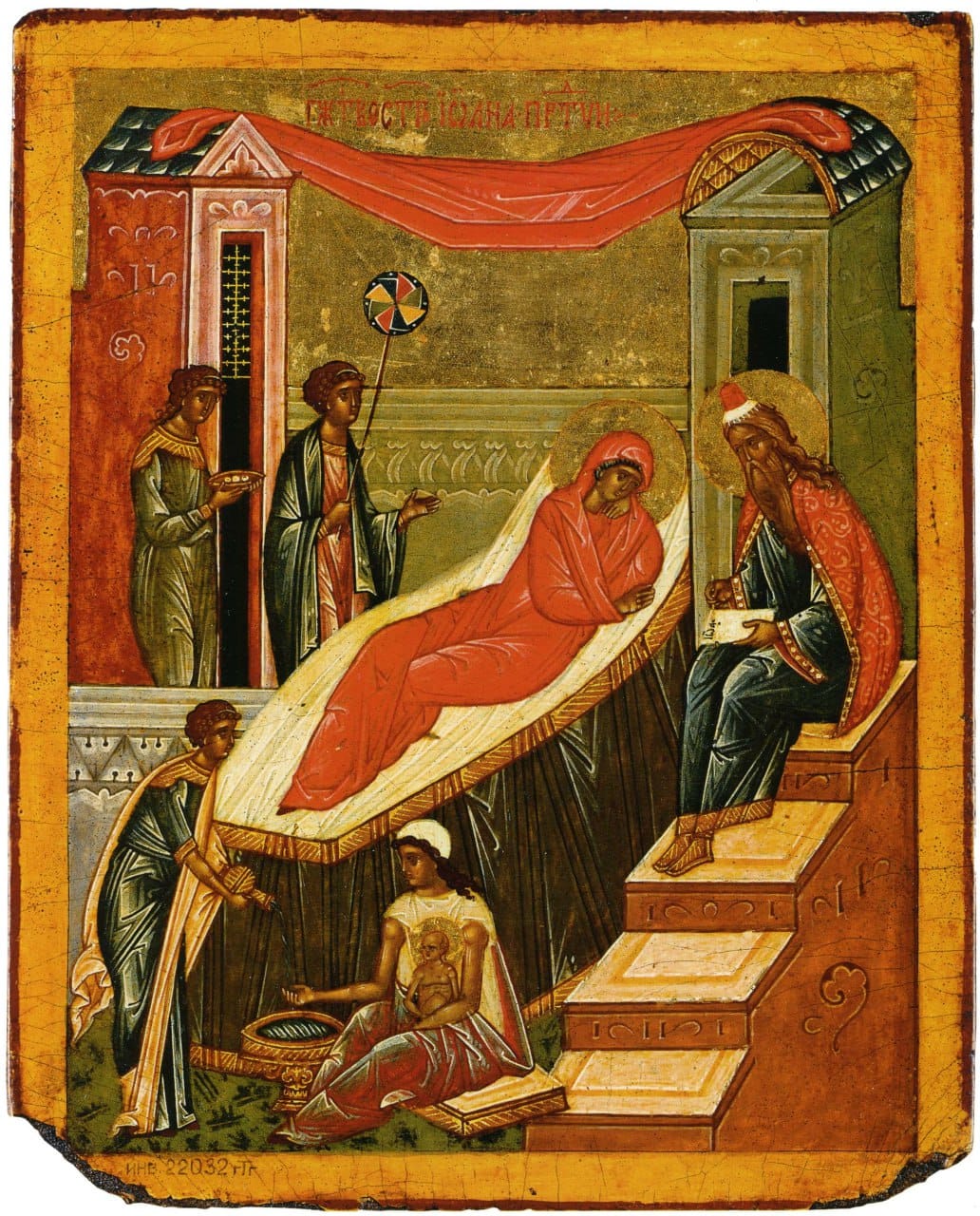
The Nativity of John the Baptist, Russian icon of the late fifteenth to early sixteenth century.
The Gospel tells us that in the reign of King Herod an angel appeared to the aged priest Zacharias and said: “Fear not, Zacharias: for thy prayer is heard; and thy wife Elisabeth shall bear thee a son, and thou shalt call his name John.” Zacharias did not believe him and was struck dumb until the prophecy should be fulfilled. After the birth of the child, Elisabeth began to ask Zacharias what the boy should be called; he asked for a writing tablet and wrote on it: “His name is John”, and immediately recovered his speech.
The iconography of this subject resembles that of the Nativity of the Virgin and took shape in Byzantine art as early as the pre-Palaiologan period, that is, before the thirteenth century.
At the centre of the composition, on a high couch, Elisabeth reclines diagonally in a pale red maphorion. She is turned towards Zacharias and communicates with him by signs. The high priest Zacharias sits on the right on a stepped throne, writing on a tablet the name “IωА” or “His name is John”.
On the left, separated from the couch by a low grey wall, two women approach Elisabeth with a ripida (a ceremonial fan) and gifts (a dish of food).
Below, in front of the couch, is a scene of the infant being bathed in a font by two maidservants. One of the women holds a pitcher in her hand; the other sits beside a bowl of water with the infant John in her arms.
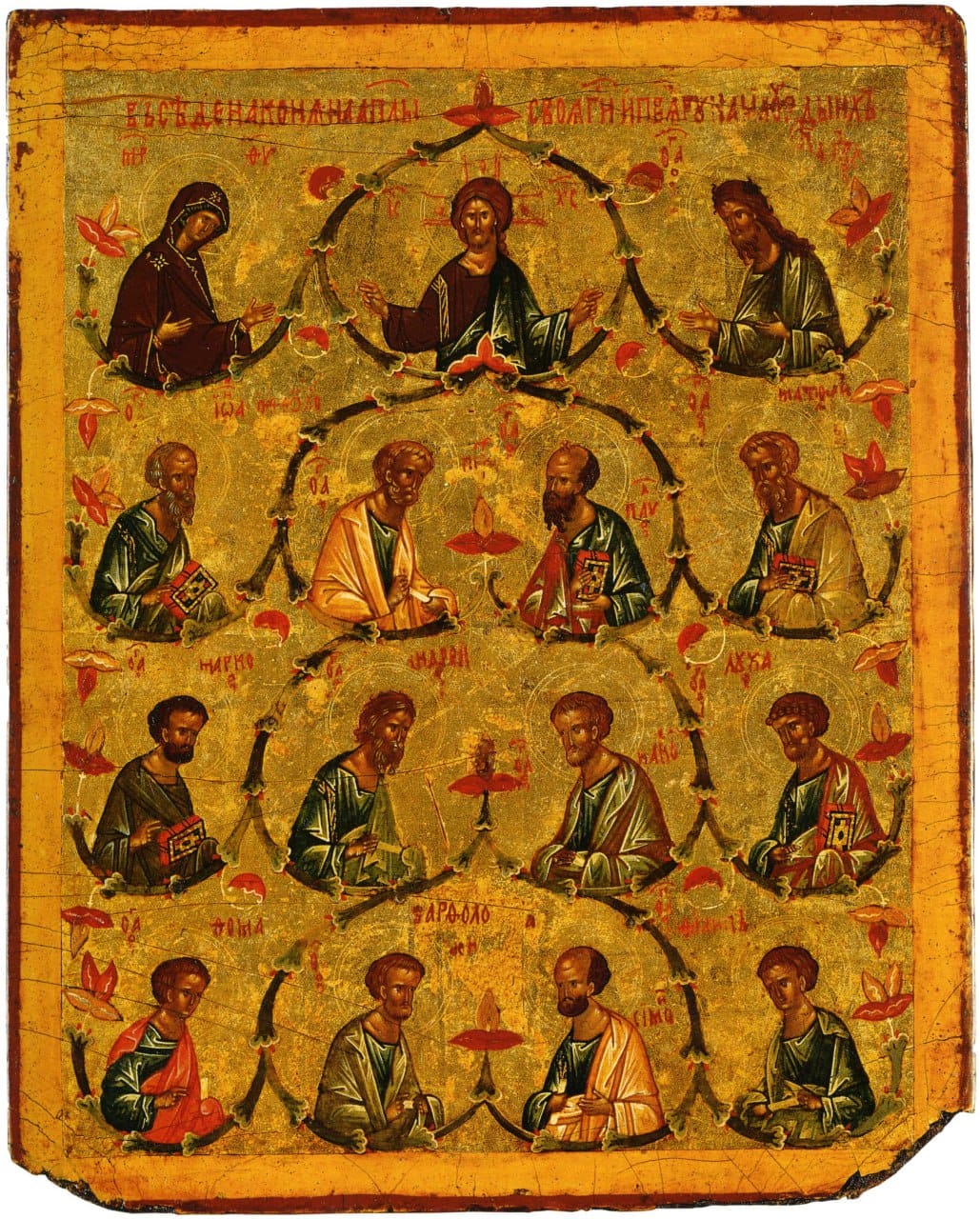
This icon is double-sided. The reverse shows half-length figures of the Saviour, the Virgin, John the Baptist and the twelve apostles, framed by stylised branches with flowers. The inscription on the reverse reads: “He mounted his horse upon the apostles and took their bridles in his hands.”