“When looking over the work of his pupils he spoke for the most part abruptly, in short phrases: ‘The head is too small’, ‘The hand is drawn wrongly’...
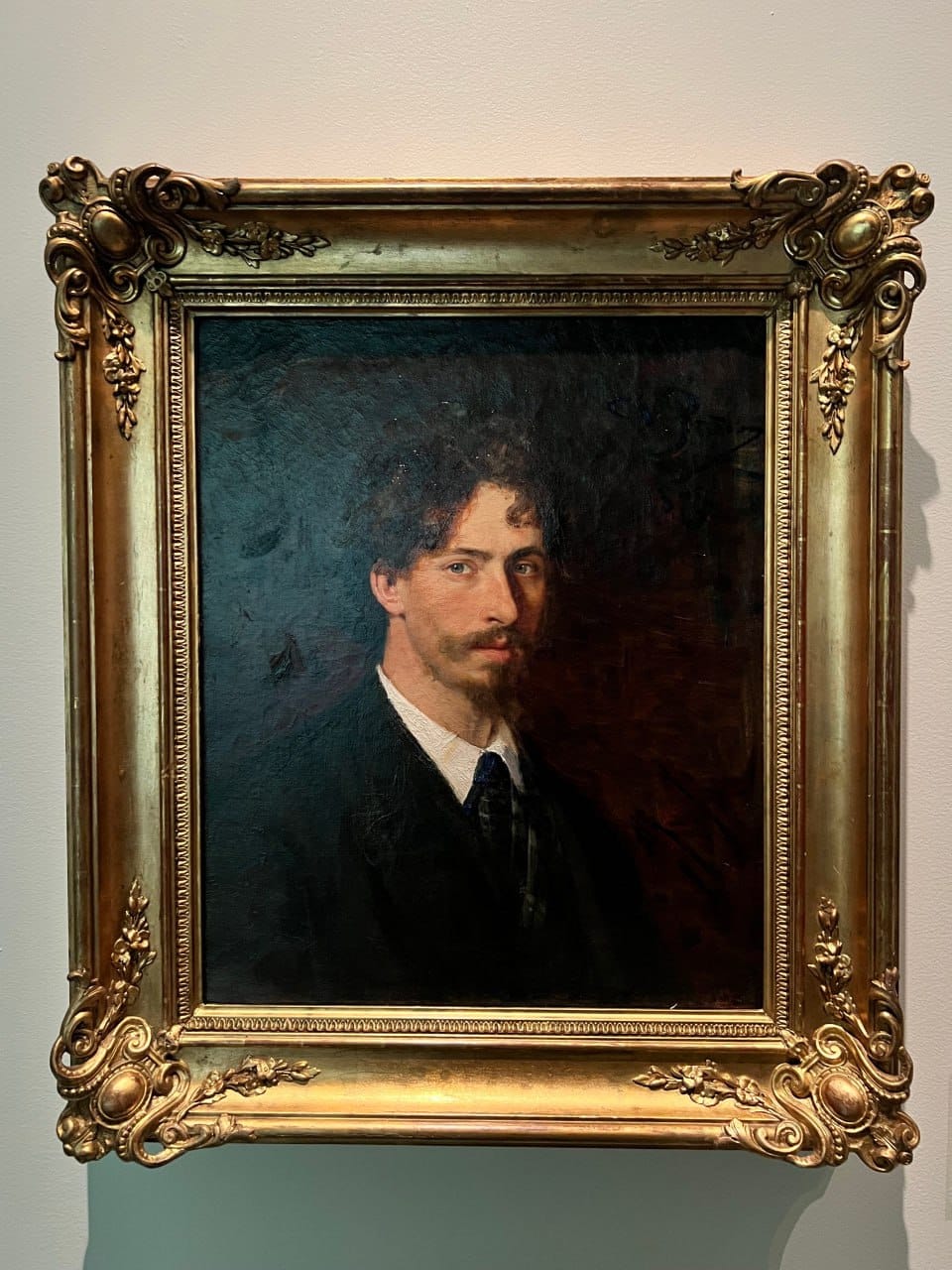
“When looking over the work of his pupils he spoke for the most part abruptly, in short phrases: ‘The head is too small’, ‘The hand is drawn wrongly’... Why too small, why wrongly, Repin usually did not explain, but demanded that his pupils grasp it for themselves. Yet at times there came moments when he explained in detail and with astonishing weight,” so the painter Nikolai Yakovlevich Borisov remembers Ilya Repin, his teacher.
The New Jerusalem Museum has opened a major new exhibition, “Master Repin”, which reveals the great painter through the figure of the teacher.
The display includes works by Repin’s pupils. The artist Anna Ostroumova-Lebedeva names in her memoirs her fellow students in Ilya Yefimovich’s studio: “For tea-drinking and gatherings we had a separate room of our own, at the foot of the stone staircase, at the end of the corridor. Of my comrades I remember Somov, Fyodorov, Malyavin, Shcherbinovsky, Rozanov, Bobrovsky, Bogatyrev, Shmarov, Schröter, Landesen. Grabar and Kardovsky only paid visits, since they were studying in Munich under Ažbe.”
The exhibition tells of the vivid Repin episodes preserved in the memory of his students, pupils, younger colleagues and friends: Dmitry Kardovsky remembered how, according to Repin, a white horse on snow turns yellow; Benois, how Repin painted the portrait of a relative of his, wholly absorbed in attention to the sitter and never entering into conversation with his model. Alexander Kurennoy and Pyotr Myasoyedov were left impressed by the way Repin reworked Myasoyedov’s portrait of Nicholas II with landscape brushes, joking that the result was Alexander III. Naturally, a special place is occupied by the political quarrel between Repin and his protégé Valentin Serov: after Bloody Sunday, Serov left the Academy, blaming the President of the Academy of Arts, Grand Duke Vladimir Alexandrovich, while Repin did not. The story of the struggle over the painting “Peasant Women” by his pupil Malyavin, which was judged insufficiently academic, shows Repin from a particular side. Isaak Brodsky, meanwhile, recalls that when Repin scolded, he took an active part in correcting the faults: he might personally, in the dead of night, scrub out unsuccessful efforts.