Yesterday I attended the opening of the Gerhard Richter retrospective at the Fondation Louis Vuitton
Yesterday I attended the opening of the Gerhard Richter retrospective at the Fondation Louis Vuitton. Believe me, taking in all the splendour Richter has created is harder than reading this text.
Given that some call the 93-year-old Richter the greatest artist of our time, the exhibition is indeed of historic significance. I myself do not regard Richter as such, but his vast retrospective, spanning 60 years of work, with more than 270 pieces across the foundation's 3,000 square metres, makes a serious impression, at the very least, of one of the leading figures of contemporary art.
It is known that Richter himself chose or appointed the curators of his retrospective: Dieter Schwarz, the former longtime director of the Kunst Museum Winterthur in Switzerland, and Nicholas Serota, the former longtime director of Tate. There is something faintly amusing in the spectacle of the giants of art choosing curators for their own retrospectives... each time the choice appears entirely self-evident. And, of course, no museum or collector could have refused to lend works. So one really does get to see everything.
But there seems to be no particular curatorial conception: an ordinary, comprehensive retrospective in plain chronological order over four or five floors, ascending endlessly, until I lost count of how many galleries and tiers there were. There are undoubted masterpieces, and all of Richter's most significant and iconic works are on show, but there are also many ordinary and perfunctory pictures, not to say mediocre ones, with which one could quite well dispense.
Yet compared with the Hockney retrospective, which closed the day before in these very same walls of the Fondation Louis Vuitton, and which many visitors did not see through even to the halfway point, Richter's artistic path, so varied and unpredictable, is far more absorbing.
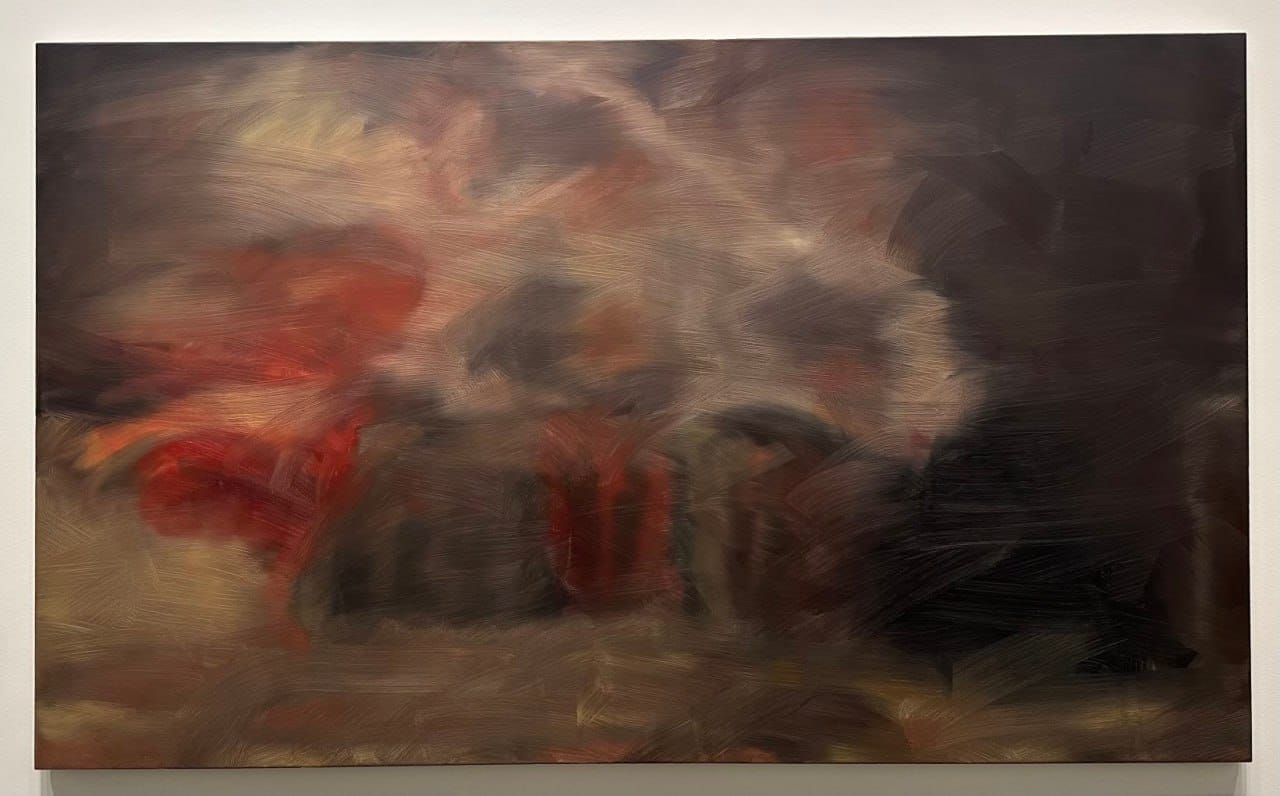
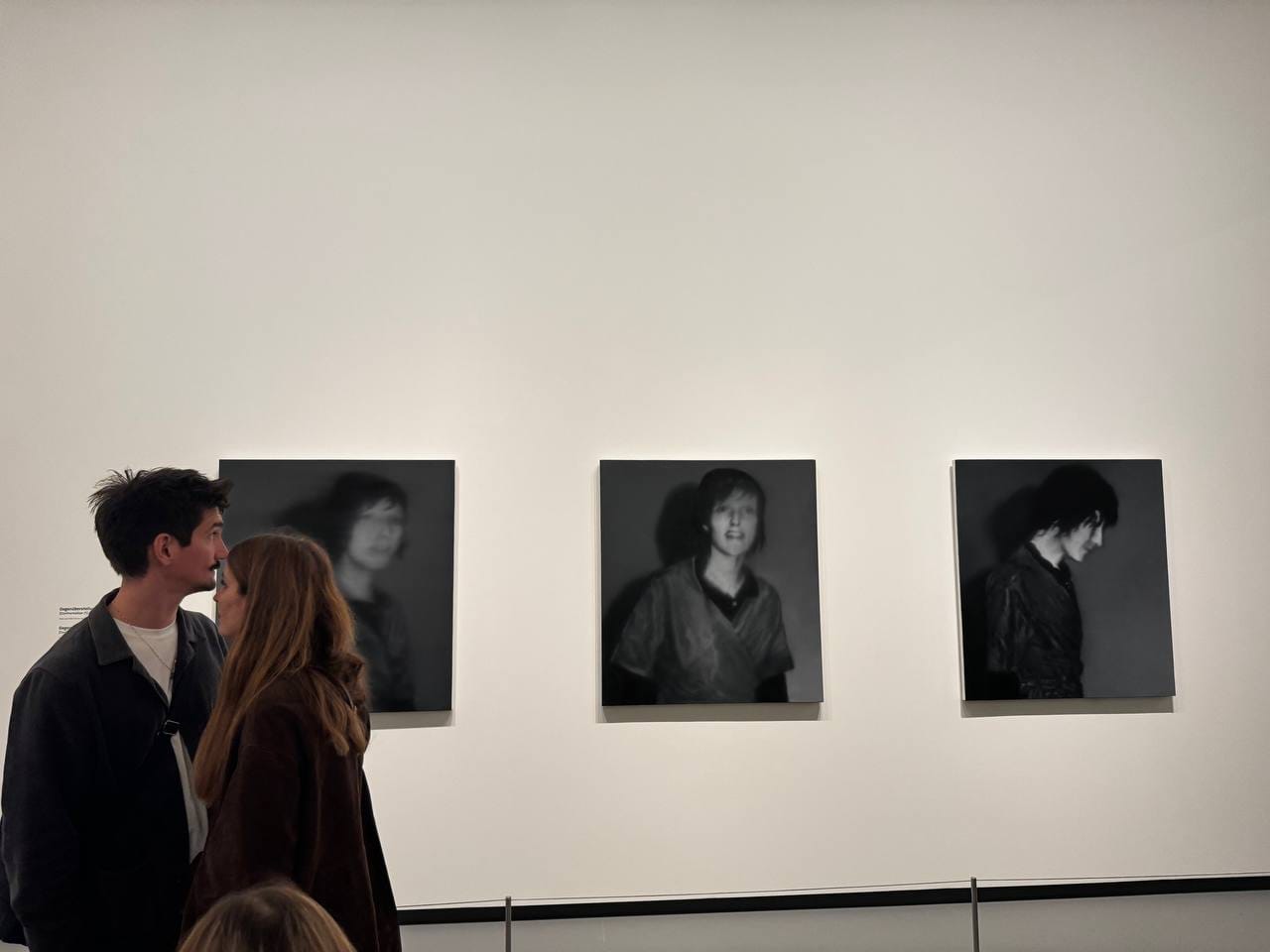
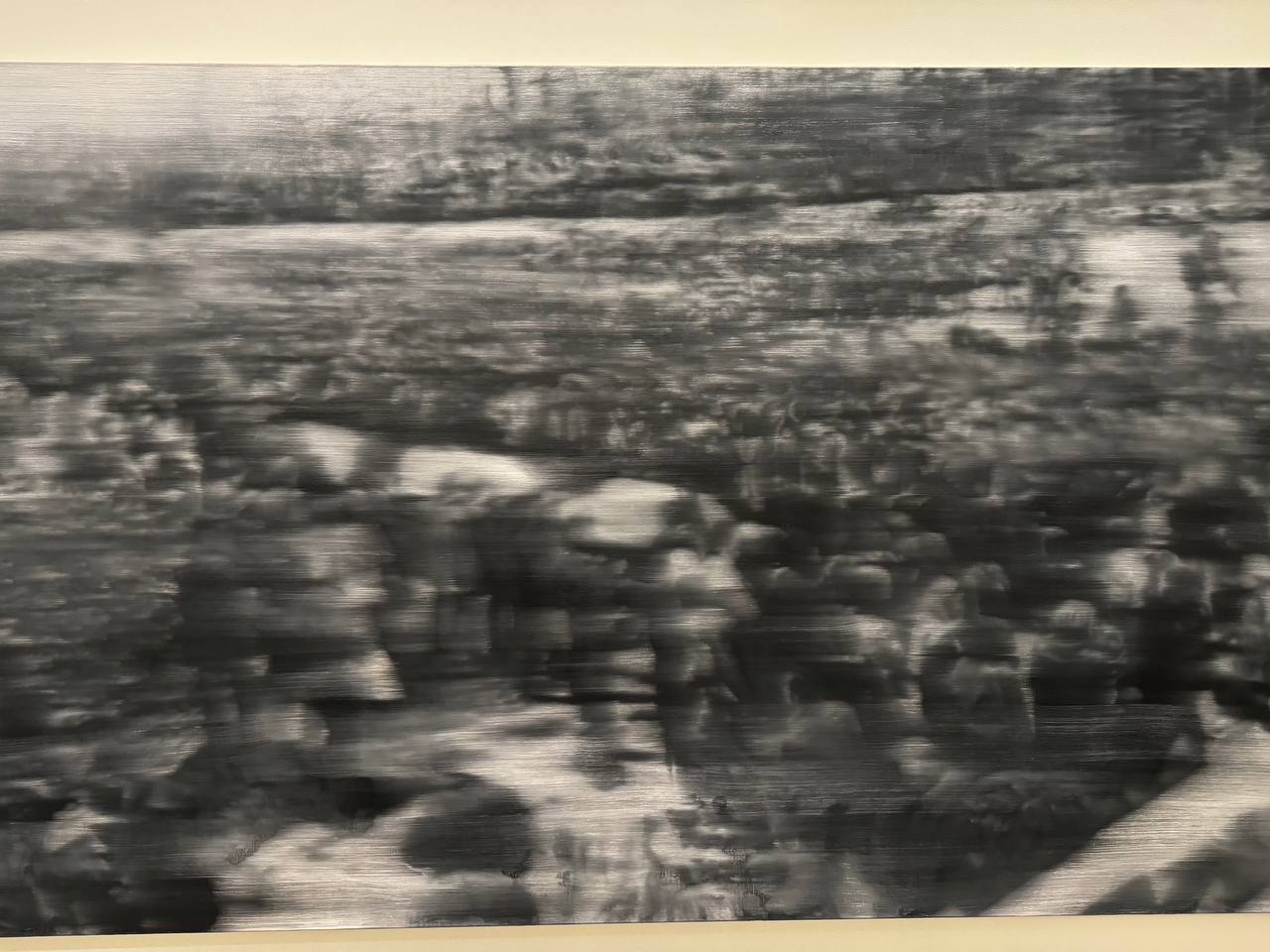
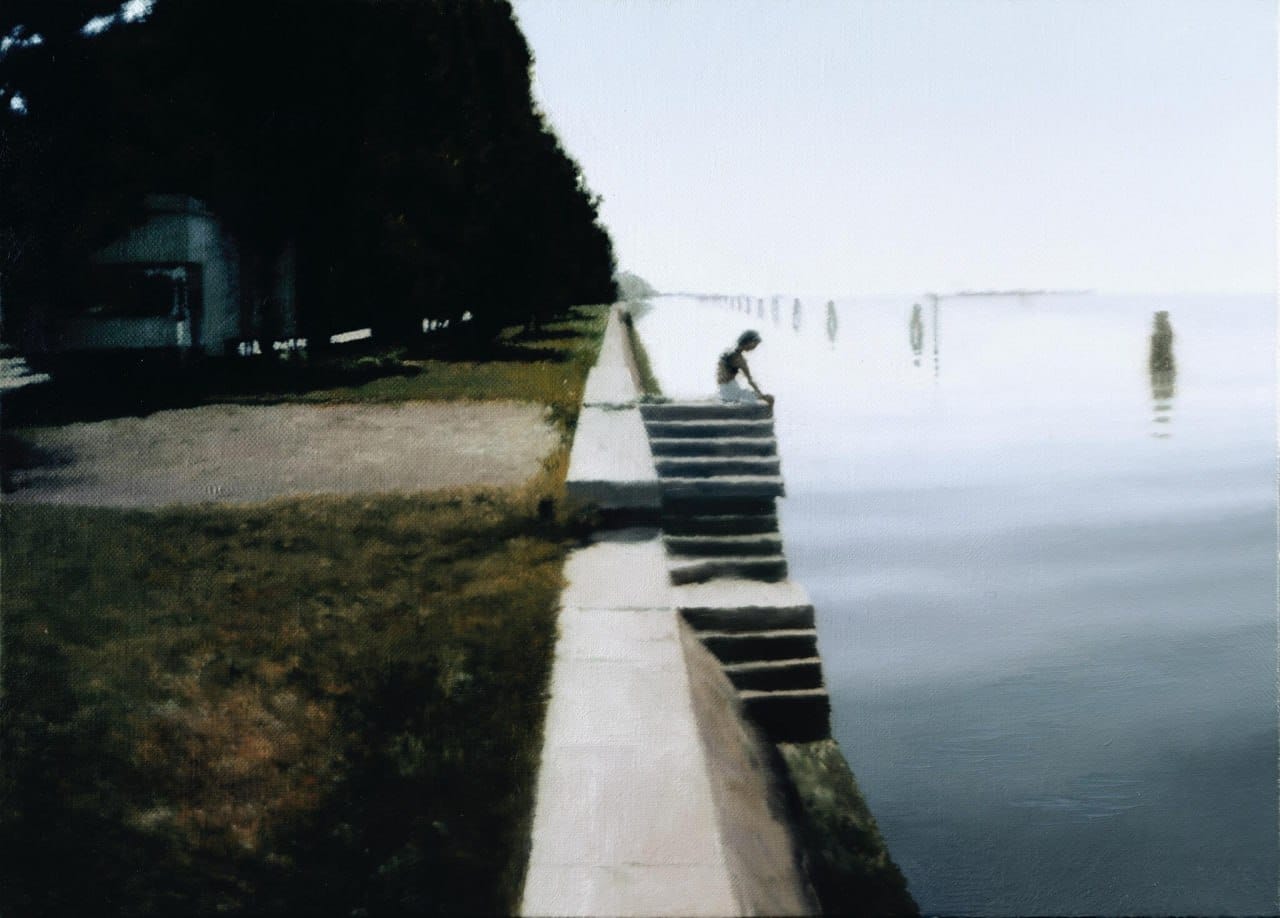
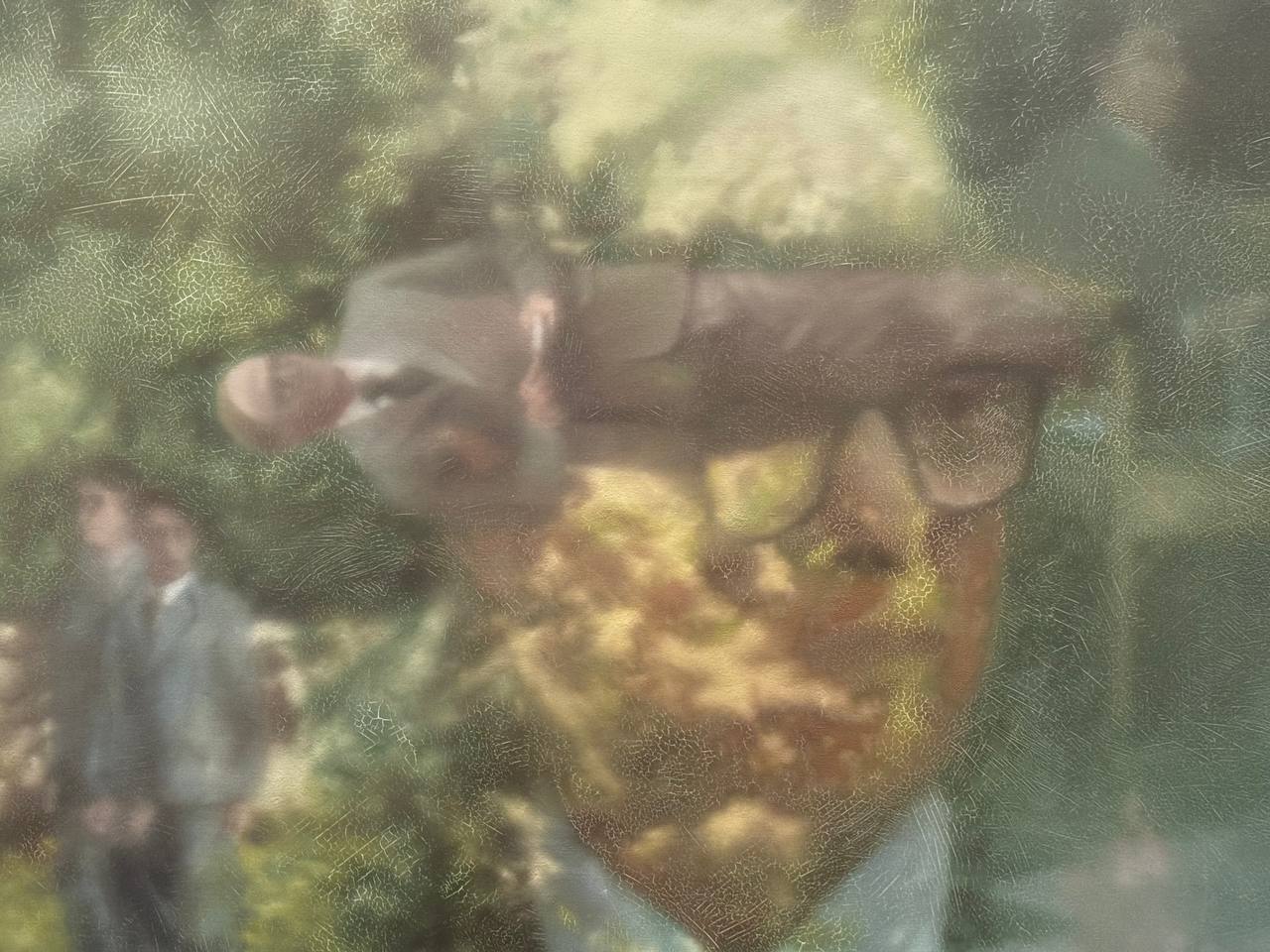
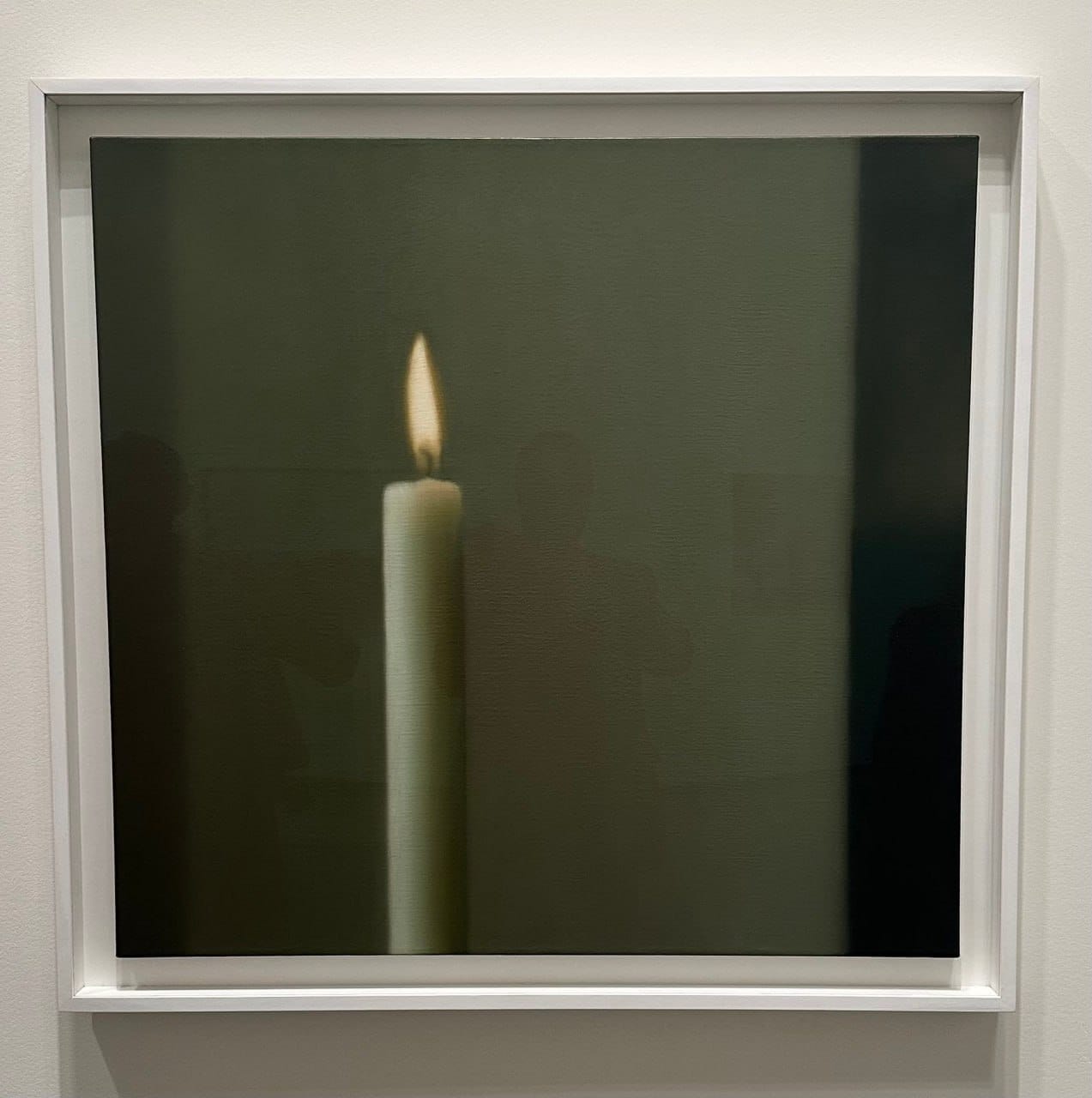
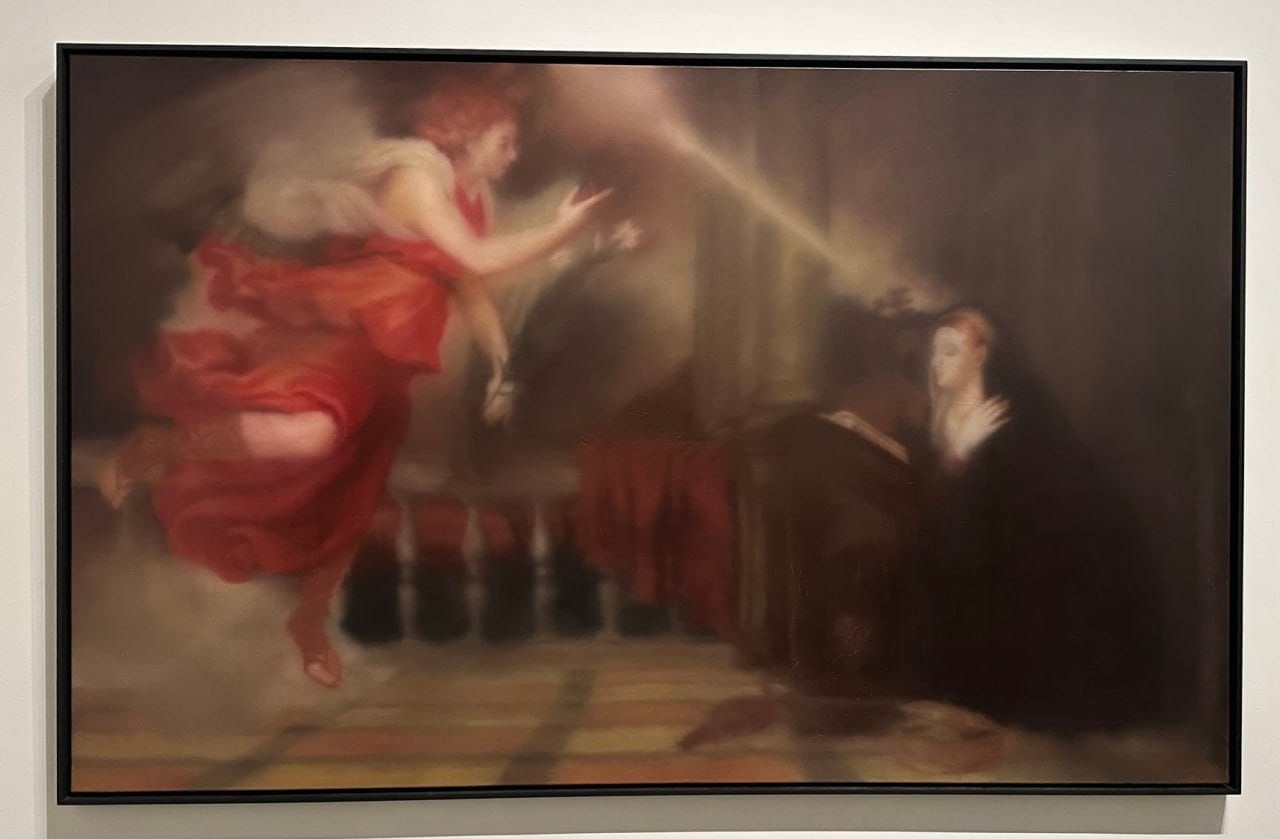
Among the vivid impressions: Richter's first paintings, made from photographs, and the most recent series of compact graphic works, in the penultimate gallery, which precedes a small and tedious final chord of sweeping abstraction, made purely for the sake of earning money. Richter keeps moving between figurative and abstract painting, and as an illustration of that transition the series of classical canvases after the likes of Titian, executed in Richter's signature "blurred" technique, is impressive. I could not pass by the bright canvases, striped like Paul Smith socks, from his not-so-distant light and cheerful series. A special place belongs to the "family photographs," in his own manner of photorealist oil painting based on black-and-white snapshots of parents with children on holiday, or of an uncle in the SS. Naturally, an enormous number of works, as the central motif of Richter's oeuvre, visibly rethink the fate of postwar Germany, the ethical dilemmas of a divided society, the themes of the Holocaust, of war, of the partition of Germany, and, beyond doubt, theorise the possibility of making art "after Auschwitz."
Having passed through several dozen galleries of the master's mixed legacy, one grasps both his contribution to the development of Pop Art and the special place of his Capitalist Realism, as well as his constant dialogue with the art of past eras, from the Renaissance to Caspar David Friedrich and many significant contemporaries and comrades-in-arms. Richter's inspiration grows not only from philosophising, German melancholy and sluggishness, multiplied by an unusual view of everyday phenomena, but also from recourse to textbook images: the exhibition includes his allusions to such figures as Johann Sebastian Bach or Gudrun Ensslin, the terrorist of the Baader-Meinhof gang.
In part, the artistic path of Richter, who trained in East Germany as a monumental artist, fled to the West literally a day before the Berlin Wall went up, and has spent his whole life reflecting on the German historical fates of the twentieth century, is paradoxical. The artist now lives in Cologne, and Cologne Cathedral is adorned with his stained glass; oil canvases with similar motifs are also on show. And it would perhaps be fitting to call him the most significant German artist and indeed cultural phenomenon of our time, and even that only if one forgets Anselm Kiefer, for example, though certainly not of the whole world.