The terms “invasive” and “non-native” carry fatal legal consequences for biological species
The terms “invasive” and “non-native” carry fatal legal consequences for biological species. These labels, in essence, open the way to measures up to and including the complete destruction of populations. In science this is called eradication. What mostly comes to mind are examples of the total eradication of species such as rats or nutria on certain island territories, say, near Australia and New Zealand or on the California islands. Seafarers would first bring some mammals, deliberately or by accident, into closed ecosystems alien to them, and after a while the newcomers became a threat to the ecological balance and had to be destroyed. Such cases number in the many thousands, and there are thousands of eradications, either successfully completed or not quite brought to a finish.
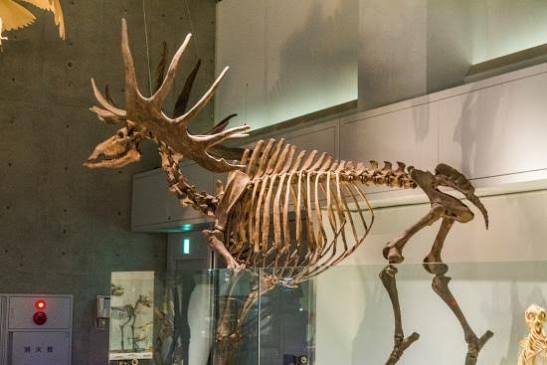
But what of moose? The photo shows a museum skeleton of an ancient moose, and it leads us to the story of how moose in Colorado were officially considered introduced. True, the first batch of animals was released in 1978 for hunting and viewing, and before that only rare chance encounters with them had been recorded. At present their population has not reached a size that would warrant destruction or make it a threat to any element of the ecosystem, but. But the category of the interloper nevertheless leaves its imprint on hunting permits and other regulatory procedures. It is strange, moreover, that as late as the 1940s the moose in these parts was regarded precisely as a native species, recently exterminated. Then that opinion grew ever fainter and was forgotten altogether, and in 2015 a single internal, unpublished report declared moose to be invasives.
Now a team led by the archaeologist William Taylor of the University of Colorado has published a study assembling three lines of evidence that moose are a native, indigenous species. The archaeological finds include moose bones from the Jurgens site near Greeley, more than 9,000 years old, and tools made of moose bone at Mesa Verde. More recent sources include some 160 years of digitised newspapers, with a map of every mention of moose, and a record of the oral tradition of the Indigenous peoples of the southern Rocky Mountains, in whose culture and economy the moose has long been embedded. The Northern Arapaho used the image of moose in clothing and ceremonial objects.
So the label of non-native species has, for the moose in Colorado, been finally disputed. Yet I cannot fail to draw attention to how the reliable knowledge of earlier scientists was erased with time, and how newer, more topical notions, answering to the spirit of the age, proposed managing the population on the premise that the moose is no master here but an uninvited guest. It was lucky, in a way, that matters did not come to mass culls, as happened in Olympic National Park in the state of Washington with the mountain goats, shot from helicopters, although archaeologists had warned as early as the late 1990s that the goats had been there long before humans