Findings published on a 17th-century ship sunk off northern Germany
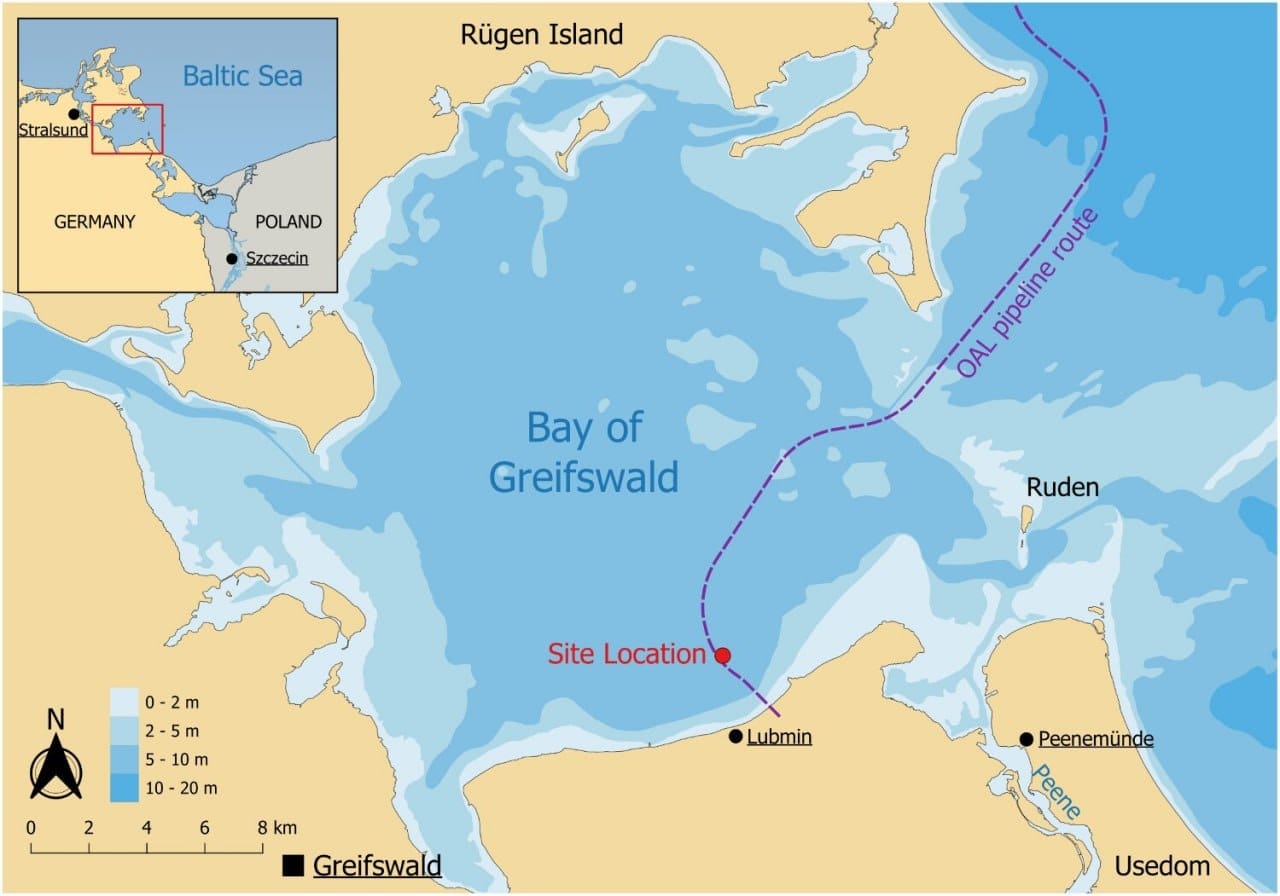
The Polish underwater archaeologist Michał Grzegorz Grabowski of the University of Warsaw has published the results of his study of a 17th-century shipwreck. Divers found the vessel in 2023 in the Greifswald Bay in northern Germany, while preparing the route for an underwater gas pipeline.
The Greifswald Bay is a shallow, sheltered lagoon of the Baltic Sea between the islands of Rügen and Usedom. For centuries a waterway ran through the bay, linking the Baltic with the basin of the River Oder.
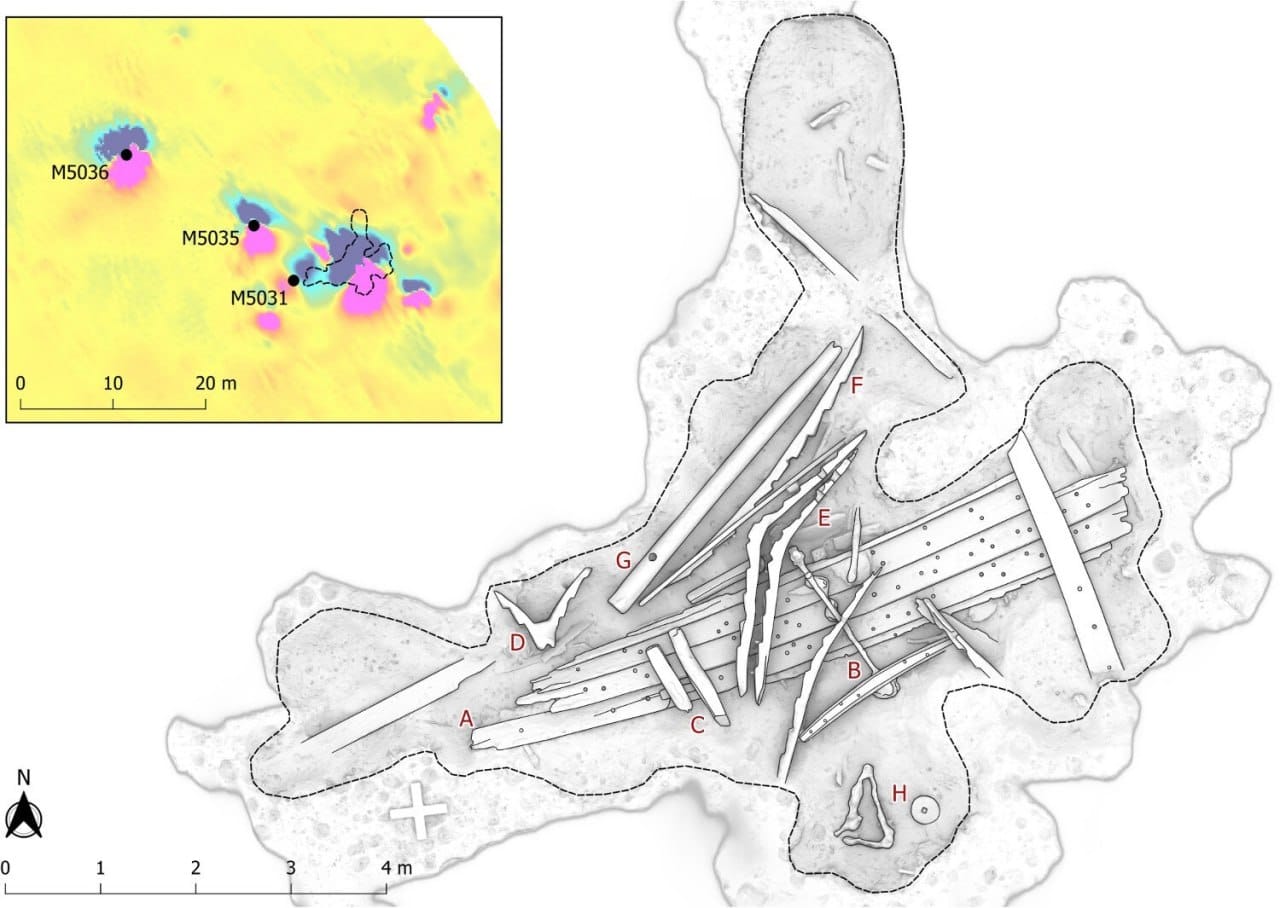
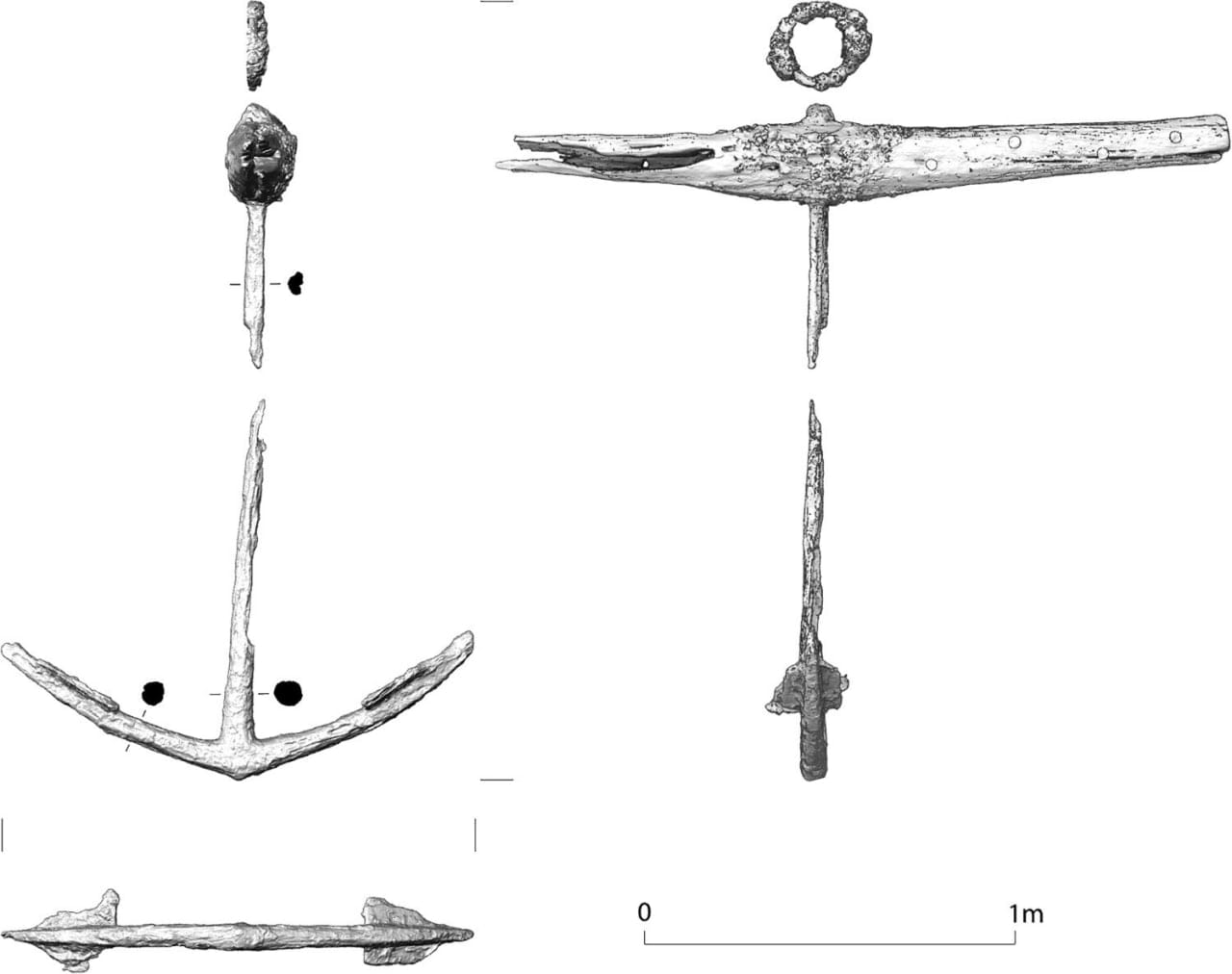
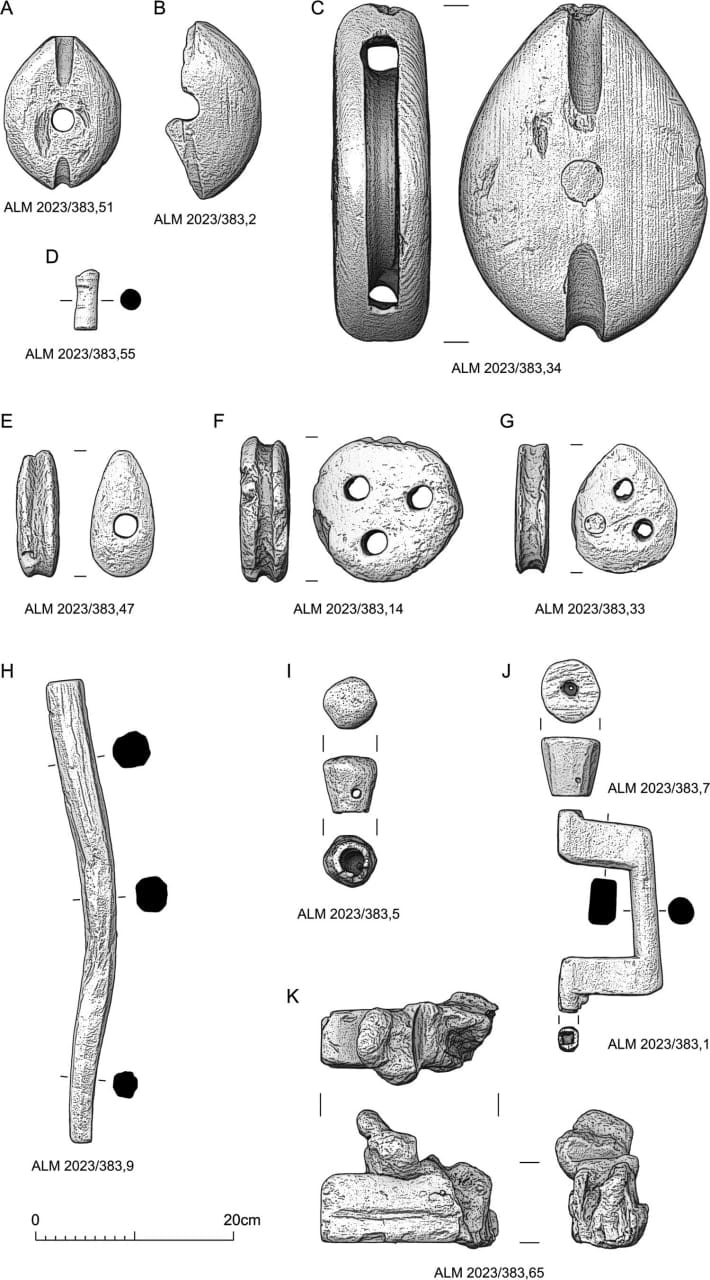
The divers were to check a group of unusual signals that instruments had recorded on the seabed. On the silty bottom, at a depth of about 7.5 metres, they found shoe soles, rigging blocks, a badly corroded anchor and scattered hull components. Rigging is the term for the ropes and tackle of a ship, by which sailors secured the masts and worked the sails.
The builders were soon due to begin dredging, so the archaeologists had very little time. A team of five made 22 dives in a little over twelve days. Even the divers' slightest movements stirred up the soft silt and spoiled visibility. The archaeologists documented their finds on the deck and then kept them in water, so that the wet timber would not dry out and suffer further damage.
A continuous stretch of the outer planking about 7.5 metres long has survived from the hull, and beside it lay individual frames and other wooden parts. Grabowski documented more than 60 objects. The surviving planks overlapped one another like roof tiles; the shipwrights fastened them with iron nails and caulked the gaps with tar and animal hair. This method of construction is known as clinker building. Dendrochronological analysis of one of the timbers showed that the tree had been felled between 1626 and 1639. This result, together with the clinker construction, allows the vessel to be dated to the 17th century. The researchers cannot yet determine the ship's dimensions, where it was built, its home port or the purpose of its last voyage.
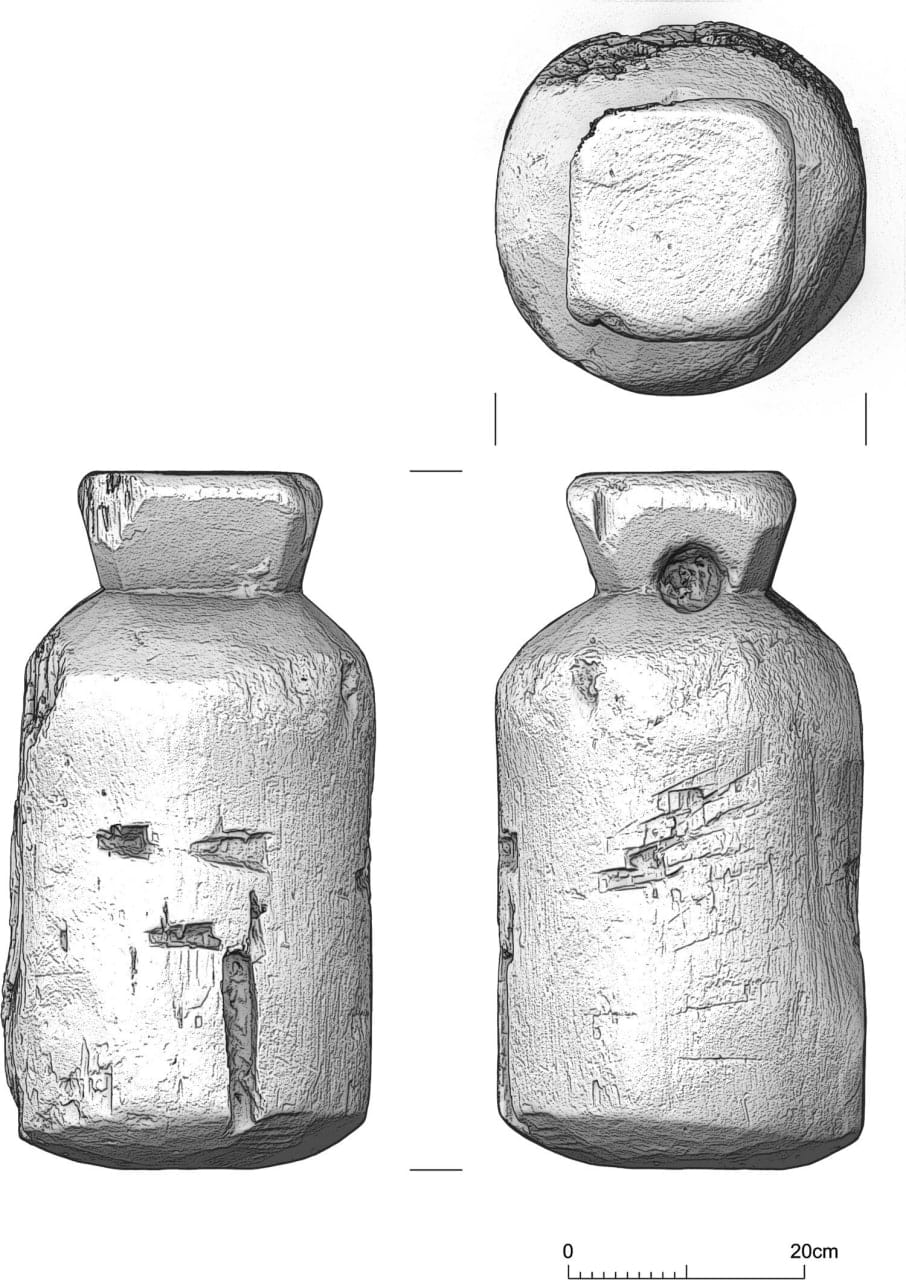
Among the finds were fragments of rope, barrel staves, wooden parts and a hollowed-out oak trunk, which probably served as a bilge pump, with which the sailors drained the water that collected in the lower part of the hull. Several carpenter's tools, among them the handle of a hand drill, suggest that the crew could repair the ship themselves and carried the necessary equipment with them. Two shoe soles and a stitched leather strap are among the few personal belongings of the sailors to have survived. Animal bones show that pork and mutton or goat kid were eaten on board. A mystery remains in the form of a flat clay tile with a hole, set into an oak block. The author of the report cautiously suggests that the sailors used it to sharpen blunted chisels or drills.
The cause of the ship's loss remains unknown. Some wooden parts bear traces of fire, and these may point to a blaze. Two anchors and a buoy of a particular type, which sailors used when anchoring, suggest that the ship lay at anchor before it sank. However, the available finds are not enough for an unambiguous reconstruction of events.
The remains of the hull may lie in the seabed sediments east of the investigated area, but the archaeologists have not yet surveyed that area. The builders eventually moved the route of the gas pipeline, and the remaining parts of the ship were covered with sandbags, so the site is for now preserved.