Polish Dress in Dutch Portraits of Children of the 17th Century, from Bol to Netscher
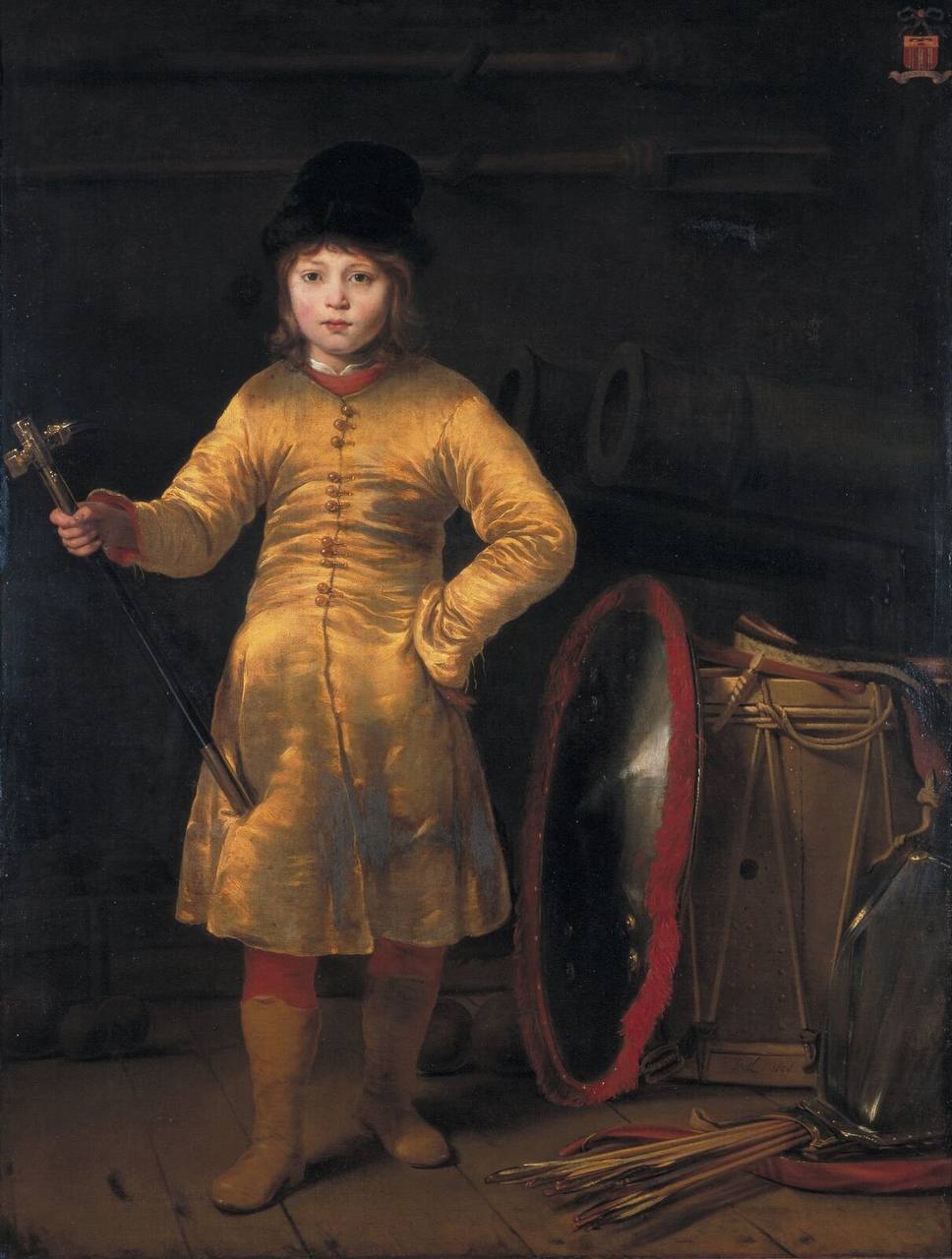
Here we have a most interesting instance of foreigners borrowing national dress: Dutch merchants in Poland dressed their children in costumes stylised after the clothing of the Polish nobility. The first portrait, of 1656, by the Dutch painter Ferdinand Bol, a pupil of Rembrandt, shows the son of a Dutch merchant in Danzig. In the boy's hand is a vivid stylistic element: a war hammer, the characteristic accessory of the Polish szlachta, otherwise known as the nadziak. In wartime this hammer was hung from the saddle; in peacetime the szlachta carried it in place of a walking stick. As you see, the nadziak was an attribute of appearance for noble children and even for foreign ones.
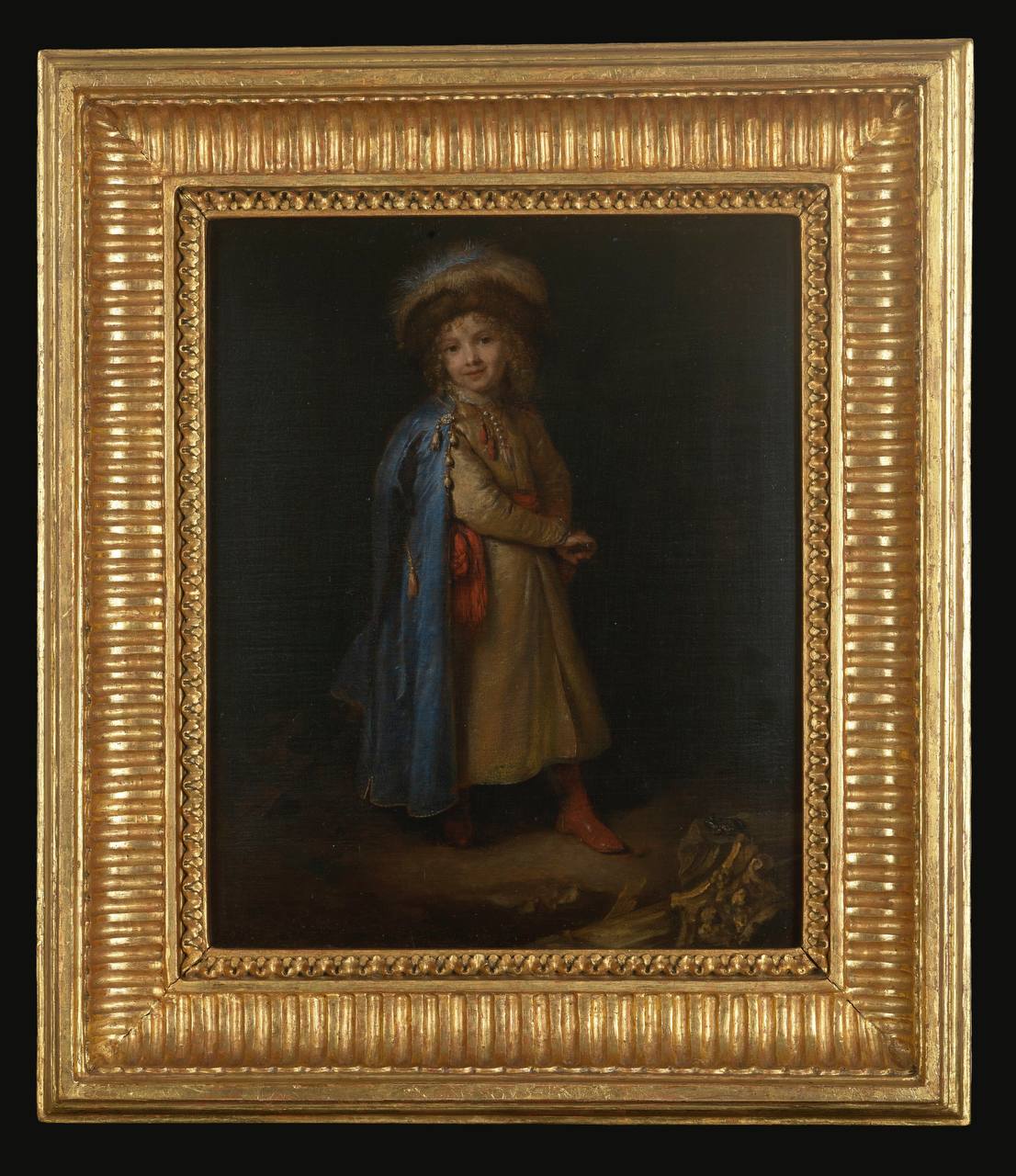
Caspar Netscher, a pupil of Gerard ter Borch who became a popular portraitist in court circles, is known for small portraits in which he meticulously reproduced the clothing of his sitters, as in this second portrait of a boy in Polish costume. The identity of the sitter is very much in question: he is thought to be either Prince Sigismund Casimir, son of King Władysław IV and Cecilia Renata, who died in 1647 at the age of eight, or else the son of a Polish diplomat at The Hague.
There are other Dutch depictions of the seventeenth century showing sitters in Polish costume, for instance by Rembrandt and Noort. In the northern Netherlands of this period one observes a marked interest in, and thorough knowledge of, seventeenth-century Polish dress. There is even so curious a document as a will drawn up in Amsterdam, in which we find an entry stating that a married couple bequeaths to their son his portrait together with the Polish costume in which, most likely, he had sat as a child.
Besides the fact that merchants brought Polish fashionable wardrobe home with them, we may understand that many portraits described in inventories as "Polish" could equally have shown Poles who had come to Holland, all the more so as it is precisely in the seventeenth century that Polish-Dutch and other mixed marriages become ever more frequent, among them marriages involving the children of noblemen who professed Protestantism and sent their sons to study in Holland.