I noticed that the website of Royal Mail, the state post of the United Kingdom, works in two languages, English and Cymraeg, that is, Welsh
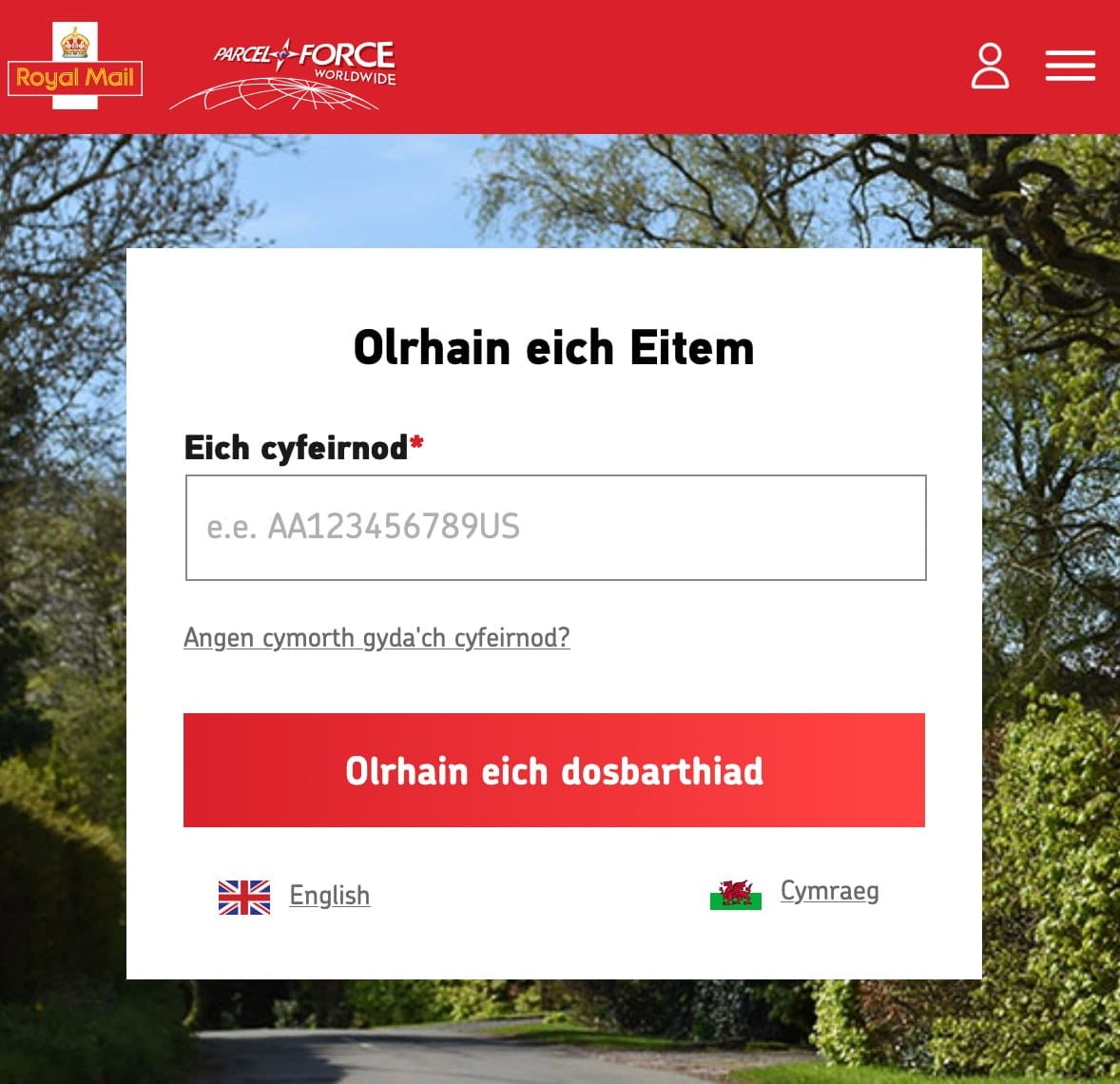
I noticed that the website of Royal Mail, the state post of the United Kingdom, works in two languages, English and Cymraeg, that is, Welsh. One wonders why only two, and why precisely these two?
The United Kingdom has, in fact, no constitutionally enshrined state language. The status of English is written into no constitutional act at all: it functions as the state language de facto. The earliest law to introduce English into official use was the Statute of Pleading of 1362, which ordered that the courts be conducted in English instead of French. It did not proclaim English the state language; it merely showed French the door of the courtroom.
Yet the native languages of the islands number rather more than one or two. Welsh, Scottish Gaelic, Lowland Scots, Cornish in Cornwall, Irish and Ulster Scots in Northern Ireland. But on the post office website only the Welsh version is to be found, and the reason is purely legal. Welsh was lucky with its legislation: the Welsh Language Measure 2011 gave it official status and introduced mandatory standards. Nationwide services are obliged to serve people in Welsh on a par with English, and failure to do so carries liability.
The other national languages were not so fortunate. Scottish Gaelic and Irish in Northern Ireland are protected by law at the level of promotion and use in local and municipal bodies, but without equal mandatory status across the country. Scots, Cornish and Ulster Scots rest on the European Charter for Regional or Minority Languages, which acknowledges their existence but does not oblige public services to switch to them. And so Welsh became the only one placed on an equal footing with English.