A study recently published in Nature presents a map of the genetic legacy of the Vikings, who possessed a complex web of family ties and a rich history of cultural exchange across Europe and beyond
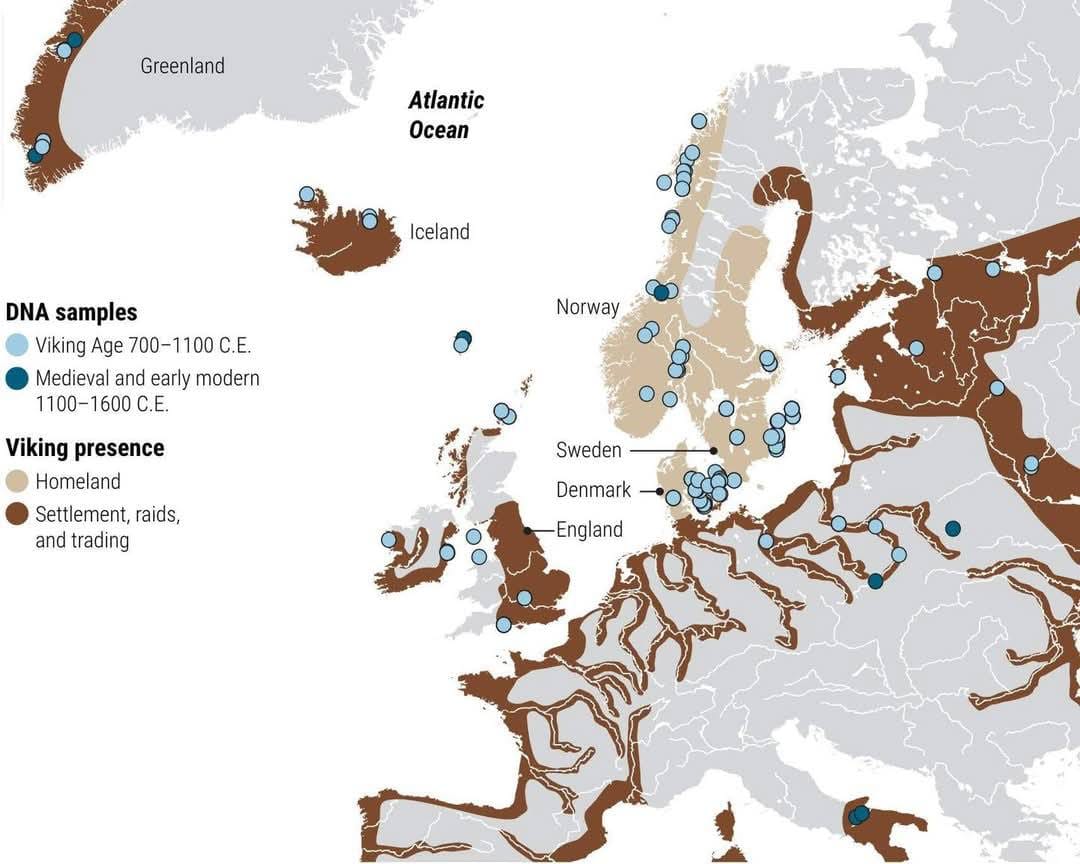
Among the notable finds are the remains of cousins scattered between Denmark and England, as well as the remains of people of non-Scandinavian origin, Sámi, Irish and Scots, buried according to Viking custom.
Still, "Viking" is rather a cultural or social identity than a strictly ethnic one, and outsiders often adopted Viking customs. Yet the finds from Scandinavia show that in this region genetic mixing remains surprisingly limited.
Yet, when speaking of the Vikings and the customary picture of them, it is important to remember the research indicating that the Norwegians, Danes and Swedes, like other native possessors of fair hair, apparently do originate from Russian territories