The 1910 Paris flood and the end of wooden block paving on the city's streets
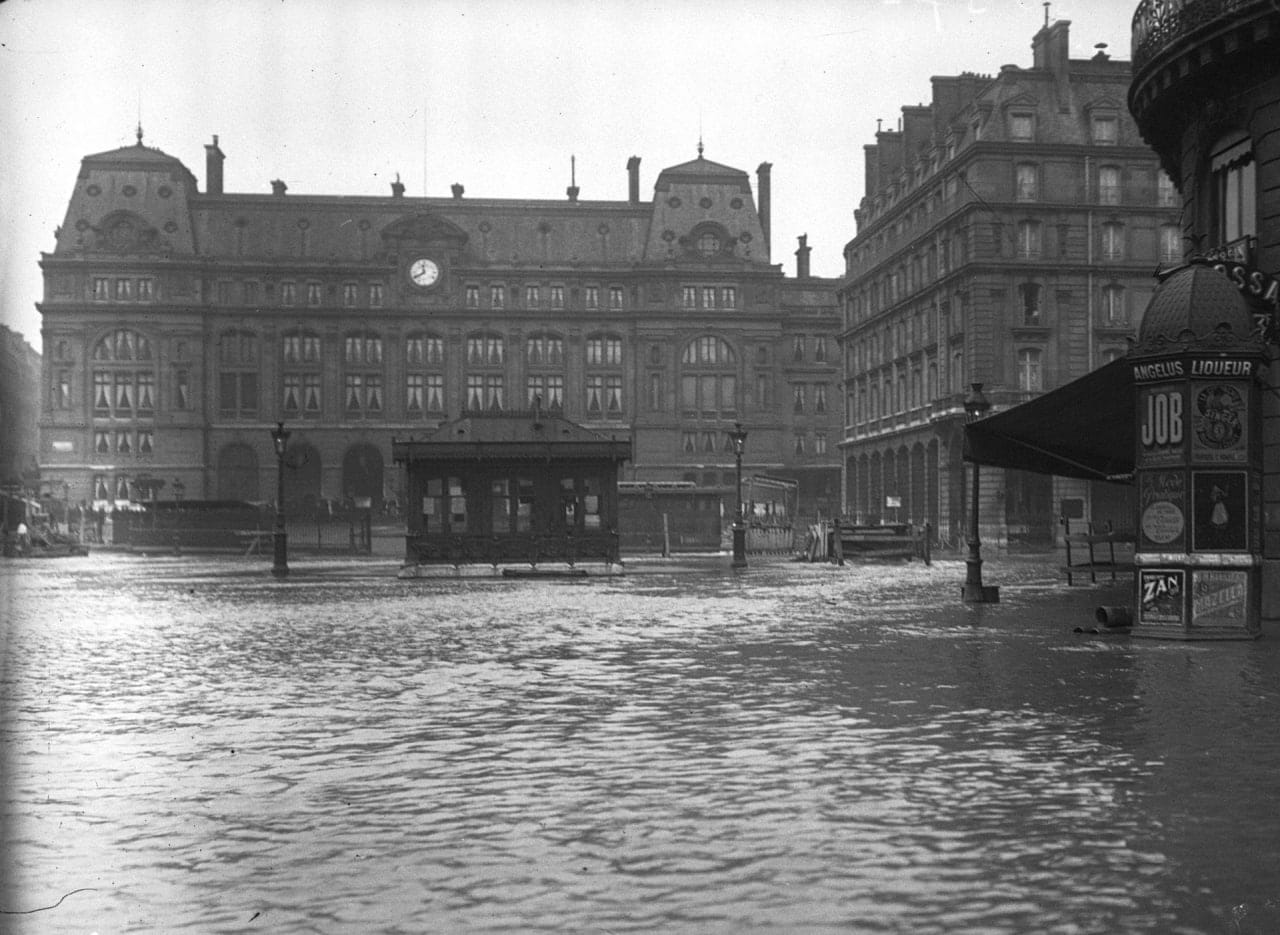
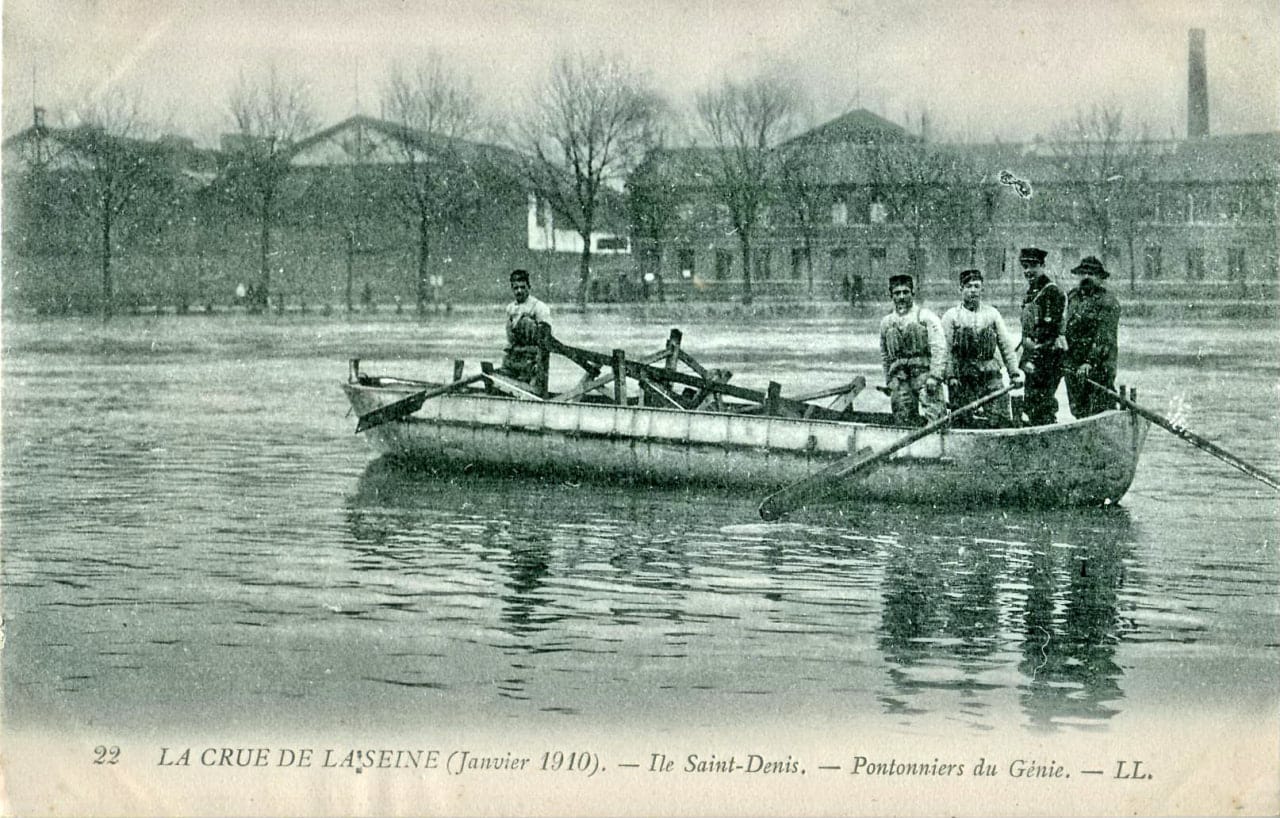
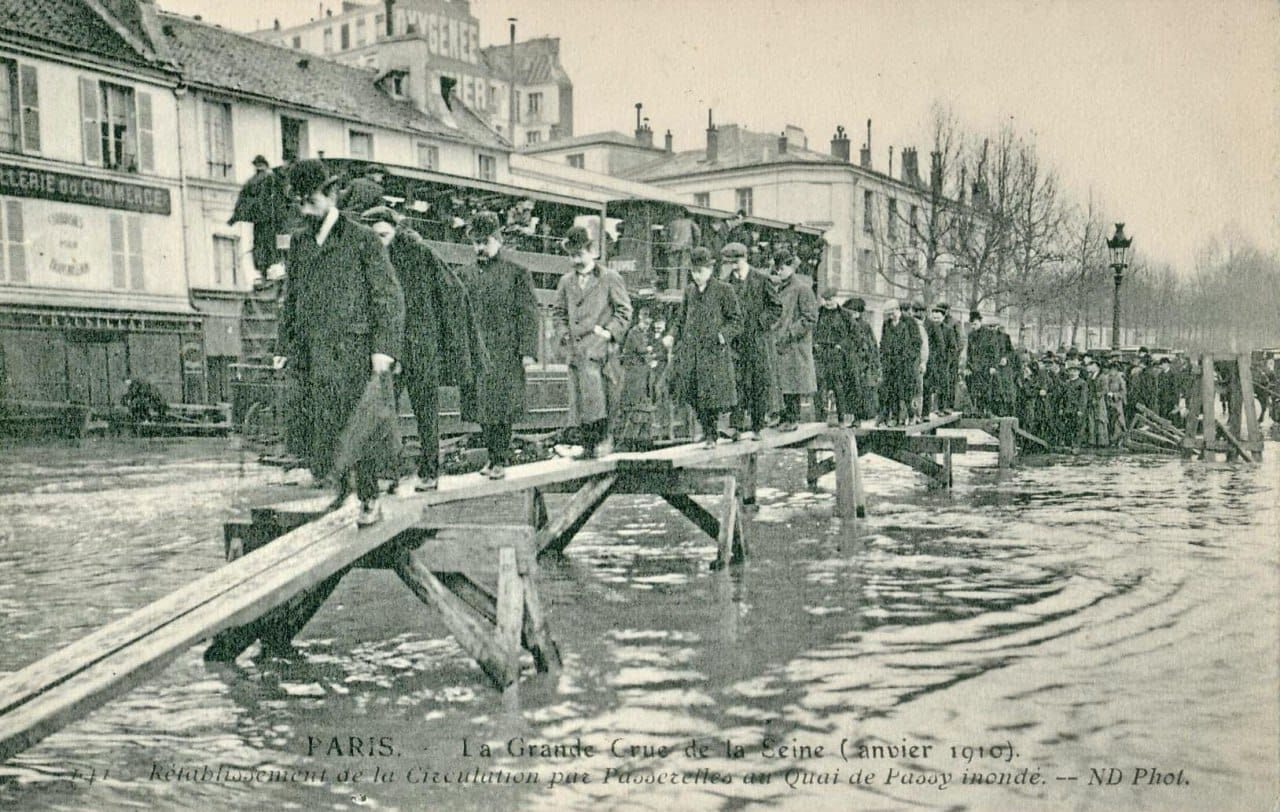
The Paris flood of January–February 1910 was the worst since 1658. The Seine itself did not burst its banks, but the rise of the water in it and in its tributaries flooded most of the city through the sewers, drainage pipes and underground tunnels, the Metro included. Hundreds of streets and tens of thousands of houses and buildings were actually inundated, yet loss of life was avoided because the water rose slowly, from 21 January until the 28th, when it peaked at almost nine metres above its usual level. It then took 35 days for the water to drain away. The consequences were appalling.
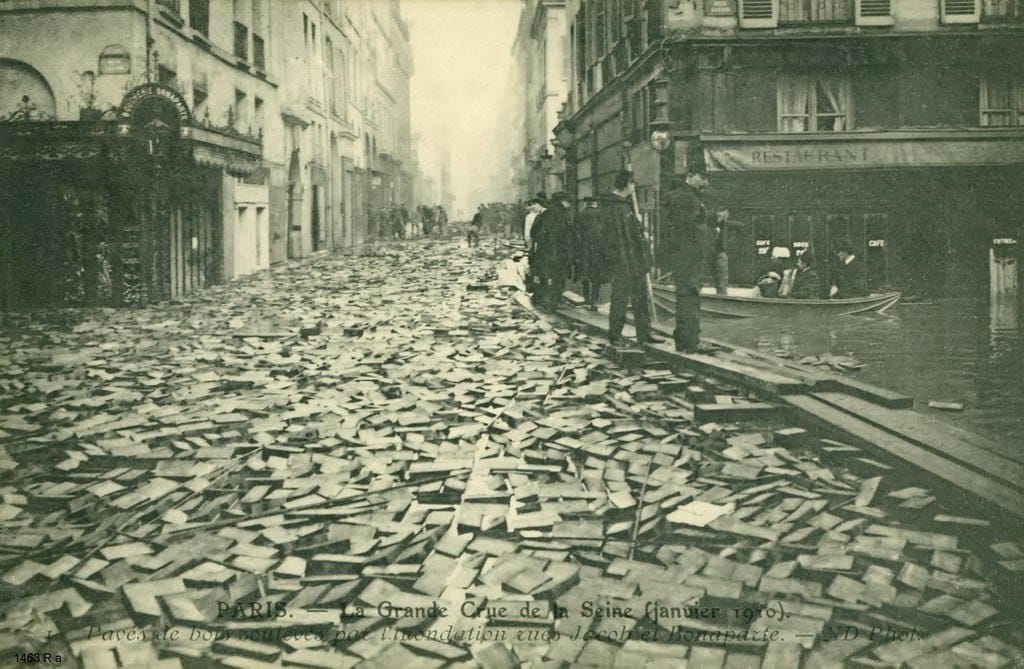
In one photograph of flooded Paris the whole street is covered with floating bits of wood. The reason is that from the end of the nineteenth century a number of city streets, even in the centre, had been paved with wooden blocks, which caused a good deal of inconvenience (for instance, the most dreadful black ice at the slightest cold snap with precipitation), and during the flood every one of these blocks floated up from the roadway. After the flood this type of street paving was abandoned in the city.